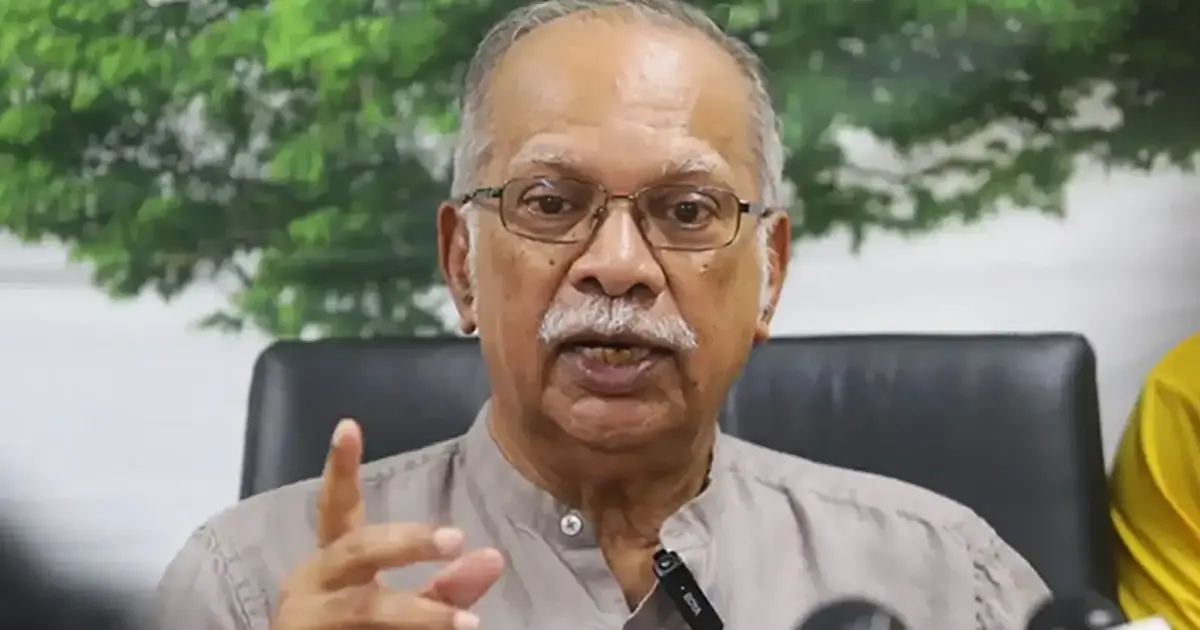
The political turmoil afflicting Malaysia's Perikatan Nasional coalition deepened yesterday when coalition leaders convened an emergency meeting that, according to observers, left the fundamental structural problems unresolved. P. Ramasamy, chairman of Urimai, has since publicly criticised the session for its apparent avoidance of Bersatu's contentious status within the broader opposition alliance, suggesting that the gathering represents a missed opportunity to address escalating tensions that threaten the coalition's cohesion.
Ramasamy's assessment points to a critical disconnect between what the emergency meeting addressed and what the coalition's member parties actually require to function effectively. The Bersatu issue has become increasingly difficult to ignore, given the party's relationship with PAS—a fellow Perikatan component—has visibly deteriorated over recent months. By skirting around this central problem, the coalition's top leadership appears to have prioritised short-term conflict avoidance over the structural reforms necessary to restore stability.
Bersatu's position within Perikatan Nasional has grown considerably more fragile as its differences with PAS have widened into public disputes. Rather than treating these divisions as separate grievances, observers recognise them as symptoms of deeper incompatibilities within the coalition's ideological and organisational frameworks. The failure of yesterday's emergency session to confront these incompatibilities directly suggests that the coalition's leadership either lacks the political will or the capacity to broker meaningful reconciliation.
For Malaysian observers tracking opposition politics, this stalemate carries significant implications. A coalition unable to resolve internal disputes risks appearing unstable and unprepared for governance, potentially damaging its credibility with both its voter base and undecided constituencies. The repeated inability of Perikatan Nasional to manage its internal contradictions publicly undermines the narrative that the opposition offers a viable alternative to the current administration.
Ramasamy's position as Urimai chairman adds particular weight to his observations. Urimai, as a smaller coalition component, has a vested interest in seeing the broader alliance function effectively, as its own political relevance depends on the coalition's viability. His willingness to voice criticism of the emergency meeting's shortcomings suggests growing frustration among secondary coalition partners about the direction and competence of the alliance's central leadership.
The focus on Bersatu's future is not merely an internal party management question. Bersatu commands significant political assets, including parliamentary seats and regional influence, particularly in certain states. Its security within the coalition affects not only its own members and supporters but also the distribution of power within Perikatan Nasional's decision-making structures. An unresolved situation creates uncertainty that filters through the entire coalition's operations.
PAS, as the dominant Islamist force within Perikatan Nasional, has its own strategic interests that may conflict with Bersatu's positioning. The growing rift between these two parties reflects different visions for the coalition's direction and priorities. Rather than allowing these tensions to fester, effective coalition management would require transparent dialogue and clearly negotiated arrangements that each party could accept and work within.
The broader context matters significantly here. Malaysia's political landscape remains fluid, with major parties constantly recalibrating alliances and positioning themselves for advantages in the next general election. For Perikatan Nasional, internal divisions at this stage are particularly damaging because they signal weakness to potential allies and undecided voters. The emergence of criticism from figures like Ramasamy indicates that patience with the current leadership's approach is wearing thin.
Looking forward, the coalition faces a choice between addressing its structural problems directly or allowing them to compound through repeated cycles of crisis meetings that produce insufficient resolution. Ramasamy's implicit call for urgent action on Bersatu's status reflects the urgency many coalition members feel. Without concrete action, the emergency meeting will likely be perceived as merely a temporary pause in an ongoing crisis rather than a genuine intervention.
The political cost of inaction grows with each passing week. Coalition members are beginning to question whether remaining within Perikatan Nasional serves their interests, and supporters are watching carefully to assess the alliance's functionality. For Malaysia's political opposition, this moment represents both a test of leadership competence and a challenge to demonstrate the capacity for internal cooperation that governance would require.