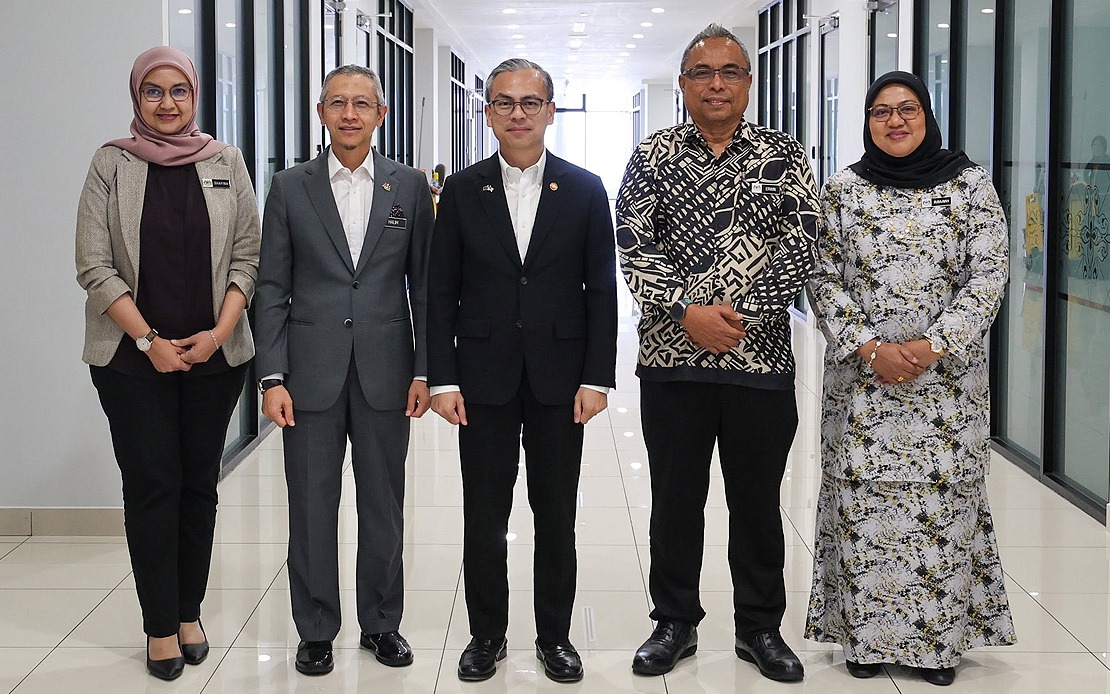
Malaysia's Communications Minister Datuk Fahmi Fadzil has formally welcomed the new leadership team at the Information Department (JaPen), marking a significant transition in the government's crucial communications apparatus. The ministerial endorsement signals continuity in the department's mandate to disseminate accurate information to Malaysian citizens while navigating an increasingly complex media landscape shaped by digital transformation and public information demands.
Erwin Khairul Ahmad assumes the role of director-general, taking the helm of an institution responsible for coordinating government communications across federal and state levels. His appointment represents the culmination of years of experience within Malaysia's bureaucratic structure, where individuals typically ascend through ranks before reaching senior leadership positions. The Information Department operates as a critical liaison between government agencies and the public, serving as a repository of official statements and coordinating media engagement strategies that shape public discourse on policy initiatives.
Paralleling this appointment, Wan Saidatul Shafina Mohd Amin has been elevated to deputy director-general with specific responsibility for digital content—a portfolio that underscores JaPen's recognition that information dissemination has fundamentally shifted toward online platforms and social media channels. Her specialised role reflects broader government efforts to strengthen digital communication infrastructure, ensuring that official messaging reaches citizens through channels they increasingly favour. The emphasis on digital content governance assumes particular importance in Southeast Asia's context, where internet penetration continues rising and misinformation concerns occupy policymakers' attention.
Fahmi's congratulatory message articulated clear expectations for the incoming leadership, emphasising dedication, wisdom, and institutional spirit as cornerstones of effective governance. His call for the department to strengthen its role as an "effective medium for delivering information to the people" resonates with contemporary governance challenges, where governments globally struggle to maintain public trust amid competing narratives and fractured information ecosystems. For Malaysian administrators, the minister's framing suggests renewed commitment to transparent, accessible government communication as a democratic imperative.
The transition also involved formal recognition of departing director-general Julina Johan, whom Fahmi publicly acknowledged for her service, dedication and contributions during her tenure. In Malaysian civil service culture, such acknowledgments carry symbolic weight, affirming institutional continuity while honouring the substantial contributions retiring officials made to their respective departments. Julina's departure after leading JaPen through periods of significant national events and policy announcements represents the conclusion of a substantial chapter in the department's recent history.
The Public Service Department (JPA) officially processed these appointments, with director-general Tan Sri Wan Ahmad Dahlan Abdul Aziz presenting letters of appointment to both Erwin Khairul and Wan Saidatul Shafina. This formal procedure, rooted in Malaysia's civil service traditions, ensures that such transitions occur through established bureaucratic channels. The JPA's involvement underscores that appointments to senior government positions remain subject to standardised procedures designed to maintain institutional integrity and meritocratic principles, notwithstanding broader debates about civil service reform.
The timing of these appointments arrives as governments worldwide confront intensifying challenges around information management, digital literacy, and combating coordinated misinformation campaigns. Malaysia's Information Department must navigate these pressures whilst adapting to technological shifts that continuously reshape how citizens consume and evaluate government communications. The new leadership team's mandate extends beyond traditional press releases and media conferences, now encompassing social media strategy, fact-checking initiatives, and rapid response protocols for addressing false narratives that potentially undermine public confidence.
For Southeast Asian observers, Malaysia's bureaucratic transitions offer insight into how middle-income democracies approach succession planning within critical institutional portfolios. The region faces shared challenges concerning information integrity and government communication credibility, making the strategic direction of national information departments consequential beyond Malaysia's borders. How JaPen evolves under Erwin Khairul's guidance may influence regional approaches to government digital communication and information governance.
The emphasis on digital content within the deputy director-general position signals institutional recognition that information distribution patterns have fundamentally transformed over the past decade. Younger Malaysian citizens increasingly obtain government information through digital channels rather than traditional media, necessitating structural adaptation within bureaucratic institutions accustomed to older communication paradigms. Wan Saidatul Shafina's appointment suggests JaPen intends to develop sophisticated digital communication capabilities rather than merely adapting existing content to online platforms.
Moving forward, the new leadership team faces expectations of maintaining the department's credibility during periods of intense political discourse and heightened public scrutiny of government narratives. In Malaysia's multifaceted political environment, the Information Department functions as a neutral administrative institution responsible for factual accuracy regardless of which political coalition holds executive authority. This expectation places considerable responsibility on the incoming director-general and deputy director-general to manage the inherent tensions between serving government interests and maintaining public trust through transparent, evidence-based communication practices.