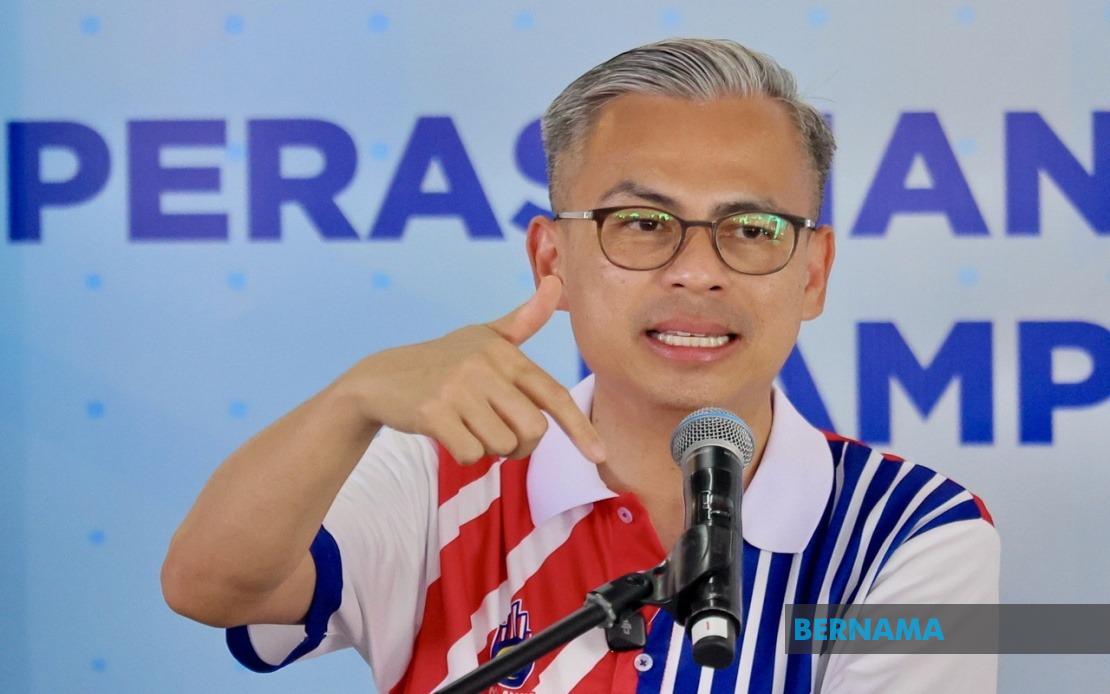
Communications Minister Datuk Fahmi Fadzil has launched a scathing attack on those responsible for operating a fraudulent WhatsApp account that falsely represents Pakatan Harapan's Saiful Nizam Samat, the party's candidate for the Endau state seat in the ongoing Johor state election. The minister characterised the deception as a troubling sign of desperation among those willing to circumvent ethical boundaries to gain electoral advantage, reflecting broader concerns about the integrity of political campaigns during the contest.
Fahmi's intervention, conveyed through comments on Saiful Nizam's official Facebook page, underscores the escalating problem of digital impersonation and fraud in Malaysian politics. His assertion that perpetrators would resort to any tactic to win reflects the combative nature of electoral competition in Johor, where parties are competing intensely for control of the state assembly. The minister's public rebuke signals that such conduct falls well below acceptable standards of campaign behaviour and demands serious attention from voters and election monitors alike.
Saiful Nizam himself moved swiftly to distance himself from the fraudulent account, issuing a categorical denial that he owns or operates any WhatsApp profile bearing his name for campaign purposes. He clarified that the account holds no connection whatsoever to him or his official campaign machinery, known as Team SS, and that voters should disregard any communications purporting to originate from such a channel. This distinction is crucial in an election environment where digital communication has become a primary tool for engaging voters, and where the potential for confusion and manipulation is particularly acute.
The fake account employed sophisticated impersonation tactics, utilising Saiful Nizam's actual profile photograph and crafting messages that explicitly claimed the account holder was "the future Endau assemblyman." By presenting itself as authentic and using the candidate's legitimate identity markers, the account was designed to deceive members of the public into believing they were communicating directly with the candidate himself. Saiful Nizam publicly shared screenshots of these deceptive exchanges to expose the fraud and alert supporters to exercise extreme caution.
In response to the incident, Saiful Nizam issued formal guidance advising the general public to maintain heightened vigilance against similar schemes. He specifically recommended that voters refrain from disclosing personal information to unverified accounts and avoid engaging in transactions or sharing sensitive data through channels they cannot confirm as legitimate. This warning addresses the real risk that fraudulent accounts could be used not merely for political messaging but potentially for identity theft, financial fraud, or harvesting of personal data for malicious purposes.
For those receiving suspicious messages claiming to come from the candidate, Saiful Nizam directed them to verify through official Team SS channels before acting on any information or requests. This multi-layered approach to combating the fraud acknowledges that misinformation can spread rapidly through WhatsApp and social media, and that establishing authoritative verification mechanisms is essential to preventing public confusion. The emphasis on official verification reflects growing sophistication in how political campaigns manage their digital presence and communications.
The incident occurs within the context of a highly competitive four-way race for the Endau seat, where Barisan Nasional, Pakatan Harapan, Perikatan Nasional, and Parti Orang Asli Malaysia fielded candidates. This crowded field naturally intensifies pressure on all contenders to generate momentum and voter engagement, potentially creating conditions where unscrupulous actors believe they can gain advantage through deceptive tactics. The existence of multiple competing campaigns also complicates voters' ability to distinguish between legitimate and fraudulent communications, particularly when impersonators employ sophisticated digital techniques.
The WhatsApp impersonation represents a troubling evolution in Malaysian electoral misconduct. Unlike traditional campaign violations that focus on misspending or logistical irregularities, digital fraud directly targets voter trust and undermines the authenticity of political communication itself. When voters cannot be confident that a message originating from an account bearing a candidate's name actually comes from that candidate, the information environment becomes corrupted at its foundation, making informed electoral choices significantly more difficult.
The incident also highlights broader vulnerabilities in WhatsApp as a political communication platform. The messaging application's end-to-end encryption and relative anonymity of account creation have made it a preferred tool for political campaigns across Southeast Asia, yet these same features create opportunities for impersonation and fraud. Unlike public social media platforms where verification mechanisms and account history provide some confidence in authenticity, WhatsApp relies heavily on users individually determining whether their contact truly represents the person they claim to be.
Fahmi's intervention adds weight to emerging calls for stricter enforcement of electoral regulations regarding digital conduct. As Malaysian elections increasingly incorporate digital campaigns and social media outreach, regulatory frameworks have struggled to keep pace with technological innovation and new forms of misconduct. The minister's public condemnation signals that government leadership recognises digital fraud as a serious threat to electoral integrity and voter confidence in democratic processes, though translating this recognition into effective enforcement remains challenging.
The incident serves as a reminder to Malaysian voters of the importance of critical engagement with campaign communications, regardless of the platform through which they arrive. Cross-referencing official campaign websites, verified social media accounts, and direct contact through published campaign office numbers remains the most reliable way to confirm the authenticity of political messaging. As digital campaigns become more sophisticated, voter literacy regarding verification and authentication becomes increasingly central to protecting themselves from manipulation and fraud.

