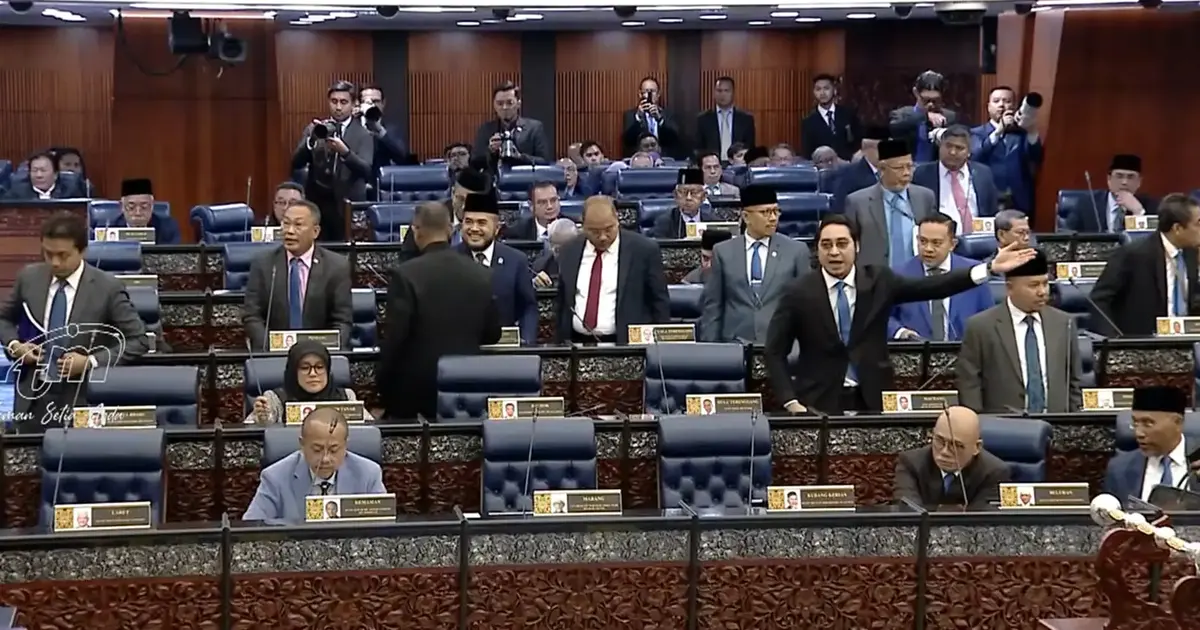
Communications Minister Fahmi Fadzil has publicly commended Members of Parliament from Bersatu for their decision to remain and participate in the ongoing Royal Commission of Inquiry (RCI) proceedings into Tabung Haji, even as he pointedly criticised the absence of other Perikatan Nasional (PN) lawmakers who chose instead to withdraw from the proceedings. The distinction drawn by Fahmi underscores deepening fractures within the PN coalition and highlights competing approaches to how opposition parties engage with government-initiated investigative mechanisms examining Malaysia's largest Islamic pilgrimage savings fund.
Tabung Haji has faced sustained scrutiny over the past several years, with concerns centring on operational transparency, financial management practices, and the custodianship of deposits belonging to millions of Malaysian Muslims preparing for their hajj journey. The establishment of the RCI represented an attempt to address longstanding public concerns and provide a comprehensive examination of the institution's governance structures. The attendance or absence of parliamentary representatives at these inquiry sessions carries broader political significance, reflecting not merely individual choices but calculated positioning by opposition parties regarding their relationship with investigative institutions and the government.
Bersatu's decision to have its MPs participate in the RCI hearings distinguishes the party from other PN components, most notably the Pan-Malaysian Islamic Party (PAS) and the Malaysian United Indigenous Party (Bersatu's historical ally, though the exact composition varies). This divergence is noteworthy given that these parties ostensibly share the opposition coalition's political framework and should theoretically coordinate their parliamentary strategies. Fahmi's public acknowledgment of Bersatu's cooperation suggests the government views engagement with the inquiry process as a mark of institutional responsibility and democratic maturity, qualities the minister is keen to highlight when discussing different opposition groupings.
The walkout by other PN MPs represents a deliberate protest strategy, though the underlying motivations warrant examination. Opposition lawmakers frequently employ boycotts and walkouts as mechanisms to delegitimise proceedings they view as politically motivated or when they believe participating lends unwarranted credibility to what they characterise as government overreach. The choice to withdraw from RCI sittings can signal to their political base that the party refuses to validate what it considers a predetermined outcome or a tool for political persecution. However, such tactics also carry reputational costs, particularly when public sentiment regards the inquiry as addressing legitimate governance failures demanding transparent examination.
For Bersatu, the decision to participate reflects several possible strategic calculations. The party may view constructive engagement as politically advantageous, positioning itself as the responsible opposition voice willing to work within institutional frameworks despite disagreeing with government policies on other matters. Alternatively, Bersatu might possess specific grievances or interests related to Tabung Haji governance that it wishes to air publicly through the inquiry process. The party's positioning as a bridge between government and opposition could also explain its willingness to attend when other PN components demur. Fahmi's praise, whether calculated or genuine, nonetheless reinforces the optics of Bersatu as the more pragmatic coalition member.
The Tabung Haji RCI itself occupies contested political terrain. The institution manages contributions exceeding RM70 billion from millions of Malaysians, and scrutiny of its operations touches not merely financial management but also questions of religious institutional autonomy and state oversight of Islamic affairs. The inquiry's scope and conclusions will inevitably carry significance beyond technical governance matters, potentially influencing how Malaysians perceive the safety of their hajj savings and the credibility of the institution entrusted with these funds. This context explains why opposition parties view their engagement or non-engagement as politically freighted decisions rather than routine parliamentary participation.
The contrast Fahmi drew between Bersatu and other PN MPs also reflects broader coalition dynamics. Perikatan Nasional has historically struggled to maintain unified positions, with member parties pursuing divergent strategies depending on their assessment of political circumstances. The current splintering over the RCI participation suggests these tensions remain unresolved. For the government coalition, Fahmi's comments serve to drive wedges within the opposition, highlighting discord that might weaken coordinated opposition responses to government initiatives. By publicly crediting Bersatu while implicitly criticising PAS and other PN components, Fahmi attempts to shape the narrative around institutional cooperation and democratic conduct.
From a Malaysian governance perspective, the split over RCI participation raises questions about how opposition parties calibrate their engagement with oversight mechanisms. Democratic systems function optimally when opposition representatives participate actively in investigative processes, even those initiated by governments they oppose. The walkout strategy, while theatrically powerful, may ultimately undermine opposition credibility if voters perceive it as obstructionism rather than principled resistance. Conversely, uncritical participation risks legitimising flawed processes or appearing insufficiently adversarial to core supporters.
The implications for Malaysian parliamentary culture should not be overlooked. If opposition participation in RCI proceedings becomes fragmented and unpredictable, it may discourage future governments from establishing investigative commissions, fearing that opposition non-cooperation will undermine their perceived legitimacy. Alternatively, opposition parties might adopt more consistent approaches that balance scrutiny with constructive engagement. Fahmi's intervention, by publicly distinguishing between cooperative and non-cooperative opposition members, implicitly argues for participation as the more defensible posture.
Looking forward, the Tabung Haji inquiry and the responses it generates will likely influence how PN coalition members position themselves relative to future government initiatives. Bersatu's choice to attend may pay political dividends if the RCI produces findings the party can leverage, or may prove costly if participation is later construed as tacit endorsement of problematic outcomes. The other PN MPs' absence signals continued resistance to what they may view as government dominance over investigative processes. These diverging strategies will shape not merely the immediate inquiry's credibility but also the broader ecosystem of parliamentary accountability and opposition conduct that characterises Malaysian democracy.

