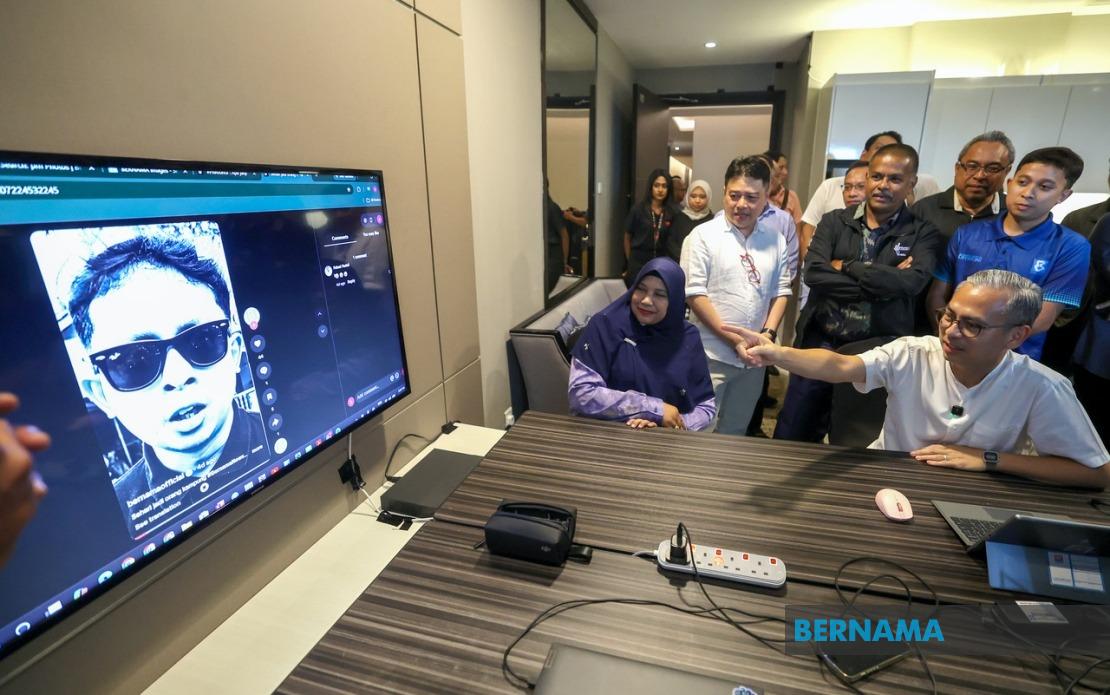
Communications Minister Datuk Fahmi Fadzil has commended the Malaysian National News Agency (Bernama) for demonstrating strong institutional commitment during its coverage of the Johor state election, emphasizing the critical role independent media plays in informing voters during crucial electoral periods. Visiting the Bernama Operations Centre in Johor Bahru on July 7, Fahmi acknowledged the agency's efforts in ensuring citizens received reliable and thorough reporting throughout the election cycle, reflecting the government's recognition of quality journalism's importance in democratic processes.
During his inspection of the operations facility, Fahmi observed first-hand the coordination mechanisms that enabled Bernama to maintain comprehensive coverage across the sprawling southern state. The minister noted that a dedicated team of 44 personnel—comprising reporters, videographers, and photographers—had been deployed strategically to provide real-time updates from polling stations and campaign activities. This scale of deployment underscores the resource commitment required for serious election coverage, particularly in a state as geographically dispersed as Johor, where communities stretch from the southern peninsula's interior to coastal regions.
The operational scope of Bernama's assignment extended across Johor's entire territory, encompassing remote constituencies such as Endau in the interior and Tanjung Surat on the coast, while simultaneously maintaining coverage of the state's northern districts. This geographic breadth presented logistical challenges that required sophisticated coordination and pre-planning. The infrastructure supporting such operations—from communications technology to physical newsroom facilities—demonstrated the institutional capacity that national news agencies must maintain to fulfill their public mandate, even as media landscapes have shifted dramatically with digital transformation.
Fahmi specifically acknowledged the leadership of Bernama chief executive officer Datin Paduka Nur-ul Afida Kamaludin and editor-in-chief Arul Rajoo Durar Raj for orchestrating the preparation and logistical coordination essential to election coverage. The minister's emphasis on leadership reflected understanding that institutional news gathering depends fundamentally on editorial vision and operational discipline. By spending more than an hour at the facility engaging with journalists and technical staff, Fahmi signaled government-level recognition of the demanding nature of election reporting, where journalists work extended hours under pressure to verify information and meet publishing deadlines.
The Johor state election itself represented a significant democratic exercise, with 172 candidates competing for 56 state assembly seats. The polling date of July 11 made the preceding period critical for information dissemination, as voters required comprehensive background on candidates, party platforms, and policy positions to make informed choices. Early voting conducted on July 7 demonstrated the complexity of modern election administration, requiring media outlets to maintain simultaneous coverage of multiple voting phases and electoral activities across different locations.
Bernama's traditional role as Malaysia's national news agency carries particular significance in this context. As a government-owned institution, the agency operates under principles of public service journalism, tasked with providing factual reporting accessible throughout the country. During state elections, this responsibility becomes especially pronounced, as regional constituencies may have limited independent media infrastructure. The agency's deployment of substantial personnel and technical resources to Johor reflected this institutional responsibility to ensure that citizens, regardless of geographic location, could access election information.
The facilities reviewed by Fahmi represented substantial investment in infrastructure supporting contemporary news operations. Modern election coverage requires integrated platforms combining traditional newswire services, digital publishing, video production, and social media distribution. The operations centre functioned as a nerve centre coordinating these diverse output channels, enabling Bernama to serve multiple audience segments with varying media consumption preferences. This multi-platform approach has become essential as Malaysian media audiences increasingly access news through smartphones and online portals rather than exclusively through traditional print and broadcast channels.
Fahmi's visit and subsequent commendation carry implications for broader discussions about media independence and government-media relations in Malaysia. While acknowledging an institution's capability and commitment represented a routine ministerial function, the public nature of such recognition also communicated official expectations regarding journalistic standards during elections. The minister's emphasis on accuracy and comprehensiveness reflected democratic principles that electoral coverage should prioritize factual reporting over partisan advocacy, though distinctions between these approaches remain contested in Malaysian media discourse.
The election coverage also highlighted ongoing tensions in Malaysian journalism between resource constraints and coverage expectations. Independent news organizations frequently struggle with limited budgets and staffing, creating practical difficulties in matching Bernama's institutional capacity. The gap between national news agency resources and those available to private media outlets shapes information ecosystems, potentially affecting which stories receive sustained investigation and how thoroughly regional developments are covered. Fahmi's appreciation of Bernama's deployment thus implicitly acknowledged this resource disparity within Malaysian media.
Looking forward, the Johor election coverage model may establish precedents for future state and national polls. As Malaysia's electoral calendar includes periodic state elections and general elections affecting multiple jurisdictions simultaneously, questions about coordinating comprehensive national coverage become increasingly complex. Bernama's experience managing large-scale, multi-location reporting provides institutional knowledge relevant to these future exercises. The agency's demonstrated capacity to maintain operations across geographically challenging terrain while meeting contemporary publishing standards suggests that well-resourced, centrally coordinated news operations remain capable of fulfilling public information functions despite digital media disruption.
The appreciation conveyed by a government communications minister toward national news agency personnel also reflected institutional recognition of journalism's demands. Election coverage requires journalists to work long hours in challenging conditions while maintaining professional standards under pressure. Public acknowledgment of such commitment, particularly from senior government officials, contributes to broader professional recognition that journalism constitutes skilled labor deserving respect and support. This recognition matters particularly in Southeast Asian contexts where media freedom and professional autonomy sometimes face pressure, as explicit government appreciation for institutional competence and independence—when earned through genuine professional performance—reinforces norms supporting journalistic professionalism.

