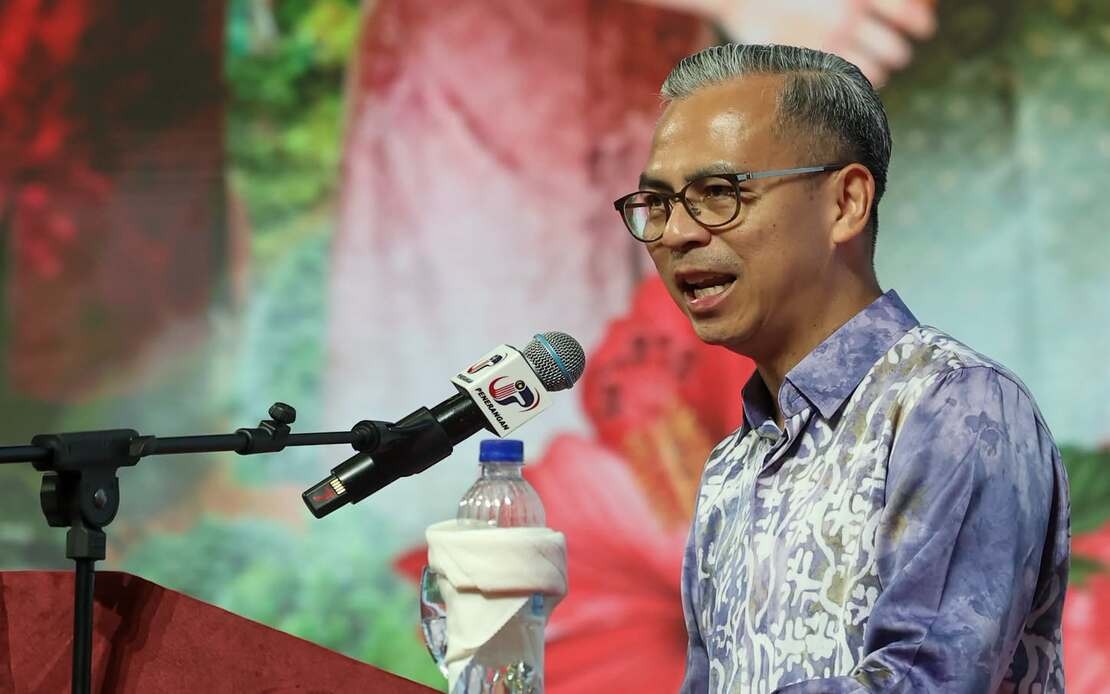
Communications Minister Datuk Seri Fahmi Fadzil has extended his congratulations to celebrated singer-composer Faizal Tahir following the unveiling of 'Aku Berjanji', the designated theme song for next year's National Day and Malaysia Day (HKHM) celebrations. The composition made its public debut during the formal launch of the 2026 National Month initiative and the accompanying Fly the Jalur Gemilang Campaign, which took place in Ipoh on July 19. Fahmi's endorsement underscores the government's emphasis on cultural expressions that resonate with themes of national pride and collective identity as Malaysia approaches its significant anniversaries.
In his public remarks, the minister highlighted the thematic resonance of Faizal Tahir's work, emphasizing how the song encapsulates messages centered on unity, togetherness, and patriotic devotion. The selection of such a composition for the official HKHM celebrations reflects a deliberate strategy to employ the universal language of music as a vehicle for reinforcing national cohesion and shared values. By championing a locally produced artistic work, the government signals its commitment to supporting Malaysian creative talent while simultaneously embedding deeper messages of social harmony into the national narrative surrounding Malaysia's founding milestones.
The campaign's inauguration by Prime Minister Datuk Seri Anwar Ibrahim has already generated considerable momentum and public engagement, according to Fahmi's assessment. The formal commencement of these festivities marks the beginning of an extended period during which Malaysians across diverse communities and regions are expected to participate in commemorative activities. The choice to premiere the theme song during this launch event demonstrates the interconnection between cultural programming and broader national celebrations, positioning music and artistic expression as integral components of official commemorative architecture.
Beyond celebrating the song itself, Fahmi issued a broader appeal to all Malaysians regarding the proper display and respect accorded to the national flag during this period. He encouraged citizens to exhibit the Jalur Gemilang with visible pride and to ensure that flags displayed in homes, offices, and public spaces meet appropriate standards of presentation and structural integrity. This emphasis on flag protocol reflects historical sensitivities around national symbols and the government's ongoing efforts to cultivate respectful civic behaviour among the population. The minister's intervention demonstrates how celebrations tied to national identity necessarily encompass practical dimensions of public conduct and communal responsibility.
In an era increasingly shaped by digital technologies and artificial intelligence capabilities, Fahmi extended his guidance to encompass the responsible use of generative AI platforms. He specifically cautioned social media users against employing artificial intelligence tools to create or manipulate images of the Jalur Gemilang, warning that such applications frequently produce representations containing technical or symbolic inaccuracies. These errors, he cautioned, risk diminishing the honour and dignity associated with Malaysia's most recognizable national emblem. This cautionary note reflects broader governmental concerns about how emerging technologies intersect with expressions of national identity, particularly given how rapidly AI-generated content circulates through digital networks and reaches millions of viewers instantaneously.
The government's preemptive guidance regarding AI usage and flag imagery reveals an understanding that technological advancement has fundamentally altered how national symbols are reproduced, distributed, and encountered in public discourse. Where previous generations encountered the Jalur Gemilang primarily through officially sanctioned channels and physical displays, contemporary digital natives encounter countless variations—some accurate, others distorted—through social media feeds and messaging applications. By articulating clear parameters around appropriate AI usage, the administration seeks to preserve the symbolic integrity of national icons whilst acknowledging the reality that regulation remains challenging in decentralized digital environments.
Faizal Tahir's selection as composer for this prominent national occasion reflects his standing within Malaysia's contemporary music landscape. The artist's previous body of work has consistently demonstrated an engagement with themes resonating across Malaysian society, establishing him as a culturally significant voice capable of articulating sentiments that transcend regional and communal boundaries. His appointment to this role therefore carries implicit recognition from cultural policymakers that artistic credibility and broad public recognition constitute valuable assets in national commemorative programming. The composition itself represents an investment in creating a unifying cultural artifact that will likely endure throughout the year-long festivities.
The timing of these initiatives places them within the broader context of Malaysia's ongoing nation-building discourse. As the country navigates contemporary political complexities and social divisions, official celebrations anchored around founding moments serve multiple functions simultaneously. They provide opportunities for collective reflection on shared history, facilitate public recommitment to national values, and create frameworks within which diverse communities can participate in synchronized expressions of belonging. The deliberate integration of original music compositions into this architecture demonstrates sophistication in understanding how artistic endeavour can serve nation-building objectives whilst maintaining genuine creative merit.
Looking forward, the 2026 HKHM celebrations promise to extend far beyond the premiere of Faizal Tahir's composition. The Fly the Jalur Gemilang Campaign represents an invitation for sustained, visible participation from ordinary Malaysians throughout the coming year, transforming individual acts of flag display into a collective performance of national identity. In combination with the official theme song, these elements create a multimedia framework through which national pride and cohesion receive both auditory and visual expression. The government's efforts to establish clear cultural boundaries—regarding AI usage, flag presentation, and symbolic respect—suggest an administration acutely aware that national celebrations function most effectively when underpinned by shared understanding of appropriate behaviour and shared reverence for foundational symbols.

