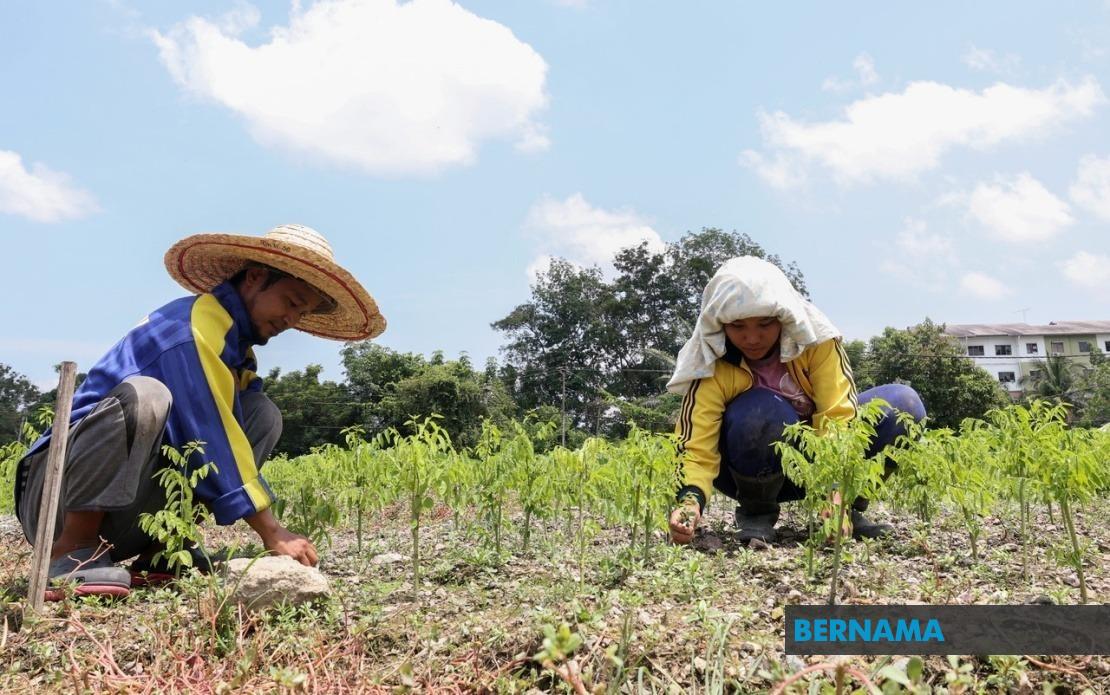
Sandakan and 16 other regions across Malaysia are grappling with an unprecedented heat wave that threatens agricultural livelihoods and economic stability in key farming communities. The Malaysian Meteorological Department (MetMalaysia) has elevated alert status across these zones following a sustained spike in maximum daily temperatures, signalling the severity of conditions that farmers and horticultural operators are now confronting daily.
The practical impact on farming operations has become immediate and tangible. Firyanus Salamba, a vegetable producer in Sandakan's Batu 7 area, describes a fundamentally altered cultivation schedule driven by environmental necessity. His crops—including okra, sweet shoots, and mustard greens—now require three daily watering cycles to maintain soil moisture, a departure from the single irrigation routine that sufficed during normal seasonal patterns. This intensified labour represents both increased operational costs and the underlying desperation to preserve crops against climatic stress.
Despite tripling irrigation frequency, Salamba reports that overall yield has contracted noticeably. The situation proves particularly acute for heat-sensitive varieties such as chilli, which struggle to germinate and mature under extreme thermal conditions. This indicates that mechanical solutions—simply adding more water—cannot fully compensate for the biological limits of crops facing environmental extremes. The phenomenon underscores a critical agricultural vulnerability as climate patterns shift.
MetMalaysia's framework for heat classification provides context for understanding severity levels. A Level 1 alert, categorised as cautionary, activates when an area experiences daily maximum temperatures between 35 and 37 degrees Celsius sustained for a minimum of three consecutive days. This technical threshold, while precise, translates into tangible hardship for producers whose crops operate within narrow temperature tolerance bands. The alert system functions as an early warning mechanism, yet it arrives only after dangerous conditions materialise.
The geographic distribution of affected zones reveals a pattern spanning both peninsular and East Malaysian territories. Peninsular Malaysia's 11 designated areas concentrate primarily in the eastern seaboard and central highlands—Larut and Matang, Kuala Kangsar, Kampar and Batang Padang in Perak; Kuala Krai in Kelantan; Kuantan, Raub, Temerloh and Pekan in Pahang; alongside Hulu Selangor and Gombak in Selangor. This clustering suggests that elevated terrain and interior regions experience particular thermal intensity during such episodes.
Sabah's vulnerability reflects acute impacts on East Malaysian agriculture. Five districts—Telupid, Tenom, Sandakan, Pitas and Beluran—face Level 1 conditions, positioning the state at the epicentre of heat-related agricultural stress within Malaysian Borneo. Sarawak experiences somewhat less severe circumstances, with only Marudi qualifying for alert status, yet even this single designation signals the expanding geographic footprint of extreme weather phenomena across the region.
Flower nursery operators report comparable production challenges, indicating that heat stress transcends commodity type and affects horticulture broadly. Nurseries managing ornamental plants must increase watering frequency to twice daily minimum to prevent wilting and bloom loss before flowers reach market maturity. The economics of floriculture—where visual perfection determines marketability—mean that any visible damage renders inventory unmarketable, creating pressure for preventive measures that escalate production expenses.
The cumulative economic implication extends beyond individual farm operations. Agricultural sectors in affected zones face reduced output precisely when supply constraints typically elevate prices, potentially creating food security tensions. Wholesale produce prices may spike, affecting household budgets across Malaysia and potentially creating inflationary pressure in food-related consumer price indices. The timing of such episodes during peak growing seasons compounds the disruption.
Climate dynamics increasingly position heat waves as recurring rather than exceptional events across Southeast Asia. For Malaysian policymakers and agricultural planners, this developing pattern necessitates systematic adaptation strategies—crop variety selection favouring heat resilience, irrigation infrastructure capable of delivering more water during critical periods, and potentially crop insurance mechanisms that insulate farmers from complete revenue collapse during thermal extremes. Without proactive intervention, agricultural communities face cyclical crises that undermine both rural incomes and national food self-sufficiency.
The current episode affecting Sandakan and neighbouring zones represents both immediate crisis and broader cautionary signal. Farmers managing daily operational responses today confront longer-term uncertainties about whether traditional cultivation methods remain viable under shifting climate baselines. MetMalaysia's alert system provides notification of danger, yet the agricultural sector requires more comprehensive preparation strategies to transform environmental awareness into genuine resilience against thermal stress that appears increasingly normalised within tropical and subtropical Malaysia.

