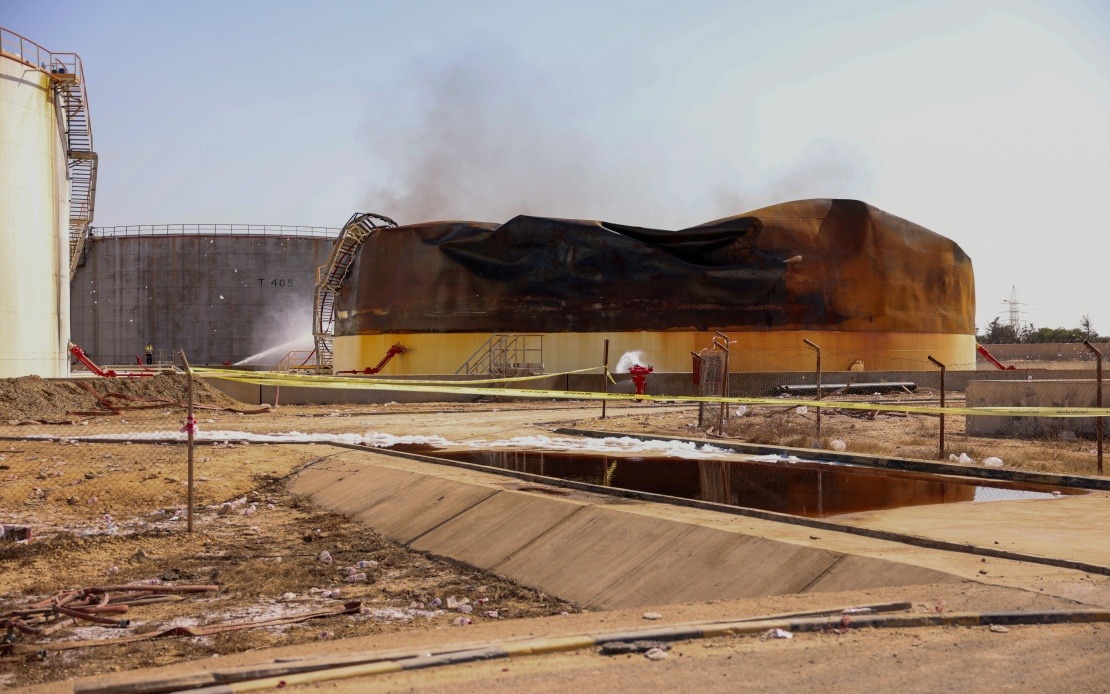
A significant explosion near the Zawiya power plant in western Libya has severely damaged the facility's operational capacity, forcing the shutdown of several generation units and exacerbating an already fragile electricity supply across the country. According to the state-owned General Electricity Company of Libya (GECOL), the incident occurred on Saturday and has triggered immediate restoration efforts to stabilise the national grid. The incident underscores the vulnerability of Libya's critical energy infrastructure and the broader security challenges facing the oil-rich nation as it attempts to rebuild its institutions following years of conflict and political division.
GeoCOL teams have mobilised to investigate the circumstances of the explosion, though initial technical details remain unclear. The company stated that work is underway to determine the precise cause of the incident and to establish which generation units require repair or replacement. In a statement to the public, GECOL acknowledged the disruptions and expressed confidence that electricity service would be restored to normal levels in the near term, contingent on successful completion of restoration work. The utility has apologised to citizens for the resulting blackouts and intermittent power supply, assuring stakeholders that teams would remain engaged until the electrical grid achieves full operational stability.
This latest incident arrives just days after a series of drone attacks targeted Zawiya's critical infrastructure on multiple fronts. The earlier strikes, which occurred approximately one week prior, inflicted damage on oil storage facilities, desalination plants, and additional power infrastructure in the region. These coordinated attacks have raised alarm among Libyan officials and international observers regarding the security posture of essential assets in Zawiya, a strategically important coastal city. The succession of incidents suggests a pattern of targeting vital systems that underpin economic activity and public welfare, though the identity of those responsible remains unknown.
Security analysts have pointed to Libya's precarious geopolitical position as a likely backdrop for the escalating attacks. The country remains fragmented between competing power centres, with limited state capacity to protect infrastructure across vast territorial expanses. The absence of a credible attribution for either the drone strikes or the power plant explosion raises questions about whether state actors, non-state armed groups, or international players may be involved. Investigators have launched formal inquiries to trace the origin of the drones used in the earlier attacks and to identify perpetrators, though such investigations in Libya's unstable environment often face significant obstacles.
The impact of the Zawiya power plant disruption extends beyond simple electricity rationing. For Malaysia and other Southeast Asian nations monitoring regional stability and energy markets, Libya's deteriorating infrastructure security holds relevance to broader discussions about supply chain resilience and geopolitical risk. Libya remains a significant global oil and natural gas producer, and repeated attacks on energy facilities risk further constraining international supplies and elevating global commodity prices. Additionally, the instability could accelerate migration pressures toward North Africa's Mediterranean coastline, creating humanitarian and security ripple effects across the Middle East and into Europe.
The systematic targeting of desalination facilities alongside power plants and oil infrastructure suggests a campaign designed to create cascading failures across multiple sectors. Water and electricity are fundamental to civilian welfare, and their simultaneous disruption amplifies social hardship and can destabilise governance structures. Zawiya's population depends on desalination for freshwater supplies given Libya's arid climate and existing water scarcity. Any prolonged outage in desalination capacity could trigger humanitarian concerns and public discontent that undermines whatever authority local and national administrators retain.
Libya's electricity sector was already struggling prior to these recent attacks. Years of civil conflict have degraded power generation capacity, transmission infrastructure, and maintenance capabilities across the country. The national grid routinely experiences blackouts, rolling shutdowns, and uneven service distribution. Citizens and businesses have adapted to chronic electricity shortages through reliance on private generators and alternative power sources, but such solutions remain expensive and environmentally problematic. The fresh damage at Zawiya further compounds these underlying systemic weaknesses, pushing the recovery timeline further into the future.
Government authorities have not publicly identified suspects or disclosed whether they possess evidence linking the attacks to specific actors. The absence of claimed responsibility by militant groups, despite the sophistication demonstrated by drone operations, suggests possible state-level involvement or the involvement of parties who prefer operational secrecy. International attention has focused on external powers potentially seeking to destabilise Libya or influence its political trajectory, though domestic factions cannot be ruled out. The timing of the incidents and their targeting precision indicate planning and technical capability that exceeds typical insurgent capacity.
GECOL's restoration efforts will likely prove protracted given the extent of damage and Libya's constrained technical and financial resources. Spare parts for power generation equipment may prove difficult to source given international sanctions concerns and Libya's fractured state capacity for procurement. The company must balance immediate repairs to restore supply with longer-term investments in hardening facilities against future attacks. International partners, including neighbouring countries and multilateral development institutions, will probably be called upon to support reconstruction efforts, though political divisions within Libya complicate coordination.
The incidents at Zawiya represent a troubling indicator for Libya's trajectory toward stability and institutional rebuilding. Rather than consolidating gains and expanding service provision, the state finds itself defending critical assets against attack whilst simultaneously attempting to improve deteriorated infrastructure. For regional observers in Southeast Asia tracking governance challenges and infrastructure vulnerability in fragile states, Libya's experience provides cautionary lessons about the compounding effects of political fragmentation, weak state capacity, and security threats to essential services. The path toward functional electricity provision and secure infrastructure in Libya remains protracted and uncertain.

