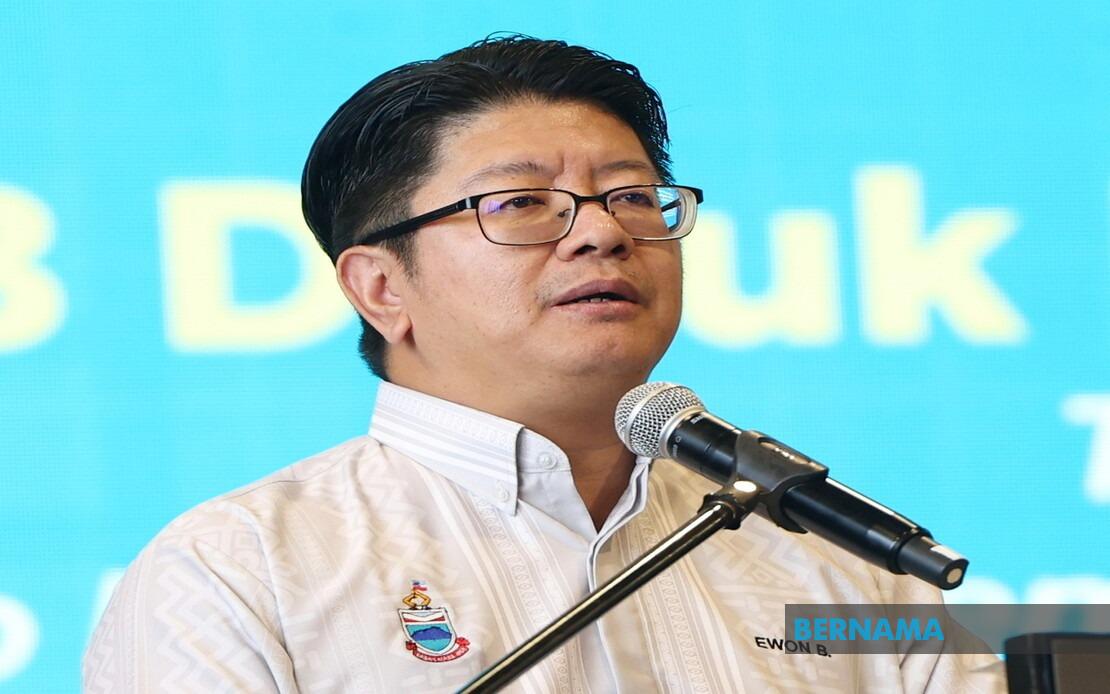
Datuk Ewon Benedick and Datuk Donald Peter Mojuntin have secured another three-year mandate as president and deputy president of the United Progressive Kinabalu Organisation, with both positions going uncontested during the party's 17th triennial delegates conference held in Penampang on August 10. The outcome reflects a degree of consensus within UPKO's ranks, with no rival candidates emerging to challenge the incumbents in what could have been a closely watched race given the party's role within the broader Gabungan Rakyat Sabah coalition.
The election also saw five vice-presidential positions remain unchanged, with Jairaiaz Joseph, Datuk Wong Thien Fook, Datuk Pangiran Lalung, Datuk Basari Sarikun, and Datuk Dr Laurentius Nayan Ambu retaining their seats on the party's highest decision-making body. This wholesale continuity at the top suggests that delegates viewed the current leadership team as effective stewards of the party's interests, particularly as UPKO navigates its responsibilities within the state coalition framework that also includes other component parties.
In his closing remarks to delegates, Ewon acknowledged the significance of the electoral process while emphasising that internal democracy ought to serve unity rather than division. He characterised the election outcome as validation of the party's collective vision, noting that all members—regardless of whether their preferred candidates won office—remain integral to UPKO's future trajectory. This rhetorical approach attempted to reassure potential detractors that the party hierarchy respected the participatory dimension of democratic governance, even though the absence of contested races meant delegates had limited choice at the ballot box.
The new leadership cohort faces immediate responsibilities in representing UPKO's policy positions to the broader state government. Ewon highlighted that party leaders and elected representatives would bear the duty of articulating UPKO's resolutions through formal channels, both within the state legislative assembly and in Parliament for those holding federal seats. This emphasis underscores the practical function of party leadership beyond symbolic representation—UPKO's leaders must serve as conduits between grassroots membership and governance structures at multiple administrative levels.
Particularly significant is Ewon's specific reference to Sabah Chief Minister Datuk Seri Hajiji Noor as GRS chairman. This acknowledgement clarifies the hierarchical relationship between UPKO and the larger coalition framework, suggesting that UPKO's strategic priorities will be filtered through discussions with Hajiji's administration. For Malaysian observers, this dynamic illustrates how component parties within multiparty coalitions must balance autonomous decision-making with the practical necessity of aligning positions with coalition partners controlling executive authority.
While the apex leadership faced no opposition, several UPKO party wings experienced meaningful transitions. The Youth wing elected Carlye Lajimin as chief and Newbaxter Tibin as deputy chief, marking a generational shift in how the party engages younger constituencies in Sabah. The Women's wing demonstrated mixed outcomes, with incumbent Mohina Sidom retaining the top post while welcoming Lomiti Jahan as her newly elected deputy. These auxiliary organisations serve crucial functions in party mobilisation, particularly during election campaigns and in building grassroots support networks across constituencies.
The Young Generation wing also underwent leadership changes, with Emmanuel Atin elected chief and Alison Chan taking the deputy chief position. The creation of separate youth and young generation wings reflects UPKO's recognition that different age demographics require tailored engagement strategies. These younger-oriented structures potentially position UPKO to address concerns specific to students, early-career professionals, and families, demographics that increasingly influence electoral outcomes in Malaysian politics.
The uncontested nature of the main leadership positions may signal either broad satisfaction with incumbent performance or alternatively, a degree of intra-party consensus that forestalls competition. For a party of UPKO's scale operating within Sabah's complex political ecosystem, such stability could be advantageous in maintaining coherence during coalition negotiations and in presenting unified messaging to voters. Conversely, some observers might view the absence of contested races as indicative of limited internal debate or democratic engagement, particularly if leadership positions are determined through informal consensus rather than vigorous campaigning.
UPKO's positioning within GRS carries particular significance for understanding state-level politics. As a component party in a coalition that has dominated Sabah governance, UPKO must simultaneously maintain distinct party identity whilst demonstrating commitment to broader coalition objectives. The leadership's tenure through 2029 encompasses a full state election cycle, providing stability for long-term strategic planning but also potentially limiting opportunities for course correction should electoral circumstances shift unfavourably.
The conference's outcomes reflect patterns increasingly visible in Malaysian coalition politics, where internal party elections often serve validating functions for existing leadership rather than mechanisms for fundamental renewal. Whether this approach strengthens UPKO's political efficacy or eventually undermines internal engagement remains to be evaluated through electoral performance and the party's capacity to influence policy outcomes within the state administration. The next triennial conference in 2029 will reveal whether the current leadership successfully consolidated power and delivered meaningful results for party members and constituents.

