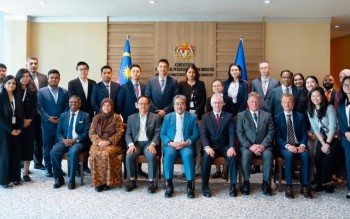
A significant European business delegation concluded a three-day engagement with Malaysian government officials on 6 August, signalling intensified efforts to deepen economic ties between the continent and Southeast Asia's third-largest economy. The visit brought together more than 25 European companies and over 70 delegates from the EU-ASEAN Business Council, reflecting the strategic importance both sides place on strengthening their economic partnership during a period of regional realignment and global supply chain diversification.
Chris Humphrey, executive director of the EU-ASEAN Business Council, highlighted that the delegation's extensive meetings with key ministries and agencies provided a direct forum to understand Malaysia's policy direction while simultaneously demonstrating European commitment to supporting the country's transformation agenda. The visiting executives secured detailed briefings on Malaysia's reform initiatives and gained clarity on regulatory frameworks affecting business operations—a critical concern for multinational corporations contemplating significant capital deployment in the region. These high-touch interactions underscore a recognition among European business leaders that navigating Malaysia's regulatory landscape and building relationships with decision-makers remains essential for unlocking long-term commercial opportunities.
The delegation's agenda reflected three interconnected priorities reshaping Malaysia's economic trajectory. At the Economy Ministry, discussions centred on Malaysia's reform packages and its commitment to environmental sustainability, with particular emphasis on circular economy development and digital transformation. These conversations revealed European companies' growing appetite to participate in Malaysia's green transition, positioning them as potential partners in achieving decarbonisation targets and sustainable manufacturing practices. Such alignment matters increasingly as European corporations face mounting pressure from investors and regulators to demonstrate environmental credentials across their global operations.
Financial and investment climate discussions at the Finance Ministry revealed an encouraging reception for European capital, covering taxation structures, government procurement pathways, and the broader attractiveness of Malaysia as an investment destination. Deputy Finance Minister Liew Chin Tong and other officials presented a positive outlook on Malaysia's economic fundamentals, underscoring the country's resilience and growth prospects. These detailed financial discussions provide the technical foundation necessary for European firms to evaluate medium-term expansion strategies and commit resources to Malaysian operations with greater confidence.
Customs and trade facilitation emerged as a significant focus area, reflecting practical concerns affecting supply chains and operational efficiency. The delegation plans to engage with the Royal Malaysian Customs Department to advance customs digitalisation and expedite clearance procedures—bottlenecks that increase costs and reduce competitiveness. Notably, European businesses also committed to collaborating with Malaysian authorities in combating illicit tobacco trade, a persistent challenge affecting government revenues and public health. This willingness to address enforcement issues demonstrates that European investors view their presence in Malaysia as entailing shared responsibility for addressing structural economic problems.
Healthcare partnerships represent an emerging dimension of Malaysia-Europe cooperation, with European pharmaceutical and medical device companies exploring opportunities to address Malaysia's evolving healthcare needs. Discussions encompassed innovative financing mechanisms for healthcare provision, medicine availability, and self-care promotion—areas where European expertise and capital could materially enhance Malaysian service delivery. As Malaysia's population ages and healthcare spending pressures mount, European partners position themselves as solutions providers rather than mere vendors, potentially creating longer-term interdependencies beneficial to both economies.
The delegation's confidence in Malaysia's investment attractiveness rested on several structural advantages articulated during discussions: the country's geographic centrality within Southeast Asia, sophisticated infrastructure and logistics networks, a relatively skilled workforce, natural resource endowments, and available land for expansion. These factors, Humphrey noted, distinguish Malaysia from other ASEAN competitors and justify European companies' consideration of Malaysia as a regional hub for manufacturing, distribution, or service operations. The emphasis on infrastructure and connectivity proves particularly timely given regional developments, including port expansions and digital infrastructure investments that enhance Malaysia's competitive positioning.
The most significant outcome of the delegation's visit concerns momentum surrounding Malaysia-EU free trade agreement negotiations. Both sides are targeting finalisation by 2027, with the fifth round of negotiations scheduled for 21-25 September in Brussels and potentially a sixth round before year-end. Having completed four rounds already, the negotiating teams have demonstrated sufficient progress to justify optimism about concluding an agreement within the specified timeframe. For Malaysia, such an FTA would provide preferential access to a wealthy market of over 400 million consumers and lock in investment commitments from European firms seeking tariff advantages. For the EU, a deal deepens its strategic presence in Southeast Asia and diversifies its economic relationships beyond China and the United States.
The current intensity of bilateral economic engagement reflects the substantial scale of existing Malaysia-EU commercial ties. Bilateral trade in goods reached €48.9 billion in 2025, with Malaysia exporting €30.3 billion and importing €18.6 billion of EU products. European investors had accumulated €33.1 billion in direct investment stock in Malaysia by 2024, underscoring the depth of European corporate presence across manufacturing, finance, technology, and services sectors. These figures represent foundational relationships that the current delegation visit sought to expand and deepen.
The timing of this European business engagement carries strategic implications for Malaysia's broader economic positioning. As geopolitical tensions between Western powers and China intensify, Malaysia increasingly attracts investment from companies pursuing supply chain resilience and geographic diversification strategies. European firms particularly seek alternatives to over-dependence on China for production, assembly, and logistics operations. Malaysia's value proposition—combining reasonable labour costs, stable governance, logistics advantages, and preferential trade access through ASEAN—makes it an attractive destination for European companies implementing such strategies.
Moreover, the focus on green transition and sustainability reflects a significant shift in European business priorities shaping global investment flows. European companies now routinely integrate environmental, social, and governance (ESG) criteria into capital allocation decisions, with many facing regulatory mandates requiring carbon footprint assessments across entire supply chains. Malaysia's demonstrated commitment to clean energy adoption, forest conservation, and circular economy principles aligns increasingly with these corporate requirements, potentially unlocking capital flows that might otherwise bypass the country for more visibly green alternatives.
The delegation's engagement with multiple Malaysian government agencies—spanning economy, finance, natural resources, energy transition, agriculture, transport, digital infrastructure, health, and tourism portfolios—signals that European companies view Malaysia as offering diversified investment opportunities across numerous sectors rather than concentrating in narrowly defined industries. This sectoral breadth suggests sustained European interest in Malaysia's long-term development trajectory and multilinear economic growth rather than opportunistic investment chasing temporary advantages.
As Malaysia navigates its own development transition—balancing growth imperatives with sustainability commitments while managing fiscal pressures and debt dynamics—the European business delegation's enthusiasm for deeper partnerships offers tangible pathways for capital mobilisation and technology transfer. Success in concluding the Malaysia-EU free trade agreement would represent a capstone achievement for this engagement, transforming bilateral economic relationships into an institutionalised framework supporting decades of mutually beneficial commerce and investment.

