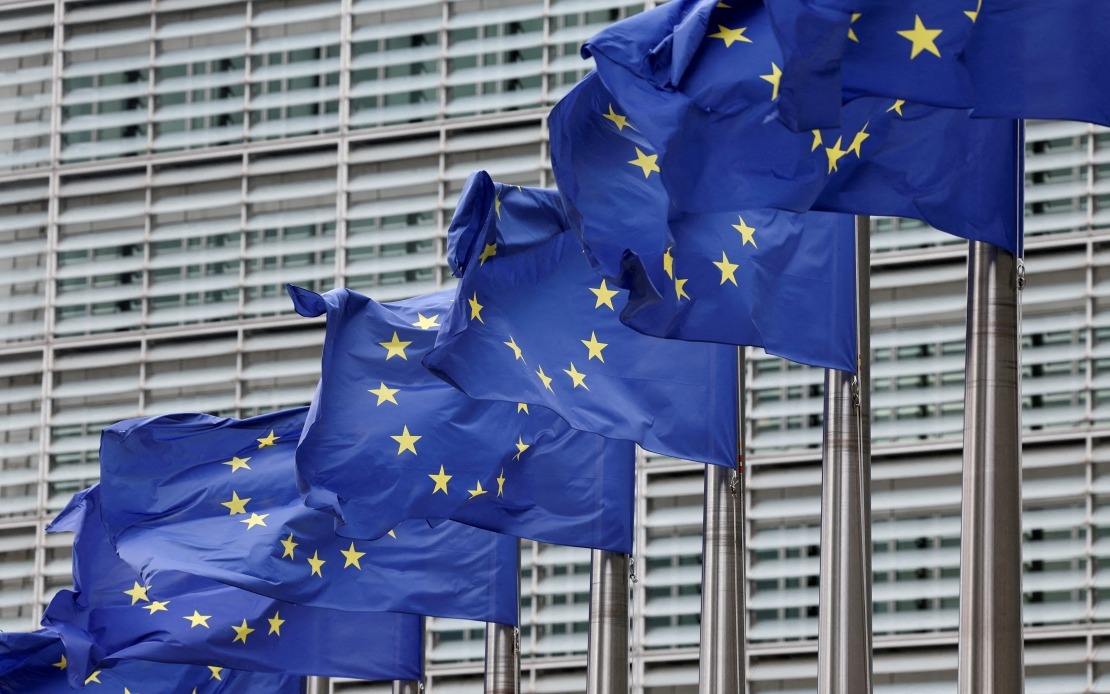
European Union foreign ministers convened in Brussels on Monday to address escalating tensions in West Asia, with particular focus on whether the bloc should intensify economic pressure on Israel through fresh sanctions targeting settlement expansion in the occupied West Bank. The gathering highlighted the EU's persistent struggle to forge unified external policy positions on one of the Middle East's most contentious issues, revealing the fundamental contradictions that persist among the 27 member nations when navigating geopolitical complexities in the region.
The European Commission had prepared an extensive menu of potential measures for discussion, ranging from selective trade restrictions to comprehensive import bans on goods and products originating from Israeli settlements. These options were designed to provide flexibility in negotiations, allowing member states to select approaches aligned with their diplomatic postures and economic interests. The preparatory work underscored the Commission's attempt to facilitate consensus-building by presenting graduated responses rather than a single predetermined course of action.
However, the fundamental challenge facing European policymakers remains the deep ideological and strategic divide within the bloc. Spain, Ireland, and Belgium have emerged as vocal advocates for imposing stringent penalties on Israel, arguing that settlement expansion violates international law and undermines prospects for lasting peace. Conversely, Germany and several other member states have consistently resisted such measures, citing concerns about the effectiveness of sanctions and the potential for unintended diplomatic consequences. This fault line reflects broader differences in how EU nations perceive their responsibility to the Israeli-Palestinian conflict and their strategic relationships in the Middle East.
The procedural mechanics governing EU decision-making on this matter add another layer of complexity to the deliberations. Should the proposed trade restrictions be formally classified as foreign policy sanctions under the EU's common foreign and security policy framework, adoption would require unanimity among all 27 member states—a threshold that remains virtually insurmountable given current positions. This unanimity requirement has historically served as a veto mechanism, allowing even a single dissenting state to block collective action. The alternative pathway involves treating such measures as commercial policy, which would require only a qualified majority comprising 15 of the 27 member states that collectively represent at least 65 percent of the EU's total population. This distinction has profound implications for whether the bloc can move forward independently of its most reluctant participants.
Beyond the Israeli settlement question, the Brussels gathering addressed multiple critical security matters demanding immediate attention. Ministers were expected to deliberate on developments concerning Iran, recognizing the regional implications of tensions involving Tehran and its various actors. The meeting also featured substantial discussion of Russia's ongoing military operations in Ukraine, reflecting the EU's sustained commitment to supporting Kyiv despite the prolonged nature of the conflict. These overlapping crises demonstrate how West Asian and Eastern European security challenges increasingly intersect within European strategic thinking.
Regarding Ukraine specifically, ministers were anticipated to reach agreement on implementing additional sanctions targeting Russian individuals, corporate entities, and government organizations involved in prosecuting the war. Such measures represent the EU's primary mechanism for exerting economic pressure on Moscow in the absence of military intervention. Nevertheless, significant uncertainty persisted about whether the bloc could construct and enforce a comprehensive new sanctions package incorporating broad trade restrictions. The technical and political complexities of designing effective economic measures that minimally disrupt EU economies while maximizing leverage on Russia create substantial coordination challenges.
Ukrainian Foreign Minister Andrii Sybiha received an invitation to participate in informal consultations with the EU ministers, reflecting Kyiv's central position in European security architecture. Ukraine's presence at such discussions signals the EU's recognition that Ukrainian perspectives should inform European strategic deliberations, particularly regarding sanctions regimes and military support frameworks. This inclusion acknowledges the direct stakes Ukraine holds in decisions affecting European security policies and the broader geopolitical environment shaping the conflict's trajectory.
For Malaysian and Southeast Asian observers, the EU's internal divisions on Israeli settlements carry important implications for understanding how Western powers navigate contentious Middle Eastern issues. The spectacle of a bloc comprising wealthy democracies struggling to achieve consensus demonstrates the structural challenges inherent in multilateral foreign policy coordination, even among nations sharing broadly similar values and institutional frameworks. This experience offers instructive lessons for regional groupings like ASEAN, which similarly confront the tension between collective decision-making and individual member state autonomy.
Moreover, the EU's deliberations reflect a broader recalibration of European Middle East policy occurring amid shifting geopolitical alignments. The inability to construct consensus on Israeli settlements suggests that traditional Western diplomatic approaches may be losing efficacy in shaping regional outcomes. As China and Russia expand their influence throughout West Asia, European policymakers face mounting pressure to demonstrate relevance and effectiveness in areas once dominated by Western diplomacy. The settlement question thus represents not merely a bilateral Israeli-Palestinian matter but a test of European political cohesion and strategic credibility in an increasingly multipolar world.
The outcome of these Brussels discussions would likely establish parameters for European engagement on Israeli-Palestinian matters throughout the coming months. Whether the EU ultimately advances unified action or allows fragmentation to prevail carries symbolic weight extending beyond immediate policy implications. A coherent response would reinforce the bloc's self-perception as a meaningful actor on global issues; conversely, continued division would further cement perceptions that European foreign policy lacks the capacity to influence outcomes on contested international matters. For regional actors observing from Southeast Asia and beyond, the results would offer clarity regarding the EU's reliability as a diplomatic counterweight to other global powers shaping Middle Eastern affairs.

