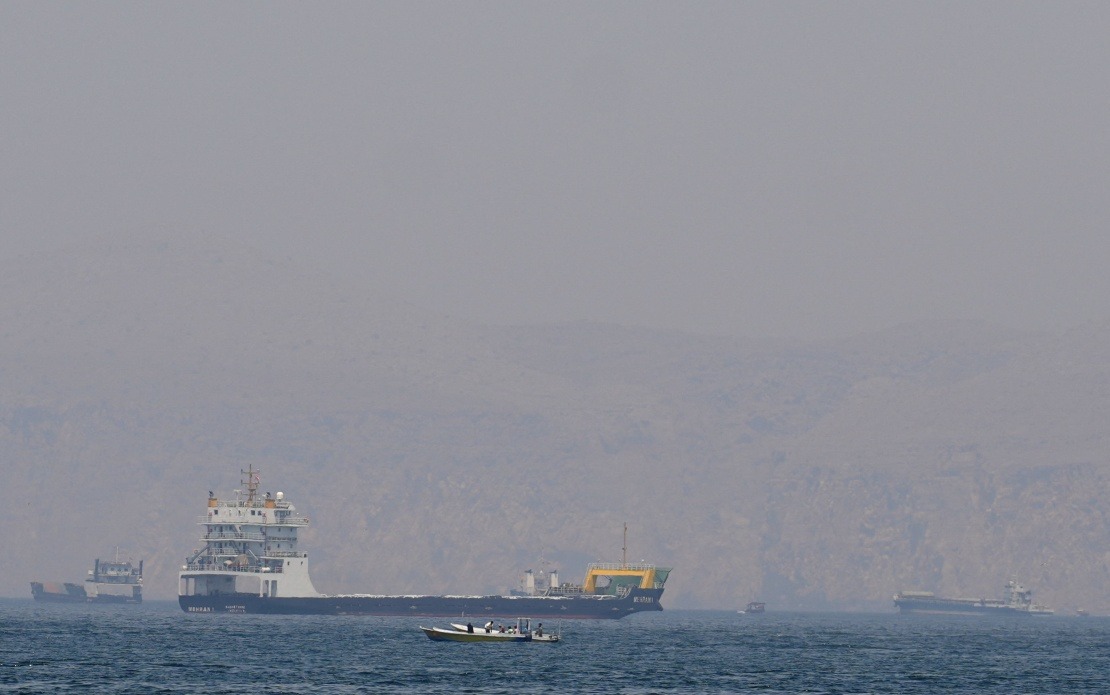
The European Union and the Gulf Cooperation Council have issued a forceful rebuke to any state asserting control over the strategically vital Strait of Hormuz, declaring such claims fundamentally incompatible with established international maritime law. In a joint statement released following diplomatic talks, the two regional blocs unequivocally stated that no nation may unilaterally impose sovereignty or regulatory authority over the waterway, which serves as one of the world's most critical shipping lanes.
The statement emerged from a high-level security forum convened in Brussels earlier this month, bringing together EU foreign policy leadership and senior representatives from the Gulf states through the GCC's ministerial structure. The forum provided a platform for the two blocs to coordinate their positions on maritime security challenges affecting the region, particularly those threatening commercial and civilian vessels navigating through this chokepoint linking the Persian Gulf to the wider Indian Ocean. This alignment between Europe and the Gulf states underscores the international significance of maintaining stable passage through the strait, which underpins global energy supplies and trade flows affecting economies far beyond the Middle East.
Both sides grounded their position firmly in the UN Convention on the Law of the Sea, the internationally recognised framework governing maritime rights and responsibilities. Under this legal instrument, the passage of ships through international straits is an inviolable right extended to all nations equally, regardless of their geopolitical standing or bilateral relationships with littoral states. The joint declaration explicitly rejected any bilateral arrangements, memoranda, or informal understandings that purport to restrict navigation or impose conditions such as permits, tolls, or service charges on international shipping. This principle holds particular relevance for Malaysia and other Southeast Asian nations dependent on reliable maritime corridors for their trade and energy security.
Central to the EU-GCC statement was a sweeping condemnation of Iranian military actions targeting commercial vessels and regional territories. The two blocs characterised these attacks as grave violations of international maritime law and explicit breaches of UN Security Council Resolution 2817, which mandates freedom of navigation and prohibits interference with shipping. By framing these incidents as attacks on the fundamental rights of all maritime users, rather than isolated bilateral disputes, the EU and GCC sought to establish a unified international position against destabilising military escalation in the region. The language employed—describing attacks as endangering both civilian lives and seafaring crews of all nationalities—reflected an attempt to transcend narrow national interests and appeal to universal principles of maritime safety.
The statement called directly on Iran to halt all military operations threatening vessels in the strait and to cease broader interference with maritime navigation. Significantly, the EU and GCC demanded that Iran maintain the Strait of Hormuz as an open passage without conditions of any kind, explicitly rejecting any possibility of transit fees or service charges. This demand carried unmistakable implications: such mechanisms could function as disguised toll systems that would effectively enable one nation to extract economic rent from the global shipping community while fragmenting the legal framework underpinning free navigation.
The joint position articulated a principle of collective security for maritime interests, asserting that threats to the strait's safety transcend bilateral concerns and affect all states dependent on this waterway. The statement emphasised that disruptions to one nation's shipping security represent threats to the broader international community, thereby establishing a basis for coordinated multilateral response. This framing proved strategically significant because it positioned freedom of navigation not as a particular interest of Western powers or Gulf allies, but as a universal right with consequences extending across the Indo-Pacific region, including Southeast Asia.
Despite the firm rhetorical stance, the EU and GCC simultaneously called for dialogue, restraint, and diplomatic resolution to the underlying crisis. This apparent tension—combining uncompromising demands for maritime freedom with appeals for peaceful negotiation—reflected the delicate diplomatic balance required when managing escalating regional conflicts. The two blocs expressed solidarity with nations affected by attacks and extended this support to seafaring personnel of all countries placed at risk, broadening the constituency affected by instability in the waterway.
The High-Level Forum represented an unusual convergence of European and Gulf state interests at a moment of significant Middle East tensions, where the United States and Iran have engaged in tit-for-tat military operations. The inclusion of Bahrain's foreign minister as GCC chair and the EU's lead diplomat demonstrated the diplomatic weight attached to this initiative. However, the statement's effectiveness hinged on whether calls for restraint could gain traction amid escalating regional militarisation, particularly given that a Pakistan-brokered memorandum signed in June seeking conflict cessation appeared to have yielded limited practical results.
For Malaysia and other Southeast Asian maritime nations, the EU-GCC position carried significant implications for regional stability and commercial interests. Any sustained disruption to the Strait of Hormuz would inevitably reverberate through regional trade networks and energy markets, affecting economies far beyond the immediate conflict zone. The joint statement's emphasis on international law and collective security interests suggested a potential framework for broader regional consensus on maintaining open shipping lanes, though the extent to which such diplomatic declarations could translate into practical constraints on regional actors remained uncertain as tensions continued escalating.

