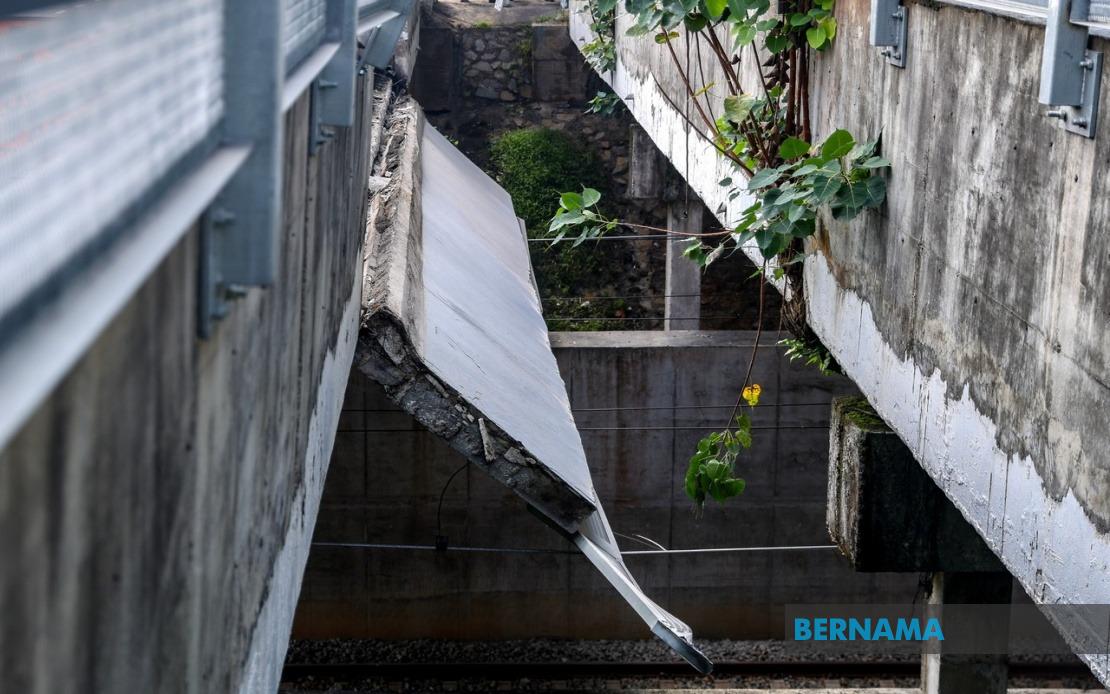
A disruption to Electric Train Service operations in Johor stemming from a lorry accident on the Kulai-Kempas Baru railway track forced Keretapi Tanah Melayu Berhad (KTMB) to implement alternative transport arrangements for thousands of commuters on August 6. The incident, which occurred when a heavy vehicle collided with infrastructure adjacent to the railway line, caused structural damage and triggered a power outage affecting the overhead line system that supplies electricity to the trains. Three scheduled ETS departures from JB Sentral Station were immediately halted, stranding passengers bound for destinations including Padang Besar, Kuala Lumpur, and Butterworth.
To mitigate the travel disruption, KTMB activated an emergency shuttle bus protocol, positioning coaches at both JB Sentral and Kempas Baru stations to transport affected passengers directly to Kulai Station. From there, travellers were able to resume their journeys by train to their final destinations. This workaround strategy allowed the company to maintain partial service continuity while addressing the track closure, though it inevitably added time and inconvenience to passenger itineraries. The decision to deploy shuttle services rather than cancel services entirely reflected KTMB's commitment to minimising disruption to the broader transport network along this important north-south corridor.
The three ETS services impacted were route 9442 serving Padang Besar, route 9524 to KL Sentral, and route 9326 heading towards Butterworth. Each had departed from JB Sentral when the incident was detected, creating a cascading effect across the schedule. In parallel, the Shuttle Selatan bus service, which provides local connectivity in the southern region, experienced partial suspension. While the Pasir Gudang and Kempas Baru loops continued operating normally, the Kulai-Kempas Baru circuit was taken offline entirely due to the track closure.
At the heart of the restoration challenge lay a section of fallen concrete parapet that had made contact with the overhead line system on both railway tracks. This structural element, likely part of the bridge or track infrastructure, necessitated careful removal to restore full electrical functionality. KTMB coordinated with the responsible haulage operator, Transmare-Chemie (M) Sdn Bhd, to secure the heavy lifting equipment required for the task. As of the morning notification, the company indicated that the 120-tonne crane needed for the operation had not yet been confirmed available, pushing the anticipated start time for removal works to approximately 10 am.
The restoration timeline remained fluid, contingent upon multiple factors beyond simple mechanical removal. Once the crane lifted and cleared the damaged concrete structure, KTMB engineers would need to conduct comprehensive technical inspections of both the track bed itself and the complete overhead line system. Safety certification was non-negotiable—the railway operator emphasized that services would only resume after all components had been formally approved for operation. This methodical approach reflected lessons learned from previous railway incidents across the region, where premature reopening had occasionally led to further problems or safety risks.
The incident highlighted the vulnerability of rail infrastructure to accidents involving vehicles in proximity to the tracks. The original triggering event, occurring the previous day, involved a lorry carrying flammable liquid that had skidded near the railway line, causing the initial power disruption. The escalation from a near-miss to an actual structural impact underscored the importance of maintaining adequate safety barriers and buffer zones around active rail corridors, a consideration for transport planners across Southeast Asia where road and rail networks often run in close proximity through populated and industrial areas.
For passengers who chose not to await restoration and resumption of normal train service, KTMB offered a full refund without penalty. Staff stationed at affected terminals were authorized to process these cancellations and provide additional assistance to frustrated travellers. This customer-centric response acknowledged that some passengers, particularly those with time-sensitive business or personal commitments, could not absorb the additional travel time imposed by the shuttle bus arrangement. The refund option thus balanced operational necessity with passenger welfare considerations.
The Kulai-Kempas Baru section of the railway network serves as a critical component of the southern transport corridor linking Johor Bahru with destinations further north. Disruptions to this section ripple outward, affecting commuters, freight operations, and regional connectivity. The incident occurred during what would normally be peak morning travel hours, maximizing the number of affected passengers. For Malaysian rail users and the broader transport community, the episode reinforced both the importance of reliable train infrastructure and the need for robust contingency planning when disruptions do occur.
KTMB's coordination with multiple stakeholders—the crane operator, Transmare-Chemie, and technical inspection teams—demonstrated the complexity of restoring a critical transport artery. The interdependencies between equipment availability, weather conditions, and engineering procedures meant that even with optimal cooperation, several hours could elapse between incident detection and full service restoration. This reality underscores the importance of preventative maintenance, proactive safety protocols, and continued investment in modern rail technology across the region.
The incident also highlighted communication challenges inherent in transport emergencies. Passengers relying on the affected ETS services needed timely, accurate information about their options—shuttle buses, refunds, and expected restoration timelines. KTMB's public statements provided these details, yet the fluid nature of the restoration work meant that estimates could shift. Such situations test the effectiveness of real-time passenger information systems and the clarity of staff training in managing public expectations during service disruptions.
As the restoration work progressed, KTMB maintained its commitment to comprehensive safety validation before reopening the track. The deliberate, methodical approach reflected an understanding that another incident would compound the damage to public confidence in rail service reliability. For passengers and freight operators dependent on the southern corridor, the disruption was a reminder of both the indispensable role that rail transport plays in Malaysia's economy and logistics networks, and the ongoing need for infrastructure protection and incident prevention measures.

