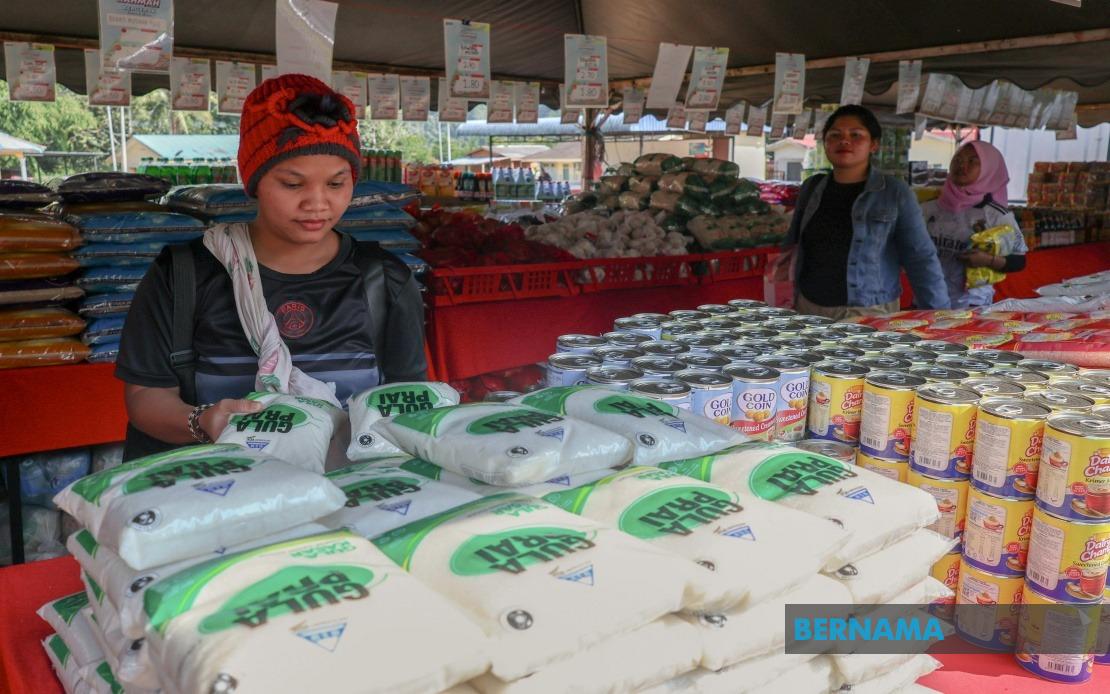
The Domestic Trade and Cost of Living Ministry has reported substantial progress in its bid to eliminate price disparities between urban and remote regions through the Essential Goods Distribution Programme, with controlled commodities now reaching rural communities at standardised rates. Since the programme's launch, essential items including sugar, wheat flour, packet cooking oil, white rice, liquefied petroleum gas, RON95 petrol and diesel have been distributed through a coordinated network designed to overcome the geographical and logistical barriers that historically inflated costs for isolated populations.
The structural challenge addressed by the initiative stems from the inherent inefficiencies of servicing dispersed rural markets. Before implementation, residents in these areas absorbed substantial markups simply to compensate for transport and distribution expenses. The Pulau Libaran zone in Sabah exemplifies the programme's impact: residents previously paid RM39 per cylinder for LPG, a figure that has now contracted to the controlled price of RM26.60 per cylinder. Similarly, packet cooking oil costs dropped from RM3.50 to the government-set price of RM2.50 per packet, representing meaningful savings for households spending limited disposable income on basic necessities.
The geographical scope of the programme reflects the uneven distribution of Malaysia's population across its vast terrain. An allocation of RM250 million for the current year supports 1.03 million residents across Sabah, Sarawak, Terengganu, Kelantan, Pahang and Kedah. This investment translates into physical infrastructure spread across 212 zones, 828 distribution areas and 1,532 points-of-sale designed to ensure that even the most remote communities maintain reliable access to price-controlled goods. The concentration of resources in certain states underscores varying levels of rural isolation and population density across the country.
Sabah alone commands substantial allocation given its vast geography and scattered population clusters. The state receives RM107.3 million from the annual budget, enabling the programme to function across 78 zones, 228 distribution areas and 587 sales points. This infrastructure reaches approximately 492,566 residents, demonstrating how the programme's logic of targeted investment aligns resources with demographic realities. Within Sabah, the Libaran constituency receives focused attention with RM1.76 million allocated specifically to serve 17,061 residents through eight distribution areas and nine points-of-sale.
Implementing price controls across dispersed geography requires robust institutional frameworks to prevent diversion and leakage. The ministry has established standard operating procedures governing the delivery chain and created Programme Monitoring and Coordination Committees operating at both national and state levels. These mechanisms address a persistent challenge in subsidy and price control regimes: ensuring that intended beneficiaries actually receive intended benefits rather than seeing supplies diverted to parallel markets where price differentials create arbitrage opportunities. The formal governance structure reflects lessons learned from previous distribution initiatives across Southeast Asia.
Assessing whether the programme achieves its social objectives extends beyond examining price reductions. The Programme Outcome Evaluation Committee has surveyed beneficiary perceptions, finding that most respondents confirmed the initiative directly alleviates living cost pressures. Importantly, surveyed populations express desire for programme continuation, suggesting that the intervention addresses a genuine and persistent problem rather than providing ephemeral relief. This feedback proves crucial as policymakers evaluate whether to sustain or expand the initiative amid competing budgetary priorities.
For Malaysian policymakers, the programme represents a pragmatic middle path between universal price controls and market liberalisation. Rather than imposing national price caps that distort supply chains or abandoning rural populations to market forces, the targeted distribution approach concentrates government resources where geographical factors create persistent market failures. This philosophy carries implications for similar sectors and regions throughout Southeast Asia, where mountainous terrain, archipelagic geography or sparse population patterns generate comparable challenges.
The programme's effectiveness depends on maintaining political commitment and securing adequate annual funding. At RM250 million annually, the investment remains substantial but manageable within government budgets. However, as inflation erodes purchasing power and transport costs fluctuate with global energy markets, the allocation may require periodic increases to sustain price stability. Policymakers must weigh inflation pressures against fiscal constraints as the programme matures.
The Essential Goods Distribution Programme also reflects evolving approaches to managing cost-of-living concerns that dominate political discourse across Malaysia and the region. Rather than relying exclusively on monetary policy adjustments or broad-based subsidies, the targeted approach allows government to maintain price stability for vulnerable populations without creating economy-wide distortions. This selectivity matters increasingly as governments grapple with inflation, fiscal sustainability and distributional equity simultaneously.
Beyond immediate price stabilisation, the programme generates secondary benefits through its distribution network. The infrastructure supporting 1,532 points-of-sale creates commercial nodes that may catalyse broader rural development. Regular supply flows encourage retail activity and provide stable income opportunities for distributors and retail operators in marginal communities. These effects extend beyond the programme's explicit consumer price objectives.
The ministry's emphasis on monitoring and evaluation reflects international best practices in subsidy and intervention programme management. By systematically gathering beneficiary feedback rather than relying on assumption, policymakers obtain evidence needed to justify continued investment or identify necessary refinements. This data-driven orientation supports more informed policy adjustments as circumstances evolve.

