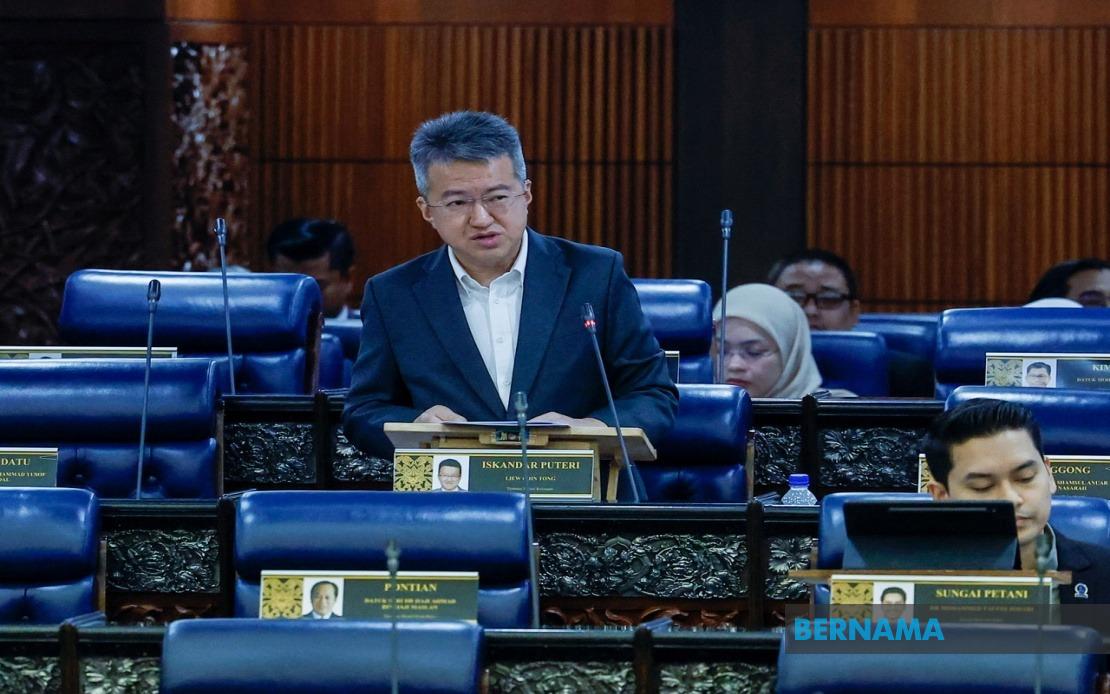
Malaysia's Employees Provident Fund has made tangible progress in helping older workers share their retirement wealth with family members through a relatively new initiative launched earlier this year. Deputy Finance Minister Liew Chin Tong disclosed that 63 applications submitted under the i-Legasi scheme have received approval, resulting in the distribution of RM46.3 million across 86 beneficiaries. The programme, which commenced on February 1, represents a significant shift in how the fund manages surplus retirement capital among its ageing membership.
The i-Legasi initiative addresses a specific demographic challenge facing Malaysia's pension system. EPF members who have reached the age of 55 and accumulated retirement savings exceeding the Adequate Savings benchmark of RM650,000 now have the option to transfer a portion of their excess funds directly into the provident accounts of their immediate family members. This structure recognises that not all household members have equal access to retirement savings, whilst some older workers have accumulated amounts well beyond their personal requirements. By facilitating intergenerational wealth transfer within the formal savings ecosystem, the scheme aims to strengthen the overall financial security of Malaysian households.
Liew presented the i-Legasi figures whilst addressing parliamentary questions about government strategies to ensure Malaysians maintain sufficient retirement income as the nation grapples with rising living costs and demographic ageing. Port Dickson Member of Parliament Datuk Seri Aminuddin Harun had raised concerns about adequacy of retirement savings, particularly given Malaysia's trajectory towards becoming an aged society by 2030. The concern reflects broader anxiety within Malaysian society about whether current savings levels will prove sufficient when workers eventually retire, especially amid persistent inflation affecting food, housing, and healthcare expenses.
Beyond the i-Legasi programme, the broader EPF membership data reveals a cautiously optimistic trajectory. As of May 31, approximately 3.04 million active EPF members aged between 18 and 60 had achieved the Basic Savings target prescribed for their age cohort. This represents 38.3 per cent of the 7.94 million members in that age bracket. The Basic Savings target is calibrated by age, with members expected to accumulate RM390,000 by the time they reach 60. This benchmark serves as a foundation for retirement adequacy assessments within the fund.
The year-on-year improvement in savings adequacy is noteworthy for policymakers monitoring retirement security trends. The proportion of EPF members reaching their age-appropriate Basic Savings targets increased from 35 per cent in May 2025 to 38.3 per cent in May 2026, translating into an addition of 330,000 members achieving the threshold within a single year. Whilst the progress is measurable, the data simultaneously underscores that nearly two-thirds of the active workforce in the relevant age bracket remain below their prescribed savings targets, indicating substantial work remains to strengthen retirement preparedness across the Malaysian labour force.
The adequacy framework employed by the EPF recognises that retirement needs vary across the lifespan. Rather than imposing a uniform savings target for all members regardless of age, the fund calculates age-specific benchmarks that reflect the compounding effects of contributions and investment returns over different career spans. A member aged 30, for instance, faces a different Basic Savings target than one aged 55. This graduated approach acknowledges that younger workers have more time to build their savings base, whilst those nearing retirement have limited opportunity to recover from shortfalls. The RM390,000 target by age 60 represents the minimum deemed necessary to support basic retirement needs under current assumptions about life expectancy, investment returns, and inflation.
Malaysia's transition towards an aged population structure introduces additional urgency to retirement savings adequacy. The projection that the nation will achieve aged society status by 2030 means that within the next four years, a significant portion of the population will be above age 65. This demographic shift has profound implications for healthcare spending, social support systems, and the dependency ratio between working-age and retired populations. When a larger share of the population depends on fixed retirement income whilst a smaller working-age cohort generates tax revenues, the sustainability of both public and private pension systems comes under strain. Ensuring individual workers accumulate sufficient personal savings thus becomes not merely a personal financial matter but a critical national economic issue.
The government and EPF leadership have signalled a commitment to expanding their policy toolkit beyond the i-Legasi programme. Liew indicated that collaboration between these institutions will focus on strengthening contribution incentive structures and broadening social protection mechanisms. Such measures could include enhanced tax relief for voluntary EPF contributions, matching contributions for lower-income workers, or portable benefits that follow workers across employment transitions. The emphasis on holistic policy formation suggests recognition that retirement adequacy cannot be achieved through a single mechanism but requires reinforcement across multiple policy domains, from taxation to labour market regulation.
For Malaysian workers in their late career stages, the i-Legasi programme offers practical flexibility in managing accumulated wealth. The ability to channel excess retirement savings to family members provides estate planning advantages within the formal pension framework. Rather than waiting for probate processes or risking unequal distribution of informal savings, members can directly designate family beneficiaries and transfer funds during their lifetime. This approach also reduces the likelihood of retirement savings being dissipated through informal lending networks or unproductive consumption patterns that sometimes affect inherited wealth.
The international context surrounding Malaysia's retirement policy evolution is also relevant for regional observers. Many Southeast Asian nations face similar demographic pressures and questions about the adequacy of formal pension systems. Singapore's Central Provident Fund, Thailand's pension schemes, and Indonesia's rapidly expanding mandatory savings systems all grapple with balancing generosity of benefits against sustainability of contributions. Malaysia's experimentation with initiatives like i-Legasi demonstrates efforts to innovate within the constraints of a maturing provident fund system.
Looking forward, the success of i-Legasi will likely influence how policymakers calibrate future retirement security initiatives. The take-up rate, the family relationships most commonly utilised, and the outcomes for recipient beneficiaries will provide valuable empirical data about whether intergenerational wealth transfer mechanisms effectively strengthen household financial resilience. If the programme proves popular and demonstrably improves the retirement security of both donors and recipients, it could be expanded or replicated in modified forms across other Malaysian social protection schemes.
The incremental progress in Basic Savings achievement rates suggests that current policy frameworks are moving Malaysian workers in the right direction, albeit more slowly than demographic timelines might prefer. With over 38 per cent of working-age EPF members now meeting age-appropriate savings targets, the fund has established a foundation for further improvement. However, the persistence of shortfalls among two-thirds of the workforce indicates that additional policy innovation, stronger employer engagement, and potentially more aggressive contribution rate adjustments will be necessary to ensure the vast majority of Malaysians enter retirement with truly adequate financial security.

