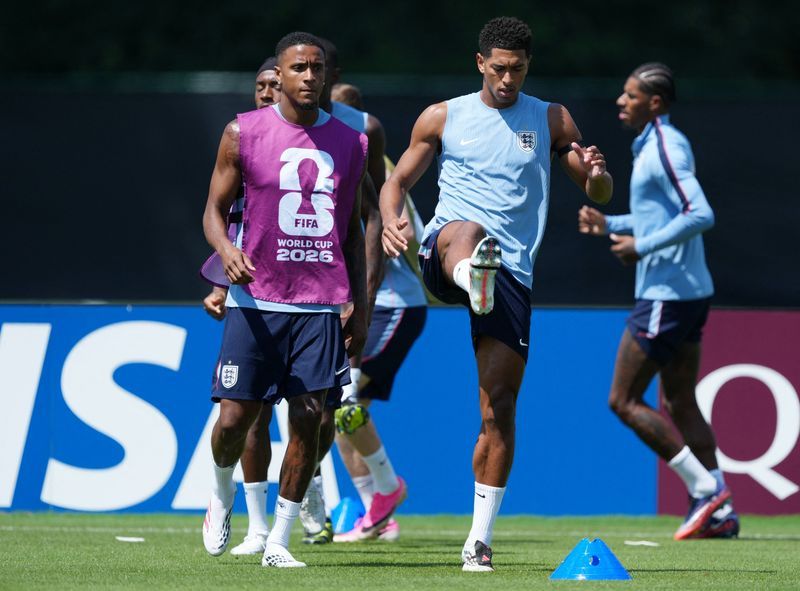
England's footballers have made a deliberate choice to tune out the constant speculation and commentary that surrounds a major tournament, focusing instead on their collective mission as they approach Wednesday's World Cup semi-final clash against Argentina in Atlanta. The England camp understands that media scrutiny is an inherent part of competing at the highest level, but defender Ezri Konsa emphasised that the squad has developed the maturity and discipline to filter out external distractions and concentrate on their objectives.
The path to this stage has not been entirely smooth, as divisions between manager Thomas Tuchel and midfielder Jude Bellingham briefly surfaced following England's dramatic 2-1 extra-time victory over Norway in the preceding round. While Tuchel expressed disappointment with the overall performance, Bellingham—who scored both goals in the match—publicly questioned whether his coach fully appreciated the physical and tactical demands of operating at such intensity against elite opposition. Such moments, though understandable in the context of championship football, inevitably generate headlines and debate among supporters and analysts.
Yet rather than allowing this disagreement to fester, the England contingent has used the occasion as a bonding exercise. Konsa told assembled journalists on Tuesday that the squad had moved past the incident with no lasting friction. He acknowledged that external noise will perpetually accompany players operating within the England system, but stressed that learning to compartmentalise such distractions is a skill acquired through years of professional experience. The defender's measured tone reflected the confidence permeating the camp.
Fellow centre-back Marc Guehi went further in his assessment, offering considerable praise for Tuchel's leadership and the atmosphere the German tactician has cultivated. According to Guehi, Tuchel has injected significant vitality into the squad's preparations and created an environment characterised by genuine camaraderie and shared conviction in the team's approach. The defender suggested that the adversity encountered against Norway—rather than deepening any cracks—has actually cemented the bonds between players and coaching staff. He told reporters that never before has the squad felt more unified in their commitment to one another.
Tuchel himself addressed these themes during his own media engagement at Atlanta Stadium, having been informed of his players' comments regarding the squad cohesion he has fostered. The manager reflected on his underlying philosophy, centring on the notion that football, stripped of its complexity, remains fundamentally a collective undertaking. He highlighted that the broader World Cup tournament has demonstrated how the sport's most decorated individuals willingly subordinate individual ambition to team objectives and national pride.
The German coach elaborated on what he perceives as the defining characteristic of his squad: a resolute refusal to surrender when circumstances become challenging. Tuchel stressed that much of this mental fortitude emerges not during high-profile press conferences or public appearances, but rather in the privacy of training sessions and team meetings. He expressed profound pride in the willingness of each player to expend maximum effort regardless of the situation, and their capacity to maintain concentration and purpose across ninety minutes or more of demanding competition.
Should England overcome Argentina, they would advance to a final rematch against Spain, who eliminated France 2-0 in Tuesday's other semi-final. Spain's dominance against the French represents a significant statement of intent, though England must first navigate the formidable challenge posed by Argentina's attacking talent and tournament experience. The Spanish victory was secured while England was in transit from their training base in Kansas to Atlanta, meaning some squad members were unaware of the outcome in real time.
When asked whether he had observed Spain's semi-final performance, Guehi matter-of-factly replied that he had spent the journey sleeping, indicating the squad's refusal to become preoccupied with potential future opponents before settling their immediate business. This pragmatism—focusing exclusively on the task at hand rather than speculating about potential pathways—underscores the disciplined mentality that both Tuchel and his players have repeatedly emphasised in recent days.
The contrast between England's public unity messaging and the Bellingham-Tuchel disagreement reveals an important dynamic within contemporary international football. While disagreements between managers and elite players are natural and, indeed, potentially healthy expressions of professional commitment, the manner in which teams navigate such moments determines their resilience under tournament pressure. England's apparent capacity to process the dispute quickly and move forward collectively suggests a squad that has matured considerably under Tuchel's tenure.
For Malaysian and Southeast Asian observers, the England narrative carries particular resonance given the region's growing engagement with European football. The emphasis on collective mentality, the balance between individual brilliance and team discipline, and the management of egos within high-performing organisations offer insights that extend well beyond the football pitch. Tuchel's insistence on togetherness as a foundation for on-field performance speaks to broader principles of organisational success that resonate across cultures and sectors.
As England prepares for Wednesday's match, the dominant narrative is one of purpose and unity. Whether this cohesion can withstand the pressure of facing Argentina—a team with their own formidable pedigree and attacking prowess—will be tested comprehensively. But the messages emanating from the England camp suggest a squad that has learned to harness internal disagreements as motivational fuel rather than divisive force, a psychological sophistication that increasingly distinguishes tournament winners from mere participants.

