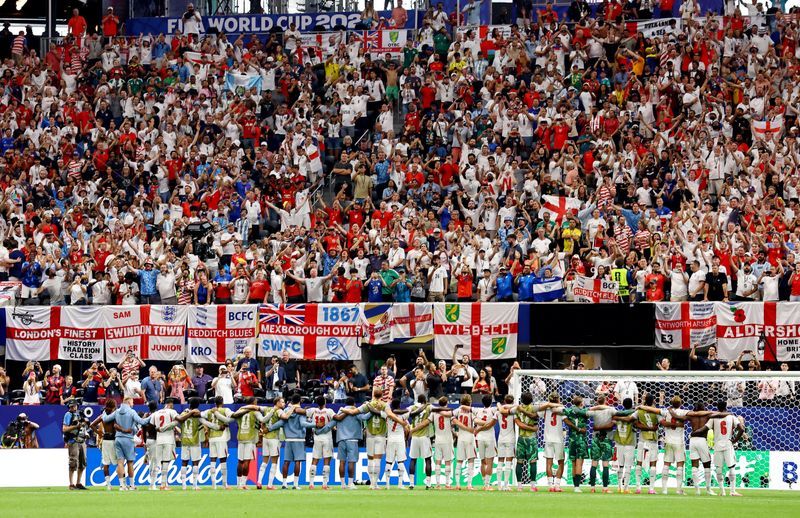
England's World Cup campaign took a dramatic turn in Atlanta on Wednesday when they recovered from a first-half deficit to overcome a spirited DR Congo side 2-1, securing their passage to the knockout stages but revealing defensive frailties that may prove costly in future rounds.
The match represented a significant test of character for Thomas Tuchel's squad, which had begun their tournament encouragingly with a 4-2 victory over Croatia before struggling through successive draws and narrow wins against Ghana and Panama. Those tepid performances had already sparked concerns about England's defensive solidity, and the Colombian side's early breakthrough appeared to confirm the worst fears of supporters gathered in the stadium.
Brian Cipenga's goal in the opening ten minutes handed DR Congo an unexpected advantage and marked the first time England had trailed at any point during the tournament. The psychological impact was immediate and profound. The usually confident English contingent fell into an apprehensive silence as the underdogs, displaying remarkable organisation and commitment, threatened to pull off one of the competition's great shocks. Yoane Wissa came agonisingly close to extending the advantage before halftime, striking the post during a dangerous forward surge that had the England backline in disarray.
What made England's predicament particularly concerning was their historical record in such circumstances. The team had never previously won a World Cup match after trailing at the interval, adding another layer of doubt as they retreated to their dressing room facing mounting pressure. Throughout the first period, DR Congo's goalkeeper Lionel Mpasi proved a formidable obstacle, while the Congolese defence constructed what appeared to be an impenetrable barrier. The contrast between the teams' approaches was striking: DR Congo needed just one chance on target to claim the lead, whereas England manufactured opportunity after opportunity without reward.
The atmosphere inside the stadium grew increasingly tense as the match progressed toward halftime. Television cameras captured the anxiety etched on supporters' faces, with one England fan painting a particularly memorable image of apprehension as he sat nursing a drink, seemingly resigned to disappointment. Around him, rows of English supporters shuffled nervously, unable to find composure as their team's tournament dreams appeared to teeter on the brink.
Tuchel's tactical adjustments during the second half proved instrumental in engineering England's comeback. Following the restart, his side gradually began to assert control, with Jude Bellingham forcing a superb save from Mpasi with a well-executed header while Declan Rice began delivering threatening balls into the penalty area. Yet for much of the second period, England continued to labour against determined Congolese defending. The German manager, visibly frustrated on the touchline, made crucial personnel changes, moving Rice to right back and introducing midfielder Eberechi Eze to provide fresh impetus in the search for a breakthrough.
The breakthrough finally arrived in the 75th minute when Kane's glancing header brushed past Mpasi's fingertips and into the net. The goal released an almost cathartic wave of relief through the stadium, and Kane's second goal just eleven minutes later appeared to have settled the contest. The England captain's two-goal contribution marked his 83rd international strike and secured passage to the next round, though the manner of the victory will likely dominate post-match discussions among analysts concerned about defensive vulnerability.
This victory represented a significant historical milestone for England, delivering their first World Cup comeback win since defeating Cameroon in the quarter-finals in 1990, precisely 36 years earlier. The symbolic resonance of the achievement, however, should not obscure the reality that the performance raised as many questions as it answered. During the group phase, England had revealed troubling weaknesses at the back, compounded by injury concerns that forced tactical compromises. Against DR Congo, those defensive shortcomings were exposed in stark detail by an opponent willing to press aggressively and play with genuine ambition.
The reward for this narrow escape is a fixture against Mexico that presents an entirely different challenge. Where DR Congo forced England to unlock an organised defensive structure, Mexico's attacking threat will demand that the English backline demonstrate they can withstand sustained offensive pressure. The task becomes considerably more demanding given Mexico City's geographical peculiarities: the Azteca Stadium sits more than 2,200 metres above sea level, creating conditions that will severely test England's physical stamina. The thin air reduces oxygen levels and causes the ball to behave unpredictably, travelling faster through the atmosphere in ways that most international teams rarely encounter.
Kane acknowledged the shifting nature of the challenges ahead, observing that whereas the DR Congo match tested his team's nerve and patience, Mexico will demand sustained defensive resilience. "The energy and team spirit is on the highest level and the commitment from everyone fully understands in which part of the tournament we are at," Tuchel said after the match, emphasising the psychological fortitude required to navigate knockout football. His comment reflected the reality that while England's comeback demonstrated character and determination, their path to the final remains fraught with technical and physical obstacles that demand marked improvement.
For Malaysian and Southeast Asian observers, England's struggle against a determined underdog offers instructive lessons about the unpredictability of modern tournament football. Just as regional sides have occasionally troubled traditional powerhouses in the Asian Cup and other continental competitions, DR Congo demonstrated that disciplined defending and tactical organisation can disrupt even well-resourced teams. Whether England can translate their narrow escape into a more convincing performance against Mexico will significantly influence perceptions of Tuchel's project and their ultimate tournament trajectory.

