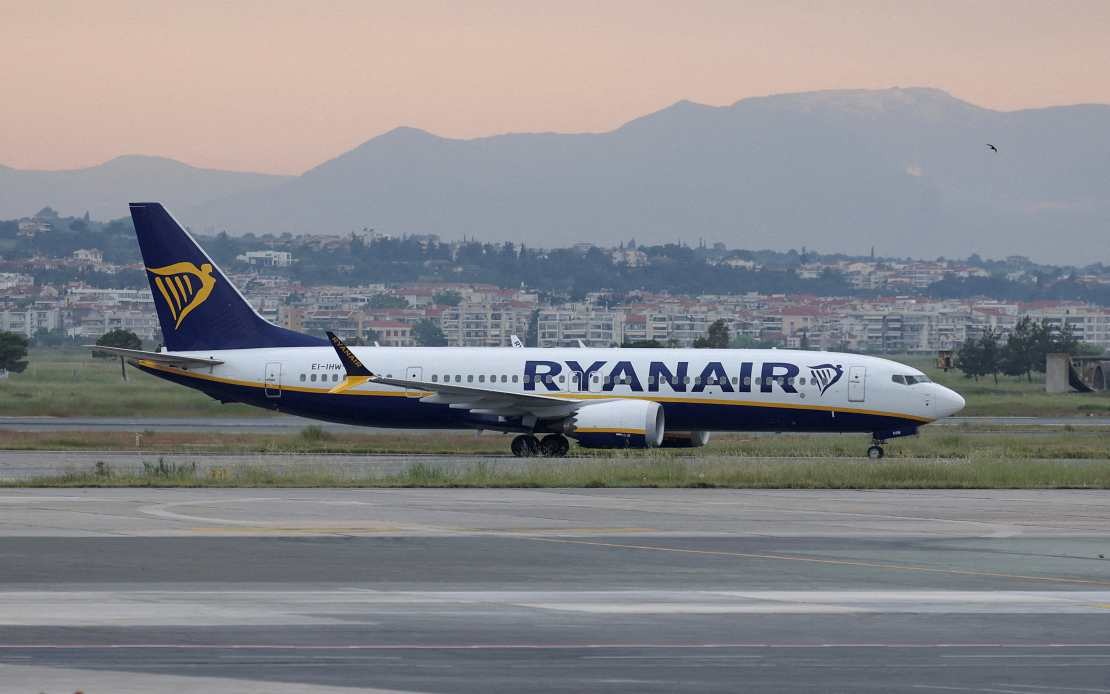
A Ryanair flight suffered a harrowing incident last month when engine fragments ripped through the fuselage at cruising altitude, partially ejecting a passenger through a shattered cabin window. According to findings released by the US National Transportation Safety Board (NTSB) this week, the Malta Air flight—operating under the Ryanair brand—was climbing away from Thessaloniki International Airport in Greece when the right engine suffered a critical fan blade failure. The sudden mechanical breakdown set off a catastrophic chain of events that would have ended tragically without the quick thinking of other passengers on board.
The investigation reveals the intensity of the structural damage sustained during the incident. When the fan blade separated inside the engine, it sent metal fragments tearing through multiple sections of the aircraft. These projectiles penetrated not only the pressurised cabin where passengers were seated but also struck the right horizontal stabiliser, which is essential for maintaining flight control. The breach of the fuselage's structural integrity created a dangerous situation that could have compromised the aircraft's ability to return safely to the ground.
The passenger seated in window seat 11F became the unwilling focus of this engineering failure. According to the NTSB report, the force of decompression and the physical impact of engine debris combined to pull the traveller partially out through the damaged opening. The entire window frame was torn away, leaving nothing but an aperture to the hostile environment of high-altitude flight. In a moment that underscores the power of human instinct and community, other passengers immediately responded to the emergency, reaching out to physically restrain their fellow traveller and prevent them from being sucked completely out of the aircraft.
Beyond the dramatic ejection incident, investigators uncovered additional clues about what triggered the engine catastrophe. Examination of the damaged engine revealed the presence of bird remains scattered throughout various components, including feathers lodged in critical areas. This discovery points toward bird strike as a contributing factor in the fan blade failure. Bird strikes remain a significant hazard in aviation, occurring when aircraft encounter flocks during takeoff and climb phases, precisely when the Thessaloniki flight was vulnerable. While modern engines are designed with redundancy and containment systems, the force of a collision at several hundred miles per hour can still overwhelm protective measures.
The physical response to the emergency demonstrated the resilience and design margins built into modern commercial aircraft. Despite the catastrophic nature of the engine failure and the breach of cabin pressurisation, the Malta Air aircraft remained controllable and capable of sustained flight. The crew successfully managed the emergency and guided the damaged Ryanair flight back to Thessaloniki International Airport, where it landed safely. This outcome reflects decades of aviation safety evolution, including containment rings designed to prevent engine fragments from penetrating the fuselage—though in this case, the force was sufficient to overwhelm these protections at the window location.
For Southeast Asian and Malaysian aviation stakeholders, this incident carries implications for fleet management and maintenance protocols. While Ryanair operates primarily in Europe, the airline operates aircraft identical to those in service across Asia, and the manufacturer shares responsibility for ensuring engine reliability across all operators. The identification of a fan blade failure as the root cause will prompt manufacturers to review inspection intervals and replacement schedules across their global fleet. Malaysian carriers and regional airlines operating similar aircraft types will monitor the NTSB recommendations closely to determine whether maintenance requirements need adjustment.
The passenger who was partially ejected survived the ordeal, though the incident left them injured. The psychological impact of such a traumatic experience—being partially pulled out of an aircraft at altitude—extends beyond the physical injuries documented in official reports. This passenger now represents one of aviation's remarkable survival stories, a testament to both aircraft design and the human response to emergency that prevented a tragedy. Their recovery and the contributions of fellow passengers who intervened likely saved their life.
The investigation underscores the importance of multiple safety layers in modern aviation. Engine containment systems, aircraft structural design, emergency procedures, and crew training all played roles in preventing catastrophe. Yet this incident also reveals that even with these protections, unexpected failures can still create dangerous situations that require human intervention. The actions of ordinary passengers who reacted instinctively to pull their fellow traveller back inside the cabin represented the final, critical safety margin when engineered systems alone proved insufficient.
For Ryanair and its parent company Malta Air, the incident prompted immediate reviews of maintenance and inspection protocols across their fleet. The low-cost carrier, which serves numerous European routes and maintains a significant presence in Mediterranean airports, operates hundreds of aircraft. Any widespread mechanical issue affects not just individual aircraft but the operational reliability of the entire network. The NTSB findings will inform how airlines prioritise engine inspections and maintenance scheduling across their operations, potentially affecting flight schedules and maintenance costs throughout the industry.

