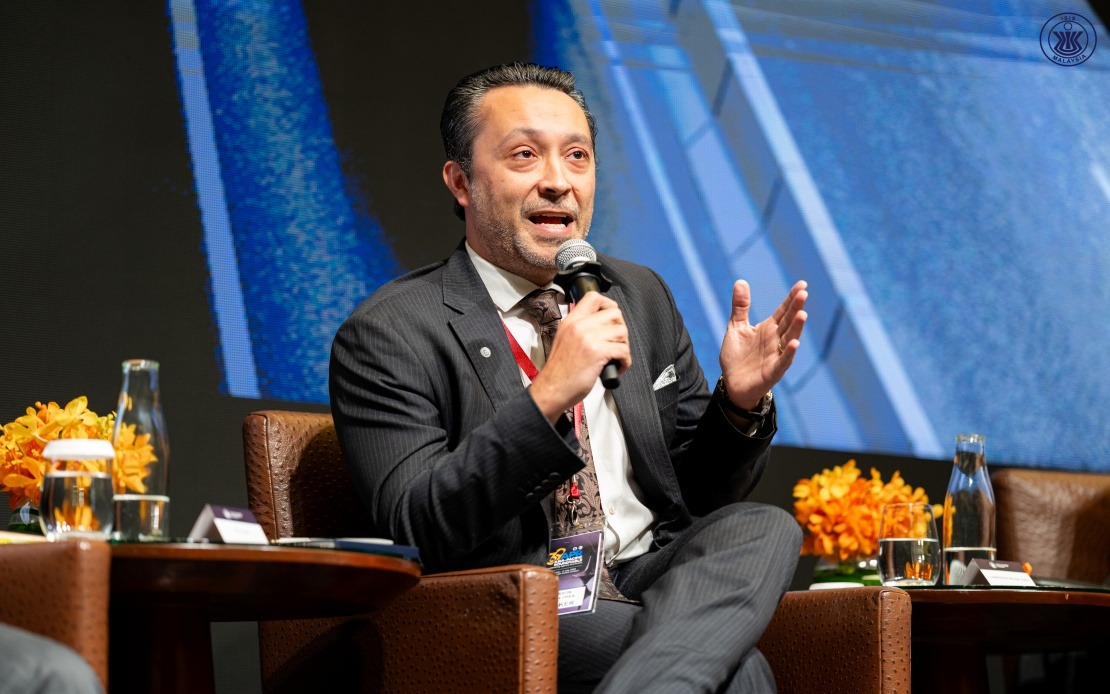
The fracturing of the post-World War Two international order presents emerging middle powers with both opportunity and obligation to chart their own strategic course, according to scholars convening in Kuala Lumpur this week. Countries including Malaysia, Brazil, India, Indonesia, Turkiye, and Mexico occupy a fundamentally different geopolitical position from traditional middle powers and should resist pressures to align their agendas with established actors, experts told the 39th Asia-Pacific Roundtable organised by the Institute of Strategic and International Studies (ISIS) Malaysia.
Dr Dawisson Belém-Lopes, a professor of international and comparative politics at the Federal University of Minas Gerais in Brazil, drew a sharp distinction between emerging and established middle powers, arguing they represent entirely different political realities and should not be conflated. The classification matters because it shapes how these nations approach diplomacy, alliance-building, and their responses to global challenges. Emerging middle powers, he noted, have historically maintained an uneasy relationship with the liberal international architecture constructed in the immediate post-1945 period, viewing it as an instrument through which Western powers consolidated and perpetuated their dominance across economic, political, and security domains.
These nations from the Global South have consistently advocated for systemic reforms to global governance structures, yet their calls for change have often gone unheeded by Western-led institutions that derive legitimacy and power from the existing order. The distinction between emerging and established middle powers extends beyond mere economic metrics or military capacity. Historical experience shapes contemporary interests in profound ways. Emerging powers carry legacies of colonialism, Cold War alignment pressures, and structural exclusion from decision-making forums. This past informs their fundamental skepticism toward international arrangements they did not design and from which they have not equally benefited.
Belém-Lopes emphasised that the Global South has accumulated both material resources and institutional mechanisms previously unavailable to it, marking a qualitative shift in its capacity for independent action. The establishment of forums like BRICS, the Shanghai Cooperation Organisation, and various South-South development banks represents concrete manifestations of this newfound agency. These platforms offer alternatives to traditional Western-dominated institutions such as the World Bank and International Monetary Fund, allowing emerging powers to pursue development strategies and security partnerships aligned with their own priorities rather than those dictated by Washington consensus orthodoxy.
Meanwhile, Peter Varghese, chancellor of the University of Queensland and former secretary of Australia's Department of Foreign Affairs and Trade, characterised the current moment as a transitional phase in which the post-war system led by the United States is gradually unravelling without a clear replacement architecture in place. This period of flux creates both instability and opportunity. The shift cannot be attributed solely to current American political leadership but reflects deeper structural transformations rippling through the international system. China's economic rise and technological advancement have redistributed global power in ways that defy the bipolar Cold War framework or the unipolar American dominance of the 1990s.
Varghese identified multiple drivers accelerating this transformation: the movement toward multipolarity, the declining influence of Washington-centric economic models, and the ascendancy of identity and cultural politics in shaping foreign policy. These forces operate simultaneously across different regions and issue areas, creating a complex landscape where traditional alliance structures no longer guarantee predictable outcomes. The weakening of the Washington Consensus—the presumption that neoliberal economic policy and Western political values represent universal best practices—has particular relevance for Southeast Asia and the Global South more broadly, where alternative development models are being tested and debated.
Yet constructing a new multilateral framework to replace the old order will require patience and sustained effort, Varghese cautioned. While agency—the capacity of nations to make strategic choices and pursue independent interests—remains essential, it alone proves insufficient for establishing a durable new world order. Countries require not only the will to act independently but also the diplomatic skill to build coalitions, negotiate compromise, and establish mutually acceptable rules. The emphasis on strengthening regional and cross-regional cooperation reflects pragmatic recognition that coherent global systems emerge from bottom-up construction through functional cooperation rather than top-down imposition by hegemonic powers.
Dr Ken Jimbo, professor of international relations at Keio University in Japan, contributed crucial perspective on Asia's enduring centrality to the evolving global order, even as American foreign policy undergoes significant reorientation. The Indo-Pacific region remains strategically vital because it contains the world's most dynamic economies, critical sea lanes through which global commerce flows, and emerging technologies that will shape the twenty-first century. Regardless of shifts in American administrations or strategic doctrine, Washington retains compelling reasons to maintain robust regional partnerships. An America First agenda may prioritise burden-sharing and cost-recovery, but it does not necessarily signal American withdrawal from Asia.
Countries such as Japan, Jimbo observed, maintain profound dependencies on a free and open rules-based international order for both security and economic prosperity. These dependencies create structural continuities even amid political change. Japan faces particular vulnerabilities given its geography, resource scarcity, and reliance on global trade networks. Yet the rules-based order itself comes under pressure as rising powers question whether rules crafted by others serve their interests. This tension between demands for order and challenges to its legitimacy defines much of contemporary international relations.
For Malaysia and other Southeast Asian nations, the implications extend across multiple domains. ASEAN's cherished principle of non-alignment and its Central role in regional diplomacy gain renewed importance as a mechanism for preserving strategic autonomy amid great power competition. The conversations at the Asia-Pacific Roundtable underscore that emerging powers possess greater latitude to define their own interests than they have exercised historically, but exercising this agency requires sophisticated statecraft, coalition-building, and long-term strategic vision. The Global South's moment is neither guaranteed nor irreversible but depends fundamentally on whether countries can subordinate immediate tactical advantages to coherent long-term strategies.

