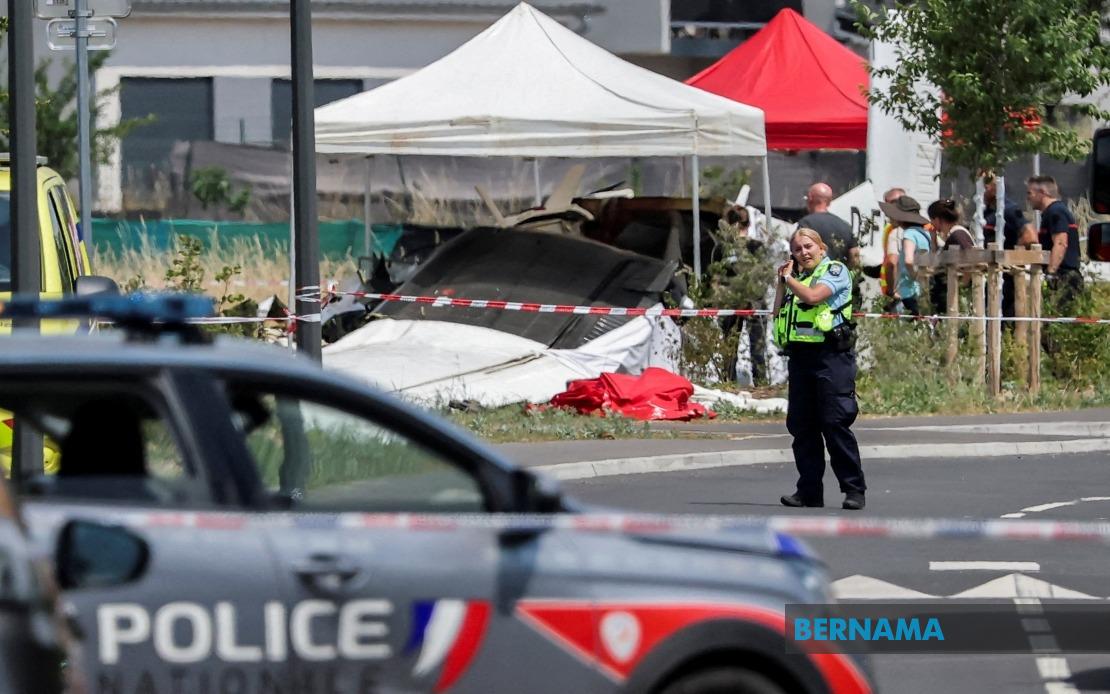
A civilian aircraft plummeted to the ground near the eastern French city of Nancy on Sunday, resulting in the deaths of all 11 people aboard. The crash occurred in Tomblaine, a town within the Meurthe-et-Moselle department, moments after the plane departed from Nancy-Essey Airport. French authorities have launched an investigation into the incident, with Interior Minister Laurent Nunez expected to visit the crash site to assess the situation and coordinate response efforts.
The aircraft was carrying a diverse group of passengers at the time of the disaster. Among those who perished were the pilot, two groups of five skydiving instructors, and independent nurses who had gathered as part of what officials have described as an initiation ceremony. Thierry Pechey, head of the Meurthe-et-Moselle branch of the Order of Independent Nurses, confirmed to broadcaster BFMTV that several of the deceased were independent nurses taking part in the event alongside experienced skydiving professionals.
The circumstances surrounding the crash remain under investigation. The aircraft went down shortly after taking off, suggesting a potential mechanical failure or other technical issue may have occurred during the critical initial phases of flight. The timing of the accident, happening moments after departure from Nancy-Essey Airport, has raised questions about whether pre-flight checks or maintenance procedures may have been inadequate. French aviation authorities will conduct a thorough examination of the wreckage and aircraft records to determine the precise cause.
Meurthe-et-Moselle Prefect Yves Seguy immediately activated the departmental operational centre to coordinate emergency response operations. This decision ensured that rescue teams, law enforcement, and other relevant services could work in concert to manage the crisis effectively. The prefect's swift action demonstrated the importance of centralised crisis management in aviation disasters, allowing real-time monitoring and coordination of response efforts at the site.
Local authorities have established restricted access zones around the crash location to facilitate the work of emergency responders and law enforcement investigators. The public has been urged to avoid the area surrounding Rue Salvador Allende in Tomblaine, where the aircraft came down. This precautionary measure protects both civilians and emergency workers, ensuring that rescue operations, evidence collection, and accident investigation can proceed without obstruction or interference.
The tragedy highlights the inherent risks associated with recreational skydiving activities, particularly when multiple groups participate in organised events. While skydiving remains a popular extreme sport across Europe and beyond, incidents such as this underscore the critical importance of rigorous safety protocols, regular aircraft maintenance, and comprehensive pilot training. The involvement of professional skydiving instructors suggests that safety standards were likely being observed, though the accident investigation will examine whether any procedural lapses contributed to the disaster.
For Malaysia and Southeast Asia, this incident serves as a sobering reminder of aviation safety considerations. Regional carriers and operators of recreational aircraft must maintain the highest standards of maintenance and pre-flight verification. The involvement of nursing professionals in the group also draws attention to how workplace bonding events, while valuable for team building and professional relationships, must be organised with meticulous attention to safety and risk management protocols.
The loss of eleven lives in a single aviation incident represents a significant tragedy for France, particularly for the families and colleagues of those who perished. The nursing community in the Meurthe-et-Moselle region will likely be profoundly affected by the loss of their colleagues and peers. The skydiving industry similarly faces difficult questions about how to enhance safety measures and prevent similar incidents from occurring in future.
Investigators will now focus on reconstructing the sequence of events leading to the crash. This process involves examining the aircraft's maintenance records, interviewing surviving witnesses if any exist, analysing flight data recorders if available, and conducting detailed forensic analysis of the wreckage. The findings from this investigation may yield important insights that could influence future safety regulations and industry practices across Europe and internationally.
Interior Minister Laurent Nunez's planned visit to the crash site signals the French government's commitment to understanding what occurred and ensuring that appropriate support is provided to affected families and communities. Such high-level political engagement underscores the gravity with which national authorities regard aviation disasters. The investigation's conclusions will likely be scrutinised not only by French regulators but also by aviation authorities across the European Union, potentially influencing future safety recommendations and industry standards.

