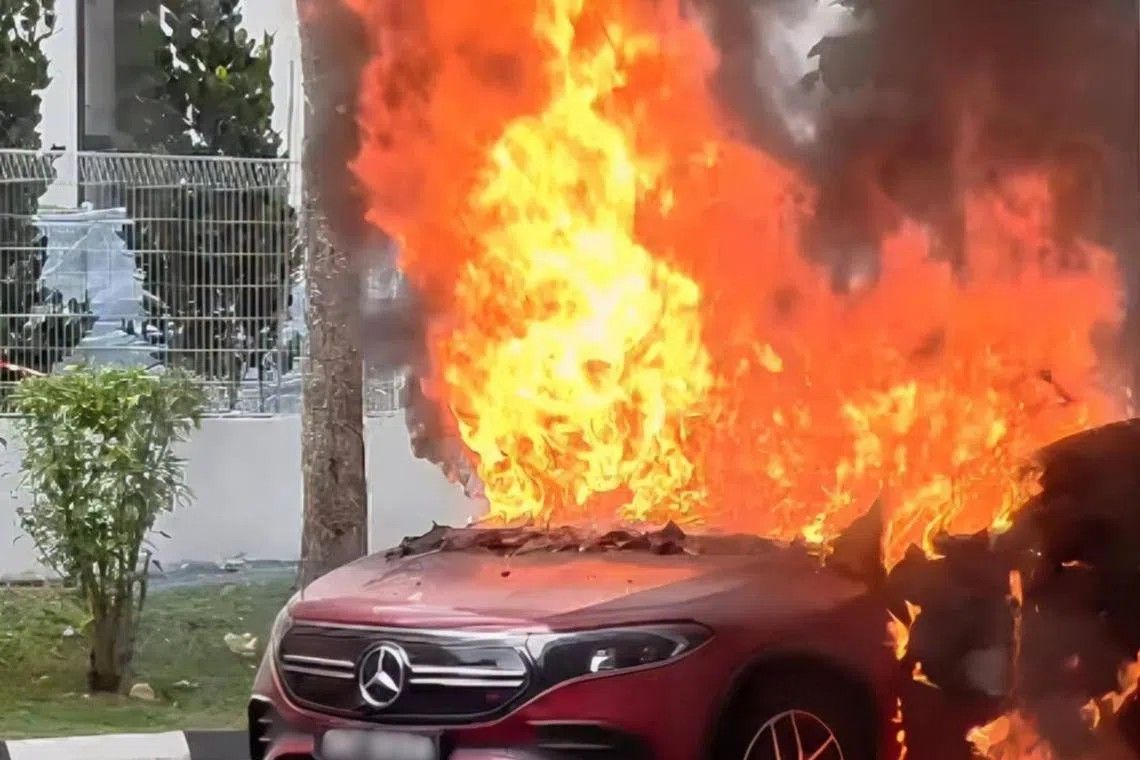
A vehicle fire near the entrance of a multi-storey carpark in Singapore's Woodlands estate has reignited concerns about the safety of electric vehicles in residential areas across the region. The Singapore Civil Defence Force (SCDF) responded to the incident at Block 548 Woodlands Drive 44 shortly after 10.10am on July 21, where an electric vehicle had caught fire with flames engulfing the interior cabin and forcing the evacuation of nearby residents.
The driver of the vehicle, who was attempting to exit the carpark when the fire broke out, initially detected an unusual burning smell emanating from the car. Upon stopping and investigating, she observed smoke billowing from the vehicle's interior, prompting her to pull over immediately and seek assistance from nearby security personnel. The rapid escalation of the fire created an urgent and potentially dangerous situation within the confined carpark environment, raising questions about emergency response capabilities in such enclosed spaces.
According to accounts provided to Chinese-language media, the flames originated in the gap between the driver's and front passenger's seats—the precise location where the vehicle's rechargeable battery pack is positioned. Battery thermal runaway, a phenomenon where lithium-ion cells experience rapid, uncontrolled chemical reactions leading to fire and explosion, remains one of the most significant safety challenges facing the electric vehicle industry. The compartmentalisation of batteries in modern EVs means that fires can develop with alarming speed once ignition occurs, leaving occupants with minimal reaction time.
Security guards stationed near the carpark attempted to contain the spreading blaze using portable fire extinguishers, but the intensity and nature of the battery fire quickly overwhelmed conventional suppression methods. Standard extinguishers are often insufficient against lithium-ion fires, which can reignite even after initial containment efforts. Recognising the escalating danger and fearing that the vehicle might rupture or explode under continued heat stress, staff and the driver evacuated to a safe distance and immediately contacted emergency services.
When firefighters arrived, they deployed a single water jet to extinguish the blaze, successfully controlling the fire and preventing it from spreading to adjacent vehicles or the carpark structure itself. The SCDF's swift response prevented what could have become a catastrophic incident affecting multiple vehicles and potentially endangering the lives of residents in the surrounding HDB blocks. The quick suppression prevented the fire from reaching a critical temperature threshold that might have triggered battery cell rupture and secondary explosions.
Photographic documentation of the aftermath revealed extensive damage to the vehicle's interior, with the entire cabin area reduced to charred remnants. The dashboard had warped significantly from the intense heat, and the structural framework supporting the front seats lay exposed and severely compromised. This level of thermal damage underscores the ferocity of battery fires and their capacity to render vehicles completely unusable within minutes. The vehicle was subsequently towed from the scene at approximately 12.15pm for detailed forensic examination.
The incident carries particular significance for Southeast Asian nations rapidly expanding their electric vehicle adoption and charging infrastructure. Malaysia, Indonesia, and other regional economies are aggressively promoting EV uptake through subsidies and tax incentives, yet many lack comprehensive fire safety protocols and emergency response training tailored to battery fires. Carpark fires pose unique challenges because of poor ventilation, difficult evacuation logistics, and the potential for fires to spread vertically through multi-storey structures.
Authorities have commenced an investigation into the root cause of the battery failure, examining whether manufacturing defects, design vulnerabilities, or external factors triggered the thermal runaway event. This investigation will be crucial for determining whether the incident represents an isolated occurrence or signals a broader safety concern. Battery quality control and thermal management systems vary significantly across manufacturers, and incidents like this often reveal gaps in safety standards or quality assurance processes.
The incident occurs within a broader global context of increasing EV fire incidents as battery technology scales to unprecedented volumes. While the overall fire rate for electric vehicles remains comparable to or lower than combustion-engine vehicles on a per-mile basis, the unique characteristics of battery fires—their intensity, difficulty in extinguishing, and potential for sudden escalation—demand specialized emergency response capabilities that many urban areas have not yet developed.
For Malaysia and neighbouring countries experiencing explosive growth in EV ownership, this incident underscores the urgency of establishing comprehensive fire safety standards for residential and commercial carpark facilities. Building codes, fire suppression systems, and emergency response protocols must be updated to account for the distinct hazards posed by battery fires. Training programmes for firefighters, security personnel, and building managers should incorporate specialised knowledge about lithium-ion battery behaviour and appropriate suppression techniques.
The absence of injuries in this incident represents fortunate timing and good decision-making by those present, but it should not breed complacency. As electric vehicle penetration deepens across Southeast Asia, the probability of similar incidents occurring in residential areas will increase substantially. Policymakers must act proactively to implement stringent safety requirements, mandatory flame-retardant carpark designs, and rapid-response emergency protocols before incidents cause loss of life or widespread property damage.
Meanwhile, vehicle manufacturers face mounting pressure to improve battery thermal management systems and develop inherently safer battery chemistries that resist thermal runaway. The investigation into the Woodlands incident will contribute valuable data to global understanding of battery failure mechanisms and may influence future design standards across the industry. For consumers and regulators throughout Malaysia and the region, such incidents serve as important reminders that the transition to electrified transportation, while environmentally imperative, demands rigorous safety management and continuous vigilance.

