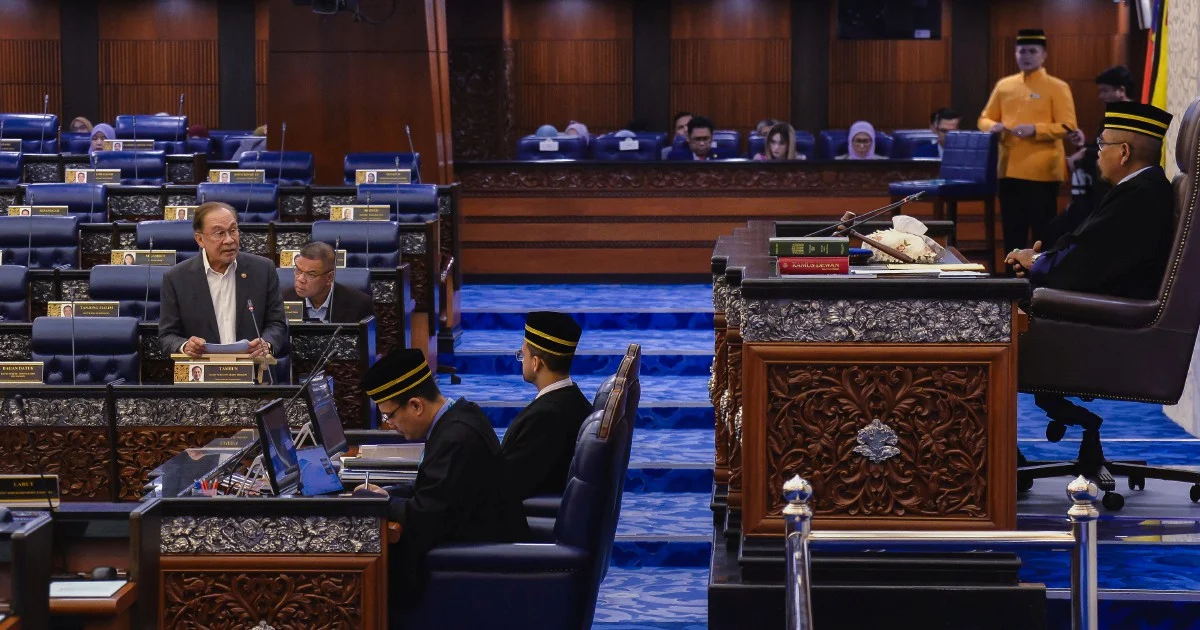
Prime Minister Datuk Seri Anwar Ibrahim has affirmed that the Election Commission maintains clear authority to enforce electoral rules and will intervene when caretaker administrations overstep their constitutional boundaries by making announcements or implementing policies that carry significant financial implications. This pronouncement underscores growing concerns about the scope of executive actions during interim periods when parliaments are dissolved and elections are pending, a recurring tension in Malaysian political practice.
The distinction between legitimate administrative continuity and improper policy-making during caretaker periods represents a recurring flashpoint in Malaysian electoral law. While a transitional government must manage routine operations and essential services, guidelines restrict substantive new commitments or announcements that might influence voter behaviour through promises of spending or programmatic benefits. The Election Commission's willingness to enforce these boundaries signals an attempt to create more symmetrical competition where campaign periods are not weaponised through governmental expenditure or policy announcements designed to sway electoral outcomes.
This enforcement posture carries particular relevance for Southeast Asia, where several democracies struggle with caretaker governments using their lingering authority to consolidate political advantage. Malaysia's approach, if consistently applied, could establish regional precedent for constraining executive overreach during interregnums and demonstrate that electoral watchdogs possess teeth to enforce campaign neutrality. The Election Commission's clear mandate—and the Prime Minister's public acknowledgment of it—suggests institutional confidence in regulatory capacity, though implementation will ultimately determine credibility.
The practical challenge lies in distinguishing routine administration from policy innovation with electoral overtones. A caretaker government making routine payments to civil servants, delivering contracted services, or maintaining existing programmes operates within bounds. However, announcing new development projects, expanding benefit schemes, or unveiling infrastructure commitments during campaign season enters contested territory. The Election Commission must navigate these nuances without appearing partisan while preventing governments from using the apparatus of state spending as electoral machinery.
Anwar's explicit confirmation reflects possible prior incidents or concerns flagged by watchdog groups, political opponents, or the Election Commission itself regarding caretaker conduct during previous election cycles. Malaysian political culture has witnessed periods where interim governments tested boundaries, whether through ministry announcements, development grants, or ministerial visits emphasising government achievements. By publicly reasserting Election Commission authority, the Prime Minister signals that such behaviour will no longer proceed unchallenged, establishing clearer norms for future transition periods.
This stance also addresses potential vulnerabilities in Malaysia's electoral framework. Unlike some Commonwealth democracies with crystalline caretaker protocols, Malaysia's guidelines operate within broader constitutional architecture where the boundary between permitted and prohibited executive action during interim periods requires regular clarification. The Election Commission's proactive position, backed by prime ministerial support, attempts to sharpen these distinctions through enforcement threat and public awareness.
For Malaysian voters and civil society organisations, this commitment offers protective mechanism against state machinery being deployed during campaign periods to influence electoral outcomes through financial announcements. Particularly in federal systems where different coalitions might govern at national and state levels, caretaker conduct carries heightened stakes, as administrations nearing electoral defeat might attempt last-minute spending or policy announcements to boost incumbent prospects. The Election Commission's readiness to intervene provides voters with assurance that campaign fairness will be actively policed.
The enforcement framework raises questions about implementation mechanisms, however. Will the Election Commission proactively monitor ministerial statements and departmental announcements, or will it act upon complaints? How will it distinguish borderline cases where announcements relate to previously budgeted programmes versus new commitments? Will enforcement include penalties, suspension of announcements, or merely public censure? These operational details determine whether the Commission's authority translates into meaningful protection of electoral integrity or remains largely rhetorical.
Regionally, Malaysia's approach contrasts with varying standards across Southeast Asia regarding caretaker governance. Some neighbours maintain stricter constitutional provisions restricting interim governments almost entirely to essential operations, while others exercise minimal constraint. Malaysia's attempt to occupy middle ground—permitting necessary administration while restricting election-sensitive policy-making—requires ongoing calibration and consistent application to gain legitimacy among political stakeholders who inevitably scrutinise enforcement fairness.
Political opposition parties, particularly those anticipating electoral competition against an incumbent caretaker government, will watch closely whether the Election Commission applies these principles uniformly. Accusations of selective enforcement could undermine the Commission's credibility and provoke constitutional disputes about electoral administration independence. Conversely, demonstrable even-handedness in restraining caretaker governments across political affiliations would strengthen institutional authority and public confidence in campaign fairness.
The Prime Minister's public statement essentially commits his own administration to respecting caretaker boundaries should his government eventually face dissolution and election. This forward commitment—pledging subordination to Election Commission authority regarding financial policy decisions during interim periods—represents implicit acceptance that electoral integrity requires constraining executive prerogatives. Whether this commitment will bind successor administrations or survive the pressure of actual election campaigns remains uncertain but represents important normative positioning.
Looking ahead, Malaysia's election watchdog faces the fundamental test: whether caretaker government enforcement becomes routine practice or selective intervention. The Election Commission's credibility as guardian of electoral fairness depends not merely on possessing regulatory authority but on exercising it consistently, transparently, and impartially whenever caretaker governments—regardless of political composition—breach established boundaries through announcements or decisions with financial consequences designed to influence electoral outcomes.

