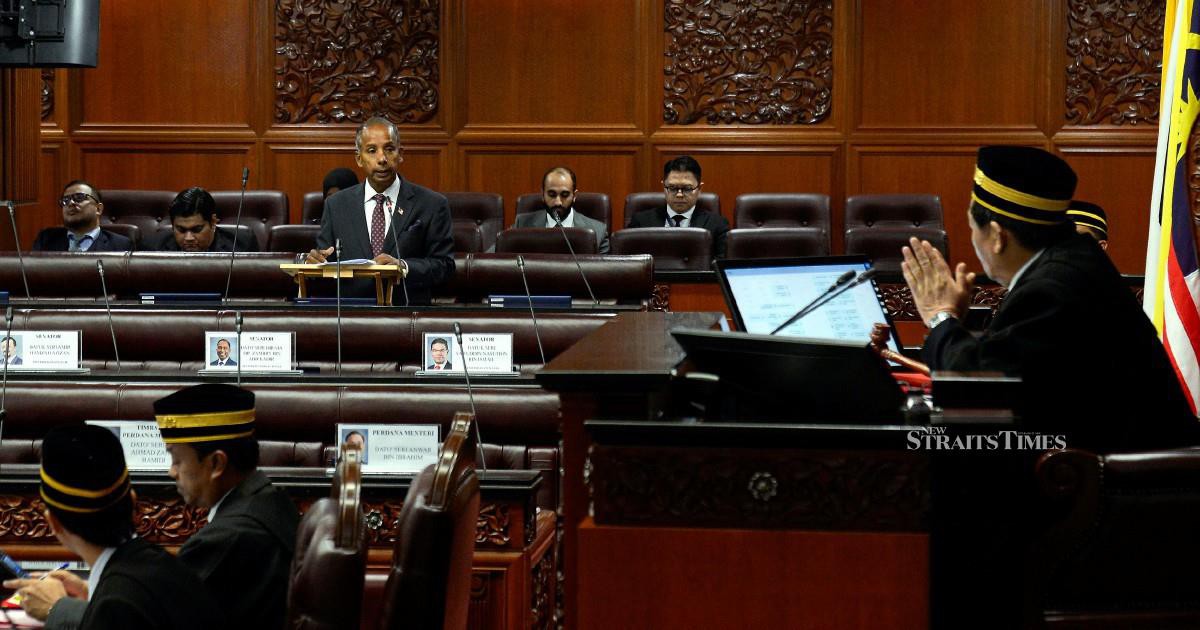
The Election Commission has agreed to conduct a comprehensive review of a proposal that would extend postal voting privileges to auxiliary police officers stationed at the country's strategic facilities and vital infrastructure locations. Deputy Minister in the Prime Minister's Department (Law and Institutional Reform) M. Kulasegaran announced the development, signalling that electoral officials are taking seriously the question of voting accessibility for uniformed personnel who remain on duty during elections.
The auxiliary police force comprises officers who provide security at sensitive installations ranging from power plants and water treatment facilities to telecommunications hubs and government buildings. Their deployment to critical infrastructure often places them in remote or restricted locations where attending traditional polling stations during elections proves logistically challenging. This geographic and operational constraint has long created a democratic participation gap for these security personnel, who perform essential services but face limitations in exercising their voting rights.
Postal voting mechanisms have existed in various democracies globally as a pragmatic solution to ensure that citizens in special circumstances—military personnel deployed abroad, hospitalised patients, and workers in isolated locations—can still participate in democratic processes. The proposal for Malaysian auxiliary police reflects similar reasoning: individuals serving the nation's security interests should not forfeit their fundamental right to vote simply because their job assignments place them beyond convenient reach of polling booths.
From a constitutional and administrative perspective, extending postal voting to auxiliary police would require careful coordination between multiple agencies. The Election Commission must review technical procedures, security protocols to prevent vote manipulation, and verification systems to confirm voter identity and eligibility. Such frameworks already exist for other categories of postal voters in Malaysia, so the groundwork is partially established, though adapting these mechanisms for a uniformed service presents distinctive challenges around access to secure postal channels and verification timing.
The announcement carries particular significance given Malaysia's emphasis on strengthening institutional security and critical infrastructure protection. Auxiliary police represent the frontline of defence for facilities that support essential services affecting millions of Malaysians daily. Recognising their contribution through enhanced voting access could boost morale and underscore the government's commitment to treating these personnel as valued contributors to national wellbeing rather than mere administrative entities excluded from civic participation.
From a broader electoral integrity standpoint, the proposal raises important considerations about maintaining election security. Postal voting systems must guard against ballot substitution, unauthorised assistance, and verification failures. The Election Commission's study will likely examine how auxiliary police can receive, complete, and return postal ballots through secure channels without compromising the ballot's integrity or exposing it to undue influence—concerns that would apply regardless of the voter's profession.
The timing of this initiative reflects evolving discussions within Malaysian governance circles about modernising electoral processes. As the nation grapples with questions about voter participation rates and ensuring that institutional and geographic barriers do not suppress legitimate voting, examining mechanisms for underserved groups demonstrates progressive thinking about democratic accessibility. Other democracies have found that expanding postal voting options, when properly safeguarded, can increase overall participation without inviting electoral malpractice.
For auxiliary police themselves, postal voting would remove a significant operational burden. Currently, officers assigned to remote or restricted facilities during election periods face a choice between seeking special leave—which may not always be granted and affects operational readiness—or foregoing their vote. This creates an artificial conflict between professional duty and civic responsibility. Postal voting would resolve this tension, allowing officers to remain at their posts while fulfilling their democratic obligations.
The proposal also merits consideration alongside broader questions about voting accessibility for other public servants who face similar constraints. Members of the armed forces, coast guard personnel, and other essential workers in isolated locations might benefit from comparable arrangements. A successful pilot or implementation for auxiliary police could establish precedent and procedures applicable to these groups, creating a more comprehensive approach to ensuring that Malaysians serving the nation retain access to its democratic processes.
The Election Commission's willingness to undertake this study signals institutional responsiveness to legitimate grievances about voting access. Rather than dismissing the proposal as administratively inconvenient, electoral authorities are engaging seriously with the substance of the request. This approach reflects best practices in democratic governance, where institutions continuously examine whether existing procedures serve all citizens fairly or whether adjustments might broaden participation while protecting electoral integrity.
For Malaysian voters and civil society, this development offers a window into how governance systems can evolve to address real practical challenges without abandoning foundational principles. The auxiliary police case demonstrates that democratic inclusivity and operational security need not be mutually exclusive—institutional flexibility can accommodate both objectives with thoughtful policy design.
As the Election Commission proceeds with its examination, the focus will likely centre on establishing secure verification procedures, ensuring postal ballots reach auxiliary police reliably, and building safeguards against potential misuse. If these technical and administrative hurdles can be satisfactorily overcome, postal voting for auxiliary police could establish a valuable precedent for recognising that those who protect the nation's critical infrastructure deserve full participation in shaping its democratic future.

