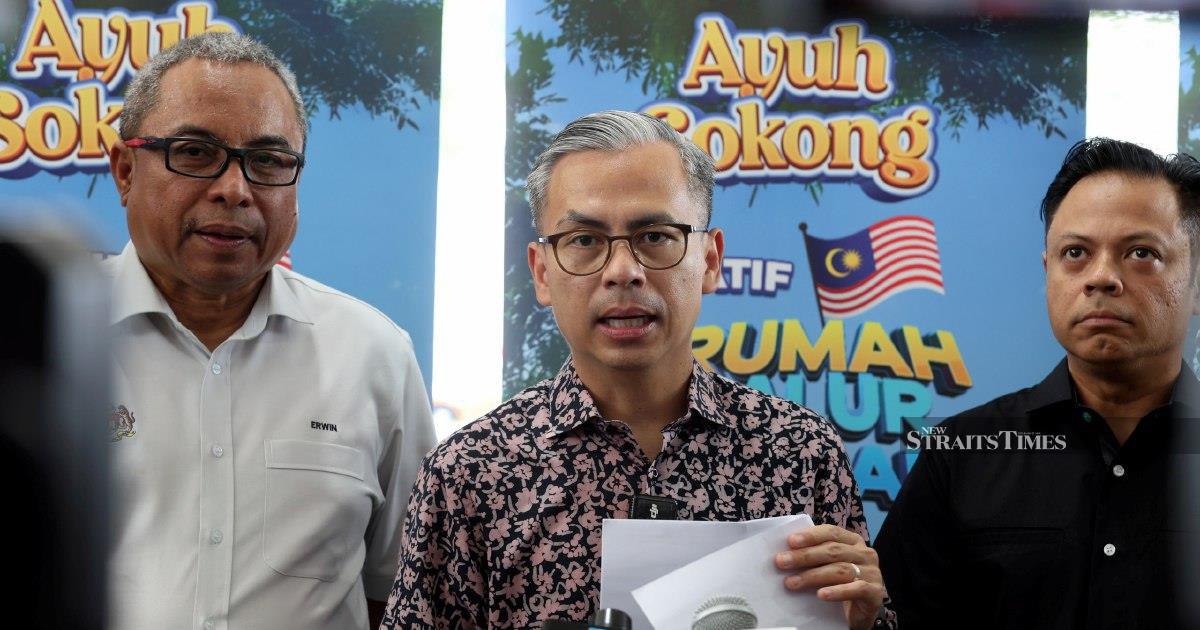
Prime Minister Datuk Seri Anwar Ibrahim has directed the Election Commission to produce an updated report assessing Sarawak's push to expand its state assembly through the addition of 17 new seats, according to government spokesman Datuk Seri Fahmi Fadzil. The directive represents a significant step in the ongoing deliberation surrounding electoral redistribution in the nation's largest state and reflects the federal government's engagement with the proposal that has generated considerable debate within political circles.
Sarawak's bid for additional parliamentary representation reflects broader demographic and administrative pressures within the state. The proposed expansion would modify the electoral landscape in Sarawak substantially, potentially reshaping political dynamics in a jurisdiction that has maintained considerable autonomy in state-level governance. The state, which comprises nearly 40 percent of Malaysia's land area despite having a population of approximately 2.8 million residents, has consistently advocated for electoral adjustments that better correspond to its size and governance requirements.
The Election Commission's assignment to revisit and refresh its analysis underscores the complexity inherent in electoral boundary adjustments at the federal level. Such modifications demand meticulous examination of demographic data, geographic considerations, administrative efficiency, and constitutional provisions governing state representation. The preparation of an updated report indicates that preliminary assessments may require refinement or that intervening developments have necessitated fresh evaluation.
Sarawak holds distinctive constitutional standing within Malaysia's federation, negotiated during the formation of Malaysia in 1963. This historical context has positioned the state to exercise considerable influence over matters affecting its internal political structure and representation. The state's role within the broader Malaysian federation means that decisions regarding its electoral composition carry implications extending beyond Sarawak itself, potentially influencing federal-state relations and the broader equilibrium of power within the federation.
The Electoral redistribution process typically involves extensive consultation with affected states, analysis of population trends, assessment of administrative accessibility, and consideration of regional development patterns. For Sarawak specifically, considerations such as connectivity across vast distances, the distribution of population in urban and remote areas, and the accessibility of government services to constituent communities factor prominently into deliberations about electoral boundaries and seat distribution.
Prime Minister Anwar's personal direction to the Election Commission suggests high-level governmental attention to this matter. The decision to commission an updated report rather than proceeding with existing analyses indicates either that circumstances have evolved or that previous assessments require supplementation with fresh data or perspectives. This approach demonstrates the careful consideration being afforded to a proposal that carries substantial implications for Sarawak's political structure.
The expansion of state assembly seats carries ramifications for governance costs, legislative efficiency, constituent representation ratios, and the broader organisational framework of state government. Adding 17 seats represents a substantial increase that would require corresponding adjustments to government expenditure, parliamentary procedures, committee structures, and administrative support systems. These practical considerations necessarily inform the evaluation process.
For Malaysian readers across the peninsula and other states, developments regarding Sarawak's electoral composition hold relevance to understanding how federal arrangements evolve and how constituent states negotiate expanded representation. The handling of Sarawak's proposal establishes precedents and demonstrates government flexibility in addressing federalism-related matters, which may influence how other states approach similar proposals in future.
The update report will likely examine whether population growth patterns in Sarawak since previous assessments justify the proposed 17-seat expansion. Demographic movements, internal migration patterns, and shifts in the distribution of voters across different regions of the state would constitute essential elements of this analysis. Additionally, the commission may assess whether existing seat arrangements adequately serve constituent communities or whether additional representation would meaningfully improve legislative responsiveness.
The timeline for completing this updated report remains unclear, though the prime minister's directive suggests the Election Commission will prioritise the assignment. The government's engagement with Sarawak's proposal signals openness to electoral restructuring while maintaining the necessary bureaucratic rigour that such consequential decisions demand. Implementation, should the proposal ultimately receive approval, would likely require constitutional amendments and would represent a significant shift in Sarawak's political representation.
Stakeholders including Sarawak's state government, political parties operating in the state, and civil society organisations focused on electoral reform will presumably anticipate the findings of this updated commission report. The outcome will illuminate whether the federal government is inclined to support Sarawak's expansion ambitions and under what conditions such expansion might occur. As Malaysia continues navigating questions about federal structure and state autonomy, decisions regarding electoral representation in constituent states assume particular importance in maintaining the delicate balance that underpins the federation.

