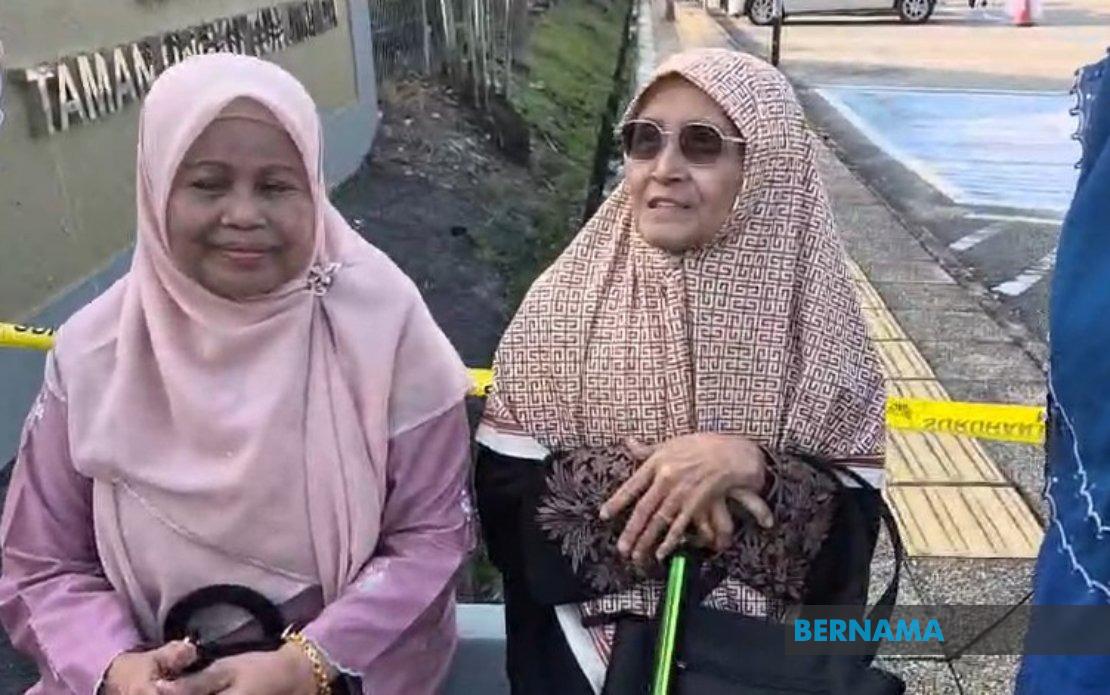
The 16th Johor State Election saw an inspiring display of democratic participation as elderly voters across the state arrived at polling centres in the early morning hours, determined to cast their ballots despite physical challenges and inclement weather. From Johor Bahru to Muar, pensioners and retirees prioritised their civic responsibility, with many reaching voting locations before 7 am to navigate the process before crowds gathered and before weather conditions could worsen.
This pattern of early voting among senior citizens reflected not merely a preference for convenience, but a deeper commitment to electoral participation that appears ingrained within this demographic. Multiple interviews conducted across different constituencies revealed that elderly voters frequently considered the 16th Johor State Election a significant civic engagement, comparable to major festival celebrations in terms of emotional resonance and community connection.
At the Sekolah Jenis Kebangsaan Cina Kulai Besar polling centre in the Bukit Batu constituency, 70-year-old Gan Hin exemplified this determination by arriving at 6.40 am, having secured time off from his farm work in Indahpura to fulfil what he described as a personal voting tradition. His employer's accommodation of this responsibility illustrated broader Malaysian workplace culture that recognises the importance of electoral participation.
Weather conditions posed a particular challenge on the election day, with heavy rainfall affecting various parts of Johor, particularly in Muar where storms intensified around 7.30 am. Despite these conditions, voters refused to be deterred. Private sector retiree P. Gunasekaran, aged 63, had experienced similar downpours during the previous state election but found the morning's rainfall significantly heavier. His decision to leave home at 6 am, immediately after waking early due to weather concerns, reflected a pragmatic approach to managing both civic duty and practical challenges.
The experiences of female voters demonstrated particular resilience. Sapiah Abdul Rahman, a 74-year-old voter at the Taman Ungku Tun Aminah Community Hall, articulated an emotional dimension to the voting process that transcended the mechanical act of casting a ballot. She described the polling centre atmosphere as reminiscent of Hari Raya celebrations, suggesting that for many seniors, election days carry profound social and cultural significance beyond their political function. Her deliberate early arrival aimed to savour this communal experience while managing crowds.
Physical mobility challenges did not prevent participation. In Johor Bahru, 84-year-old Rohani Sohod arrived at Sekolah Kebangsaan Seri Melati using a wheelchair, among the earliest voters to arrive. Her presence underscored how Malaysian seniors, despite age-related physical constraints, maintain strong commitment to electoral processes. Such participation carries implications for election administration and accessibility—the fact that elderly and mobility-impaired voters successfully navigated the voting process suggests polling centres generally accommodated their needs.
The voting patterns also revealed generational concerns about future democratic engagement. Salma Wahid, aged 74 and a consistent voter since 1981, expressed hope that younger Malaysians would demonstrate similar electoral commitment. Her concern that young people might underestimate their role in shaping Johor's future reflected a broader anxiety within older demographics about youth disengagement from politics, an issue relevant across Southeast Asia where generational voting gaps have widened.
Religious observance intersected with electoral participation for several voters. Rokiah Yunos, an 80-year-old retiree, performed dawn prayers before proceeding to vote at 7.30 am, viewing her religious routine and civic duty as complementary obligations. This integration of faith and voting reflected how many Malaysian voters conceptualise participation as part of their broader ethical and religious framework rather than purely secular political action.
The logistical scale of the 16th Johor State Election underscored why early voting became practically important. With more than 2.7 million registered voters eligible to participate across 1,076 polling centres throughout the state, and 56 state seats contested by 172 candidates, congestion at peak voting hours posed a genuine challenge. Early arrival strategies by senior citizens helped distribute voting demand across the day, potentially improving overall polling centre efficiency and reducing wait times for all voters.
Weather preparedness reflected voter experience from previous elections. Gunasekaran's recollection that rain also fell during the previous state election, though less intensely, demonstrated how voters incorporate historical weather patterns into planning decisions. His 4 am wake-up time and 6 am departure, triggered by rainfall beginning at 4 am, showed sophisticated anticipation of how morning storms might develop throughout the day.
The employment accommodations documented in reporting illustrated Malaysian workplace norms regarding electoral participation. Gan Hin's employer in Indahpura granting him time to vote before his farm work shift demonstrated how many Malaysian businesses facilitate worker participation in elections. Such practices strengthen democratic infrastructure by reducing practical barriers to voting, particularly for working-age and older workers continuing employment.
Beyond individual stories, the early arrival pattern of senior citizens indicated broader trust in electoral processes and personal investment in outcomes. These voters, many having participated in multiple elections since independence, represented institutional memory of Malaysia's democratic journey. Their consistent participation, regardless of weather or physical challenge, reinforced electoral legitimacy through their personal commitment, establishing social expectations for younger generations watching their behaviour.
The enthusiasm articulated by voters—particularly Sapiah Abdul Rahman's comparison to festive occasions—suggested that for many Malaysian seniors, elections represent more than procedural voting. They constitute community gatherings where civic duty intertwines with social connection, meaningful public participation, and affirmation of democratic belonging. This emotional dimension, often overlooked in electoral analysis, may explain the remarkable turnout among elderly voters across Johor despite formidable practical obstacles.

