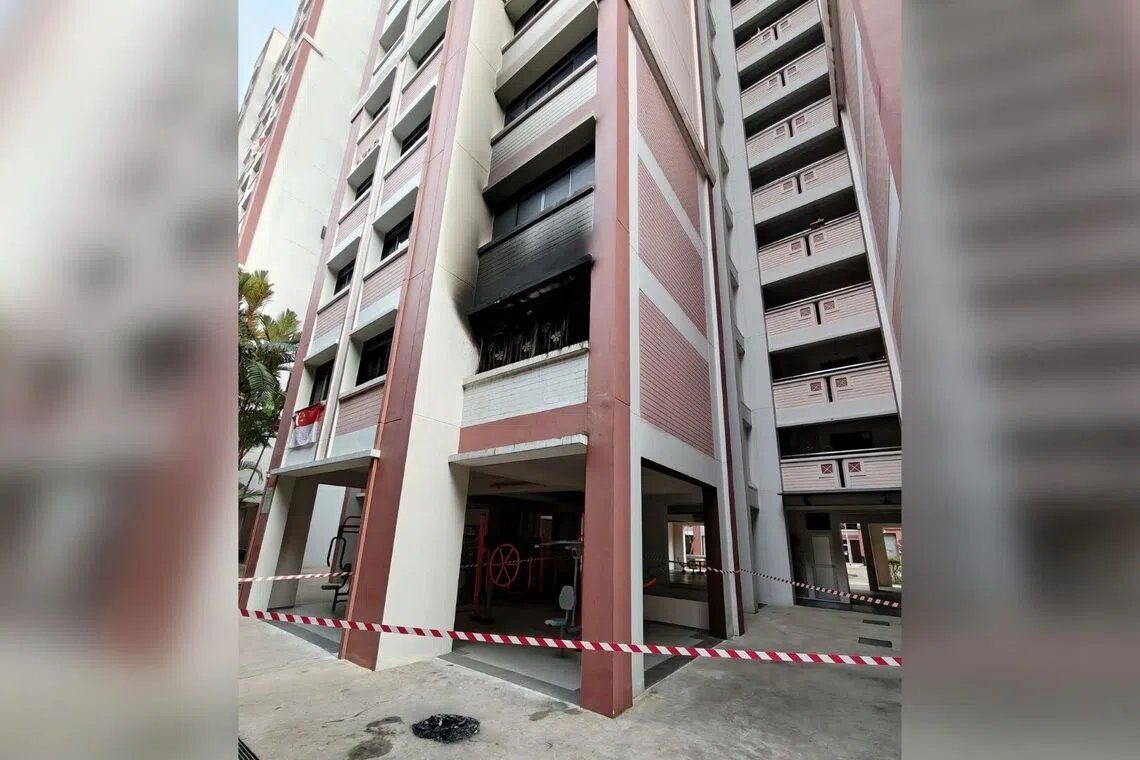
An elderly man was hospitalised following a fire that engulfed a bedroom in a Housing and Development Board flat in Buangkok Crescent in the early hours of Thursday morning. Singapore's Civil Defence Force responded to the emergency call at approximately 12:25am, arriving at Block 979B Buangkok Crescent where the blaze was confined to the contents of a second-floor bedroom unit. Firefighters extinguished the flames using a water jet, bringing the situation under control within a reasonable timeframe. The resident was transported to Sengkang General Hospital for treatment, marking another incident in Singapore's ongoing efforts to manage fire safety across its densely populated housing estates.
Ang Mo Kio GRC Member of Parliament Victor Lye provided an update through social media later that morning, revealing that the elderly man suffered cuts to his feet during the incident. The good news came swiftly, with Lye announcing that the patient had already been discharged from hospital by the time of his post at approximately 1pm on August 20. This rapid recovery and discharge reflected the relatively manageable nature of the injuries sustained, though the incident underscored the serious risks posed by residential fires in high-rise housing complexes where evacuation can be complicated.
What transformed this incident from a standard emergency response into a story of community resilience was the swift action of a young ITE student living in the neighbouring unit. The student, whose identity was not disclosed, demonstrated remarkable composure and initiative by reaching for a fire extinguisher and using it to help contain the spread of flames. Beyond this critical intervention, the student then took charge of evacuation procedures, successfully leading three residents out of the affected flat to safety. This action potentially prevented a more serious outcome and highlighted the value of immediate neighbour assistance in residential emergencies, a factor that fire safety authorities continue to emphasise in their public education campaigns.
The student's heroic response resonated with local leadership, prompting MP Lye to publicly commend the young individual for their decisive action. Such recognition serves an important function in communities, reinforcing the importance of civic responsibility and quick thinking during crises. The incident also demonstrates how younger generations in Singapore, including those in technical institutes, can play a meaningful role in neighbourhood safety and emergency response. For Malaysian readers observing Singapore's community engagement approaches, this example illustrates the value of fostering a culture where residents feel empowered to intervene constructively during emergencies.
Following the fire, support mechanisms were activated to assist the affected family. MP Lye visited the residential unit personally to offer reassurance and determine what assistance might be needed. The Residents' Network centre, a community resource designed for situations exactly like this, was opened and made available to the displaced residents. However, in a touching display of neighbourhood solidarity, the affected family opted to remain with their helpful neighbours rather than utilise temporary community facilities. This decision reflected both the practical support offered by those living nearby and the emotional comfort derived from staying within their immediate social circle during a stressful period.
The fire's origin remains under investigation by authorities, who will examine the circumstances that led to the bedroom fire in order to identify potential prevention measures. Such investigations form a crucial part of Singapore's approach to fire safety, as analysis of residential fires can reveal patterns related to electrical faults, cooking accidents, or other preventable causes. The findings from this incident may contribute to broader safety recommendations disseminated through public awareness campaigns or building management directives. For regional observers, Singapore's methodical approach to post-incident investigation demonstrates best practices in learning from emergency events to improve future fire prevention strategies.
Residential fires remain a concern across Southeast Asia, with high-density housing estates presenting particular challenges due to rapid flame spread and evacuation complexity. Singapore's HDB flats, which house the majority of the city-state's population, are fitted with modern fire detection and suppression systems, yet the human element remains critical. The rapid response by both emergency services and the alert neighbour in this case exemplifies how multiple layers of safety—infrastructure, trained personnel, and civic awareness—combine to protect lives. For Malaysian property owners and residents living in similar high-rise residential environments, this incident reinforces the importance of understanding fire safety procedures, maintaining awareness of fire extinguisher locations, and cultivating relationships with neighbours who can assist during emergencies.
The incident also highlights the ongoing relevance of fire safety education in densely populated urban environments. As Singapore continues to age as a society, ensuring that elderly residents have access to support during emergencies becomes increasingly important. Building management associations, community centres, and neighbourhood networks all play roles in creating safety nets for vulnerable populations. The swift discharge of the elderly resident from hospital suggests that prompt medical attention combined with community support can lead to positive outcomes even when emergencies occur.

