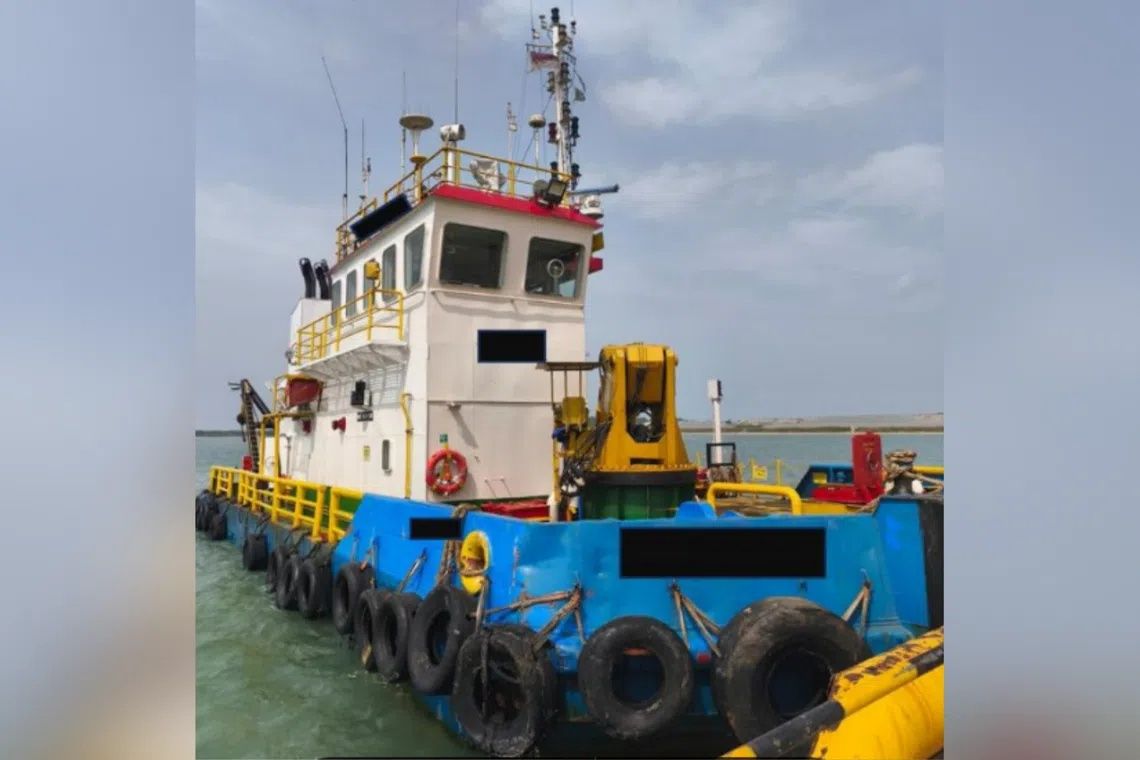
Eight crew members working aboard a Singapore-registered tugboat have been taken into custody on suspicion of orchestrating an illegal transaction involving marine gas oil, with the men scheduled for court appearance on Friday, August 14. The arrests represent the latest enforcement action by Singapore's maritime authorities against fuel theft schemes that persistently threaten the security and integrity of one of the world's busiest shipping corridors.
Police Coast Guard officers initiated the operation in the early morning hours of August 13, conducting a routine security check on the tugboat operating in waters off Tuas, a strategic location on Singapore's western coastline where significant maritime and industrial activity converges. The inspection, conducted at approximately 1.05 am, uncovered evidence suggesting coordinated criminal activity among members of the vessel's crew.
Initial police investigations established that the eight men, whose ages range from 25 to 54 years old, had systematically misappropriated marine gas oil belonging to their employer without authorisation. The fuel, valued at approximately S$10,570, was then diverted into unauthorised commercial channels where the crew members sold it privately for their own financial enrichment. This scheme represents a particularly brazen form of workplace theft, given that the perpetrators occupied positions of trust and responsibility aboard the vessel.
The charges these men face carry substantial legal consequences under Singapore's criminal framework. They will be prosecuted for theft by servant of property in possession of master, an offence that specifically addresses cases where employees or crew members unlawfully take company property entrusted to their care. Conviction on such charges could result in fines alongside imprisonment, with custodial sentences potentially reaching seven years depending on circumstances and judicial discretion.
Marine gas oil constitutes a critical fuel source within Singapore's maritime economy, widely used to power commercial vessels traversing regional waters and the broader Asia-Pacific region. The fuel commands considerable market value, making it an attractive target for organised theft operations. Beyond the immediate financial loss to employers, such criminal activities undermine the regulatory framework designed to govern maritime commerce and fuel transactions throughout Singapore's territorial waters.
Singapore's geographic position as a global shipping hub means the country maintains exceptionally strict enforcement protocols governing maritime activities and resource transactions. The port and surrounding waters function as a critical intersection for international maritime trade, necessitating robust security measures to prevent theft, smuggling, and other illicit activities that could compromise operational integrity. Illegal fuel transactions, whether involving marine gas oil or other petroleum products, are treated with particular severity because they generate revenue streams for criminal networks and undermine legitimate commercial operations.
The Police Coast Guard, which operates under Singapore's internal security apparatus, has emerged as a frontline agency in combating such maritime crimes. These officers conduct regular patrols and security inspections across Singapore's territorial waters, with particular attention paid to vessels in proximity to industrial zones and fuel storage facilities. The early morning timing of this inspection reflects standard law enforcement practices designed to catch criminal actors during periods when monitoring may be less rigorous or when theft operations are actively occurring.
For Malaysia and other Southeast Asian nations sharing maritime boundaries with Singapore, such enforcement actions carry broader implications for regional maritime security. The Straits of Malacca and surrounding waters represent crucial transportation corridors through which vital fuel shipments and commercial cargo transit daily. Organised fuel theft in any jurisdiction creates spillover effects throughout the region, as criminal networks often operate across multiple countries' waters. Singapore's aggressive stance against such activities helps establish security standards that influence maritime practices throughout Southeast Asia.
The incident also highlights enduring vulnerabilities within crew-level operations aboard commercial vessels. Tugboat operations require rotating crews and often involve extended working hours in isolated maritime environments, circumstances that can create opportunities for collusion and coordinated theft. Maritime companies must implement rigorous inventory management systems, surveillance protocols, and internal audit procedures to mitigate such risks. The involvement of multiple crew members suggests organisational sophistication rather than opportunistic theft by a single individual.
Singapore's prosecution of these cases sends clear deterrent messaging to maritime workers throughout the region who might otherwise perceive fuel theft as a low-risk enterprise. The severity of potential punishments, coupled with the certainty of detection through regular coast guard patrols, establishes concrete disincentives against participation in such schemes. Maritime employers operating throughout Southeast Asia benefit from these enforcement outcomes, as they reinforce worker compliance with corporate security protocols and fuel management procedures.
The authorities have explicitly signalled their commitment to maintaining maritime security within Singapore's jurisdictional waters. Official statements emphasise that illegal fuel transactions remain a priority enforcement concern, with ongoing patrols and security checks designed to prevent, deter, and detect such illicit activities. This messaging extends not merely to would-be perpetrators but also to the broader maritime community, reinforcing Singapore's determination to preserve the regulatory environment governing one of the world's most important shipping corridors.
As regional maritime traffic continues expanding and fuel prices remain economically significant, authorities across Southeast Asia anticipate persistent pressure from criminal networks seeking to exploit fuel supply chains. The eight arrested tugboat crew members now face judicial proceedings that will likely establish precedent for similar cases. Beyond the immediate outcomes for these individuals, the prosecution underscores how maritime law enforcement remains an essential component of Singapore's broader strategy to maintain secure, transparent, and orderly commercial operations throughout its territorial waters and the surrounding region.

