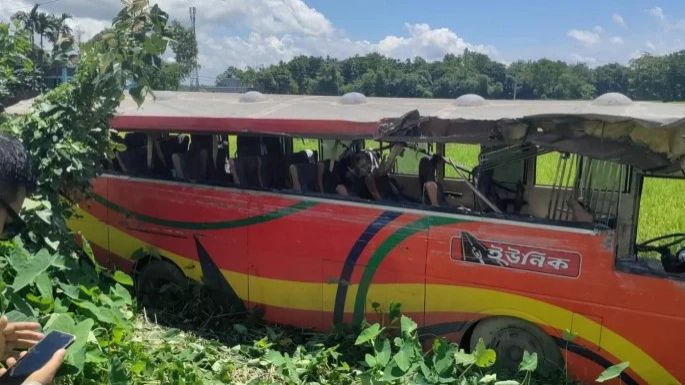
A catastrophic road accident in the Sylhet region of northeastern Bangladesh claimed eight lives on Friday morning, underscoring the persistent dangers that travellers face on the nation's highways. The collision occurred when two passenger buses struck each other head-on near Osmani Nagar, approximately 240 kilometres northeast of the capital Dhaka, at around 7:30 a.m. local time. Emergency responders recovered eight bodies from the wreckage, while a further 25 individuals sustained injuries of varying severity. Golam Mostafa, the officer-in-charge of Sylhet's Osmani Nagar police station, confirmed these figures to local media outlets shortly after the incident.
Investigators have begun examining the circumstances that led to the collision, though the precise cause remains under determination. The timing of the accident—early morning when many buses operate long-distance routes—suggests the vehicles were likely part of Bangladesh's extensive intercity transport network that connects major urban centres. Determining exactly what triggered the head-on impact will be crucial not only for understanding this specific tragedy but also for identifying whether systematic failures contributed to the crash.
Bangladesh's road safety record represents a significant public health challenge that extends far beyond individual incidents. The nation consistently records among the world's highest rates of road fatality relative to the number of vehicles in circulation, a pattern that reflects deep structural problems within the transport system. The infrastructure supporting vehicular movement across Bangladesh frequently falls short of international safety standards, with many highways characterised by poor design, inadequate maintenance, and insufficient safety features such as proper lane markings or barriers.
The condition of buses operating on intercity routes compounds these infrastructure deficits. Many vehicles in service across the country are poorly maintained, with worn braking systems, faulty steering mechanisms, and tyres operating well beyond their safe service life. Operators facing intense competitive pressure to maximise revenue often defer essential maintenance work, viewing such expenditure as cutting into profits rather than as an investment in passenger safety. Regular mechanical inspections, when they occur at all, may be cursory or conducted by technicians lacking proper qualifications.
Driver behaviour and training represent another critical vulnerability in Bangladesh's road safety landscape. Many intercity bus drivers operate with minimal formal training, having acquired their skills through apprenticeship rather than structured instruction in safe driving practices. Violations of traffic regulations—excessive speeding, reckless overtaking, and failure to maintain safe following distances—occur with alarming frequency on major routes. The fatigue accumulated during long shifts, often spanning ten to twelve hours without adequate breaks, further degrades driver alertness and reaction times.
The regulatory framework governing road transport in Bangladesh struggles with implementation challenges that leave violators largely unpunished. The traffic department lacks sufficient resources to conduct meaningful monitoring of intercity bus operations, meaning many vehicles operate without proper licensing or insurance. Checkpoints intended to catch traffic violations are often undermanned or poorly coordinated, allowing dangerous practices to continue unchecked. Corruption within enforcement agencies sometimes shields operators from accountability, particularly when local officials have financial relationships with transport companies.
For Malaysia and other Southeast Asian nations, Bangladesh's road safety crisis offers important lessons about the interconnected nature of transport safety and development. The underlying causes—infrastructure deficits, inadequate regulatory oversight, and economic pressures favouring speed over safety—operate across multiple countries in the region. Malaysia itself has made significant progress in reducing road fatalities through improved enforcement, vehicle standards, and infrastructure investment, yet continues to record casualty figures that warrant serious concern.
The human cost of Bangladesh's road accidents extends far beyond the immediate trauma experienced by crash victims and their families. Communities lose workers, students, and parents in preventable accidents, while survivors often face permanent disability that constrains their economic productivity. The healthcare system bears substantial burdens treating crash injuries, diverting resources from other medical priorities. Economically, road accidents impose costs on Bangladesh estimated in the hundreds of millions of dollars annually through lost productivity, medical expenses, and vehicle damage.
Addressing the crisis requires sustained commitment across multiple fronts. Infrastructure improvements must prioritise major intercity routes, incorporating modern safety features and maintenance systems. Vehicle standards need strengthening, with regular inspections ensuring that buses meet minimum mechanical safety requirements before operating commercially. Driver training programmes must become mandatory rather than optional, with certification systems that verify competence in safe driving practices and emergency procedures.
Enforcement mechanisms require substantial strengthening to become genuinely deterrent rather than symbolic. Penalties for traffic violations must be credible enough to outweigh the savings operators achieve through cutting corners on safety. Traffic police need adequate funding, training, and management systems to conduct regular, effective monitoring of intercity operations. Reducing corruption within enforcement agencies remains essential but difficult work requiring leadership commitment and systemic reform.
Public awareness campaigns, while not addressing root causes, can reinforce norms supporting safer travel practices among passengers and operators alike. Encouraging passengers to select operators with good safety records, to refuse travel with visibly fatigued drivers, and to report dangerous behaviour creates additional informal oversight mechanisms. Civil society organisations documenting accident trends and holding authorities accountable for safety standards contribute important pressure for reform.
The Friday morning collision in Sylhet represents merely one incident in a far broader pattern of preventable deaths that Bangladesh must confront through comprehensive, sustained action. While authorities investigate this specific crash, the broader road safety challenge demands equally serious attention to the systemic failures that make such tragedies all too common across the region.

