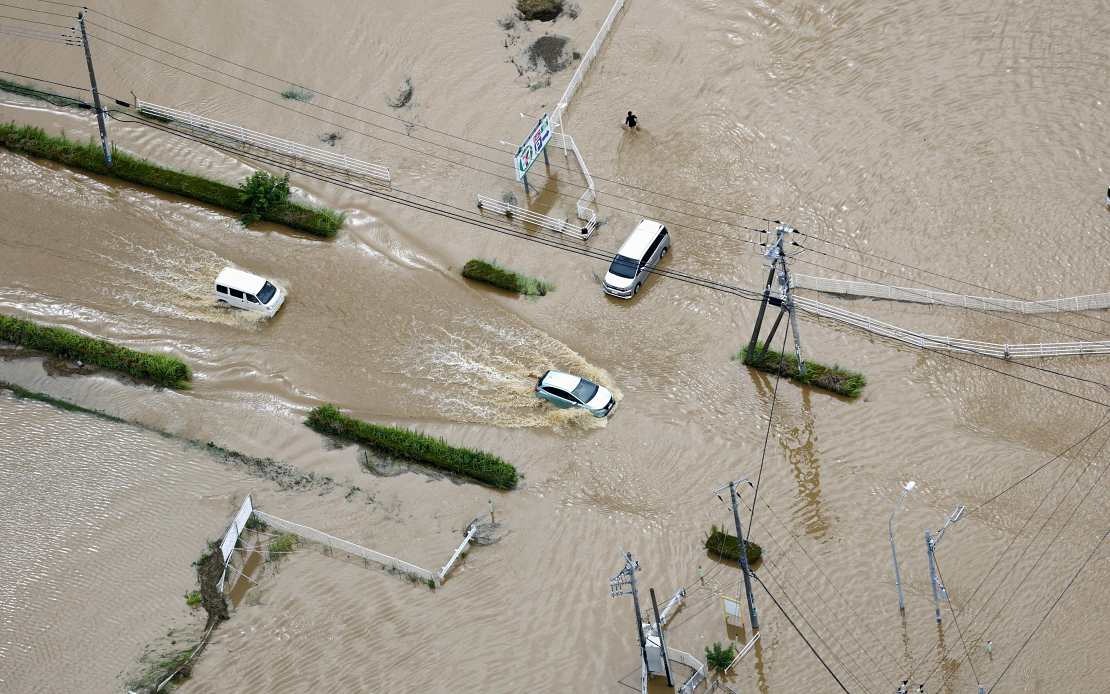
A severe weather event has claimed eight lives across Japan's Chiba Prefecture after record-breaking rainfall pounded the region through early Friday morning, with authorities struggling to manage widespread evacuations and infrastructure disruptions across one of Japan's most densely populated areas.
Deaths were confirmed in five cities within the prefecture: Chiba, Kashiwa, Ichikawa, Sakura and Yachiyo, while another four people sustained minor injuries during the deluge. The scale of the disaster reflects the intensity of the rainfall event and its devastating impact on communities in eastern Japan, a region that has faced increasing weather-related challenges in recent years.
The Japan Meteorological Agency recorded extraordinary precipitation levels during the event, with Chiba City receiving 348 millimetres of rain between midnight and 1.40 am on Friday morning. This figure assumes particular significance when compared to typical weather patterns for the region; the amount represents approximately three times the entire monthly rainfall average for August in Chiba City, compressed into a mere 12-hour window. Such concentration of precipitation within such a short timeframe creates severe conditions for drainage systems and increases the risk of flooding and landslide damage dramatically.
The meteorological agency had escalated its warning system to the highest possible alert level—Level 5—for heavy rain and potential landslides across portions of Chiba Prefecture before the peak rainfall occurred. This maximum-severity warning indicates the agency's assessment that conditions posed an extreme threat to life and property. As conditions improved on Friday morning, authorities downgraded these critical alerts to Level 4 or lower, suggesting some reduction in immediate danger, though weather officials cautioned that additional heavy rain remained possible and urged residents to maintain heightened awareness.
The human cost extended beyond fatalities, as tens of thousands of residents found themselves forced from their homes. According to figures released by the Fire and Disaster Management Agency, evacuation orders remained in force for approximately 102,600 people across Chiba Prefecture as of 11 am on Friday morning. These large-scale evacuations reflect standard Japanese disaster protocol for extreme weather events and highlight the breadth of the affected region.
The impact on regional infrastructure proved particularly acute at Narita Airport, one of Japan's major international aviation hubs serving the Tokyo metropolitan area. The operator reported that approximately 7,000 passengers spent an unplanned night at the airport after the downpour severely disrupted both train and bus operations connecting the facility to surrounding areas. The paralysis of ground transport created bottlenecks that prevented passengers from reaching their destinations or continuing their journeys, leaving thousands stranded in airport facilities.
For Malaysian readers and Southeast Asian observers, this event underscores the increasing frequency and intensity of extreme weather phenomena affecting East Asia. Japan's experience with record rainfall mirrors patterns observed across the region, including Malaysia, where monsoon seasons and unexpected downpours have intensified in recent years. The efficiency of Japan's early warning systems and established evacuation protocols, though tested by the event's severity, offer comparative insights into disaster preparedness frameworks that regional nations continue to develop and refine.
The concentration of damage in Chiba Prefecture, located in close proximity to Tokyo, demonstrates that even areas with advanced infrastructure and well-established safety systems remain vulnerable to exceptional meteorological events. The prefecture's high population density amplified the scale of the evacuation challenge, as moving over 100,000 people requires coordinated efforts across multiple agencies and municipalities. The disruption to Narita Airport operations additionally illustrates how extreme weather can create cascading effects across interconnected systems serving millions of people.
Japanese authorities faced significant ongoing challenges as investigations into individual fatalities continued and displaced residents remained in evacuation centres. The recovery process typically extends far beyond the immediate weather event, encompassing damage assessment, infrastructure restoration, and psychological support for affected communities. Previous major rainfall events in Japan have demonstrated that the full economic and social costs of such disasters can take months or years to fully quantify.
The incident also reflects broader climate adaptation concerns for densely populated regions in East and Southeast Asia. As atmospheric conditions produce increasingly intense precipitation events within shorter timeframes, both structural improvements to drainage and flood-management infrastructure, as well as advancements in predictive meteorology and public communication systems, become critical investments. Japan's meteorological capabilities rank among the world's most sophisticated, yet the prefecture still faced challenges managing the event's scale.
Weather officials emphasised the importance of continued vigilance as the atmospheric system responsible for the extreme rainfall remained capable of producing additional downpours. This caution reflected meteorological uncertainty—while the most severe conditions had passed, secondary impacts including saturated ground and compromised structural integrity could create hazards persisting for days after rainfall ceased. Residents in affected areas faced extended periods of restricted movement and heightened risk from secondary phenomena such as localised flooding or small landslides.
The disaster management response demonstrated coordination between national agencies including the Japan Meteorological Agency and the Fire and Disaster Management Agency, working with prefectural authorities to manage evacuation logistics and maintain public communication. However, the scale of displacement—requiring accommodation, food provision, and medical services for over 100,000 people—stretched regional resources considerably. The incident serves as a reminder that natural disasters, regardless of a nation's technological advancement or preparedness systems, can overwhelm existing infrastructure and protocols when meteorological extremes exceed historical precedent.

