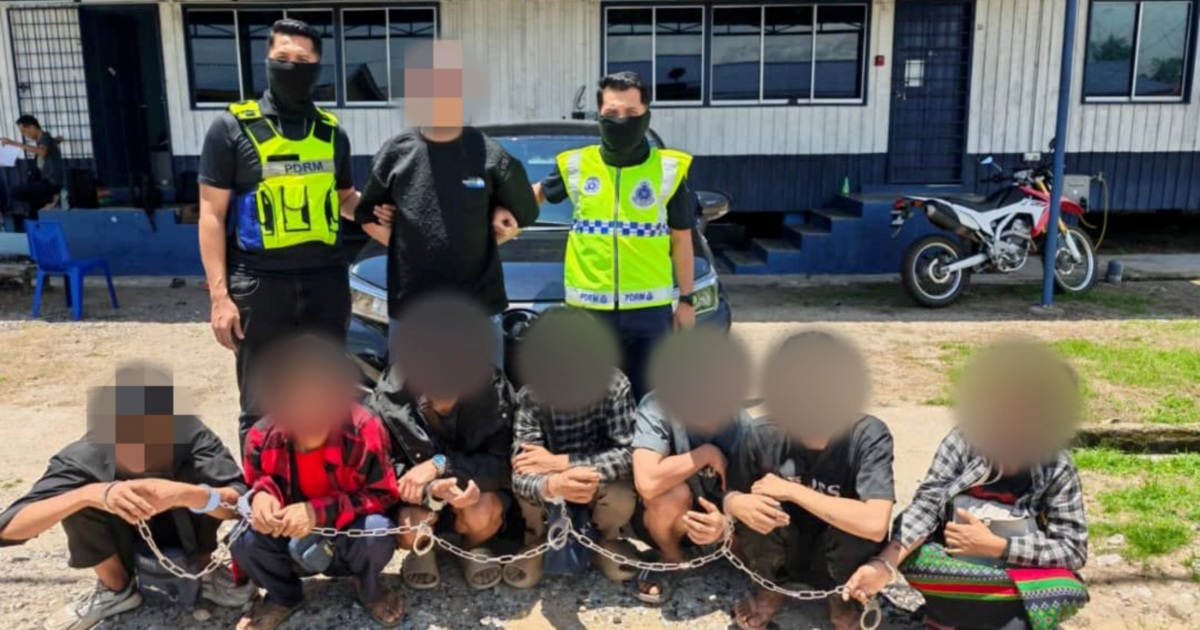
Authorities in Kelantan have moved decisively against a suspected human trafficking operation, apprehending eight people in the early hours following an investigation into the unlawful transportation of foreign nationals. The operation, centred in Kota Baru, resulted in the arrest of a Malaysian man who police believe orchestrated the movement of seven undocumented Myanmar nationals through the state. The remaining detainees are being questioned regarding their involvement in what law enforcement officials characterize as an organised smuggling network.
The raid underscores the persistent challenge Malaysian authorities face in combating clandestine migration routes that funnel vulnerable foreign workers into the country through irregular channels. Myanmar nationals have long constituted a significant proportion of undocumented migrants attempting entry into Malaysia, driven by economic desperation and limited legal pathways for employment. The Kelantan operation represents one of numerous similar interceptions conducted across the peninsula, yet the frequency of such busts suggests these smuggling rings continue to operate with relative impunity across porous border regions.
Kota Baru, as the capital of Kelantan and a key transit hub for northeastern Malaysia, has emerged as a frequent focal point for these enforcement actions. The state's proximity to Thailand and its geographic position make it a natural corridor for human trafficking operations moving migrants southward toward the economic opportunities of Kuala Lumpur and the industrial zones of Selangor. Police coordination across Kelantan has intensified in recent years, yet the sheer volume of attempted border crossings continues to strain resource allocation and reactive policing capabilities.
The transportation method employed in this case—a vehicle used to move multiple undocumented migrants through established highways—represents the most common smuggling logistics observed by enforcement agencies. Such operations rely on a loosely affiliated network of drivers, safe house operators, and coordinators who compartmentalize their involvement to minimize individual legal exposure. The arrest of the Malaysian driver suggests investigators have identified a critical link in this supply chain, though the broader organizational structure behind the operation remains under examination.
The seven Myanmar nationals recovered during the bust now face the standard processing procedures that typically accompany immigration enforcement in Malaysia. Beyond immediate detention and identity documentation, these individuals confront deportation proceedings and potential prosecution under immigration statutes. However, enforcement responses to migrant workers themselves have drawn increasing criticism from human rights organizations, which argue that migrants—particularly those fleeing economic hardship—warrant victim-centered approaches rather than purely criminal prosecution frameworks.
From a regional perspective, this Kelantan operation reflects broader Southeast Asian migration dynamics that connect Myanmar's economic stagnation and political instability directly to Malaysia's labour market demand. Malaysian industries—particularly construction, manufacturing, and domestic services—have become increasingly dependent on migrant labour, yet the formal channels for employment remain severely constrained by quota systems and bureaucratic barriers. This structural mismatch between labour demand and legal supply creates the economic conditions under which smuggling networks flourish and operate with comparative safety.
The investigation's success depends partly on community intelligence and tips from residents who observe suspicious activity in their localities. Police cooperation agreements with Thai authorities have also enhanced capacity for cross-border information sharing, though coordination challenges persist given the resources required for comprehensive surveillance across the lengthy land boundary. The involvement of eight suspects suggests police have successfully traced connections beyond the immediate driver-migrant transaction into the wider facilitation infrastructure.
Malaysia's approach to migrant smuggling enforcement has evolved incrementally, incorporating financial investigations alongside transportation interdictions. Freezing the revenue flows that incentivize smuggling operations represents a longer-term strategic objective, though such initiatives require sustained coordination between police, immigration authorities, and financial intelligence units. The eight arrests will likely trigger further probes into money transfer patterns, vehicle ownership records, and communications between network members.
For Malaysian policymakers, the Kelantan operation exemplifies the limitations of enforcement-only responses to irregular migration. Several regional experts contend that expanding legal pathways for Myanmar workers—potentially through bilateral labour agreements that include enhanced protections—could reduce the economic pressure sustaining smuggling networks. Thailand has experimented with such frameworks, though implementation challenges and exploitative conditions persist even within regulated migrant employment structures.
The broader implications for Malaysia involve acknowledging that irregular migration reflects not primarily criminal intent among migrants themselves but rather systemic gaps between labour market realities and immigration policy design. The eight arrests address immediate symptoms, yet addressing root causes requires integrated approaches encompassing economic development partnerships with Myanmar, reformed domestic labour policies, and enhanced worker protection standards. Without such comprehensive strategies, enforcement operations will likely continue generating recurring headlines as new smuggling networks rapidly reorganize following periodic interdictions.

