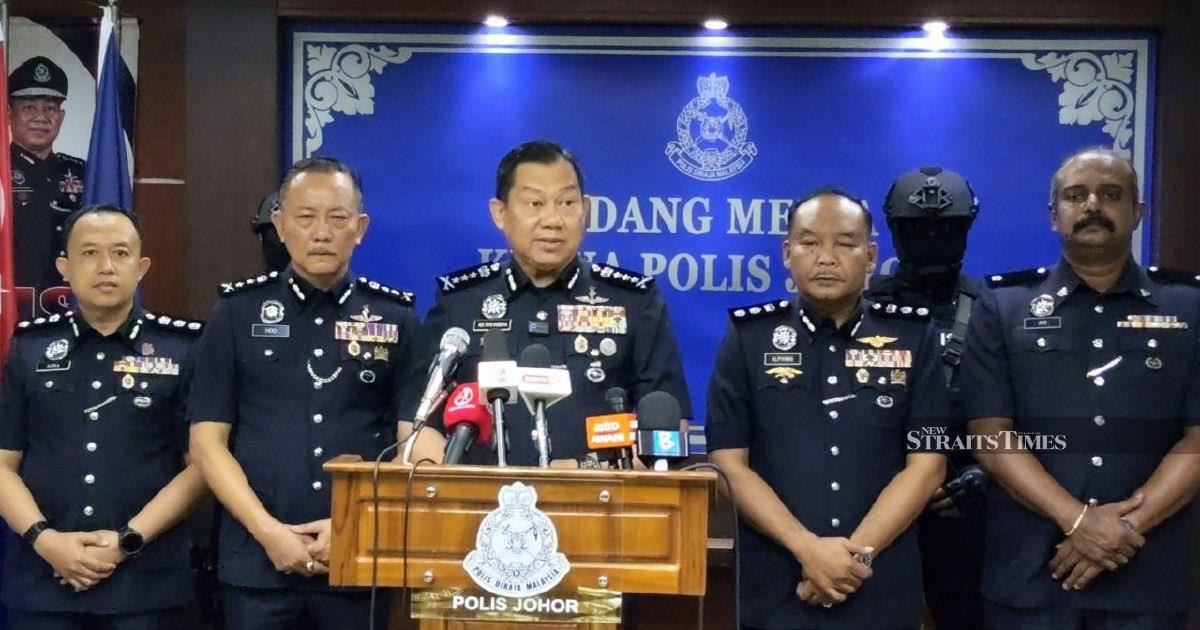
Authorities in Johor Baru have dealt a substantial blow to organised narcotics trafficking in the region, concluding weekend raids that culminated in the capture of a major methamphetamine consignment and the apprehension of eight suspects. The operation recovered 60.78kg of methamphetamine with an estimated street value of RM3.04 million, signalling the scale of clandestine drug movement operating within the southern Malaysian border zone.
Among those detained was a school dropout who had been enlisted as a transporter—a common recruitment pattern in regional trafficking networks where younger individuals are leveraged for their perceived lower risk profile and reduced legal culpability. This case underscores a troubling trend across Southeast Asia where educational disengagement becomes an entry point into criminal economies. The transporter's arrest highlights how organised syndicates systematically identify and exploit vulnerable youth, often from economically disadvantaged backgrounds, to insulate higher-level operatives from direct law enforcement exposure.
The eight individuals taken into custody during Saturday's coordinated raids represent various roles within the distribution chain. Beyond the teenage courier, the group likely included mid-level dealers, retailers, and potentially financiers—though specifics regarding individual roles have not been disclosed. Such hierarchical arrests suggest that authorities may have been tracking an operational cell for some period, gathering sufficient intelligence to justify simultaneous strikes across multiple locations.
Johor Baru's significance as a narcotics enforcement flashpoint cannot be overstated. The state capital sits strategically at the threshold between Malaysia and Singapore, with its port facilities and cross-border road networks facilitating both legitimate commerce and illicit trafficking. The region has consistently featured prominently in drug seizure statistics, reflecting both the intensity of transit operations and the elevated enforcement presence maintained by Malaysian and Singaporean authorities. This latest interception aligns with patterns observed over the past several years, where methamphetamine remains the dominant controlled substance in regional trafficking routes.
Methamphetamine, manufactured across Southeast Asian production hubs particularly in the Golden Triangle and other clandestine facilities, has become the narcotic of preference for trafficking organisations operating in this corridor. The drug's high profit margins, compact volume relative to value, and sustained demand across consumption markets make it perpetually attractive to criminal enterprises. The 60.78kg captured represents either a major retail-level cache or an intermediate waystation in a larger supply operation—context that law enforcement would carefully scrutinise during investigation phases.
The estimated valuation of RM3.04 million reflects crystallised black-market pricing and represents a meaningful loss to the trafficking network. However, analysts of regional drug trafficking patterns note that such seizures, while operationally disruptive, rarely fundamentally alter supply dynamics in established corridors. Instead, they typically trigger operational recalibration—alternative routes, new transport methods, and recruitment of replacement personnel—rather than inducing market contraction. This creates an inherent challenge for enforcement authorities seeking sustained impact against entrenched trafficking systems.
The involvement of a school dropout in the operation encapsulates a broader social dimension to drug trafficking that extends beyond pure law enforcement. In Malaysia and across Southeast Asia, educational pathways and legitimate employment opportunities significantly correlate with trafficking vulnerability. Young people who exit the formal education system without viable economic prospects become susceptible to immediate income opportunities presented by organised crime, where drug courier positions offer quick financial returns despite accompanying substantial legal jeopardy. This dynamic suggests that comprehensive countermeasures require coordinated intervention across education, youth employment, and social welfare domains alongside traditional policing.
The Johor Baru arrests occur within a national context of intensifying anti-narcotics operations. Malaysia's enforcement agencies, supported by the statutory framework of the Dangerous Drugs Act and bolstered cooperation with regional partners, have progressively upgraded their detection and interdiction capabilities. Yet the persistence and scale of trafficking through border zones indicate that supply-side pressures remain considerable, reflecting the vast market demand across consuming regions and the exceptional profitability that sustains criminal investment in these activities.
Investigations will now focus on establishing the broader architecture of the network—identifying sources of supply, downstream distribution channels, financial pathways, and command structures. Such intelligence often yields insights applicable to disrupting related operations and pinpointing additional trafficking vulnerabilities. The detention of eight individuals provides potential cooperation leverage, as mid-tier operatives may exchange information regarding higher-echelon contacts in exchange for prosecutorial consideration.
Beyond immediate law enforcement outcomes, this operation reflects the persistent challenge confronting Malaysian and Southeast Asian authorities as they seek to contain transnational drug flows. The region's geography, bordering producing areas and consumption centres, combined with infrastructure enabling high-volume commerce, creates structural vulnerabilities that enforcement alone cannot fully address. Sustainable progress requires sustained capacity-building within enforcement agencies, targeted prevention programmes addressing youth vulnerability, and international cooperation frameworks that synchronise interdiction efforts across borders.

