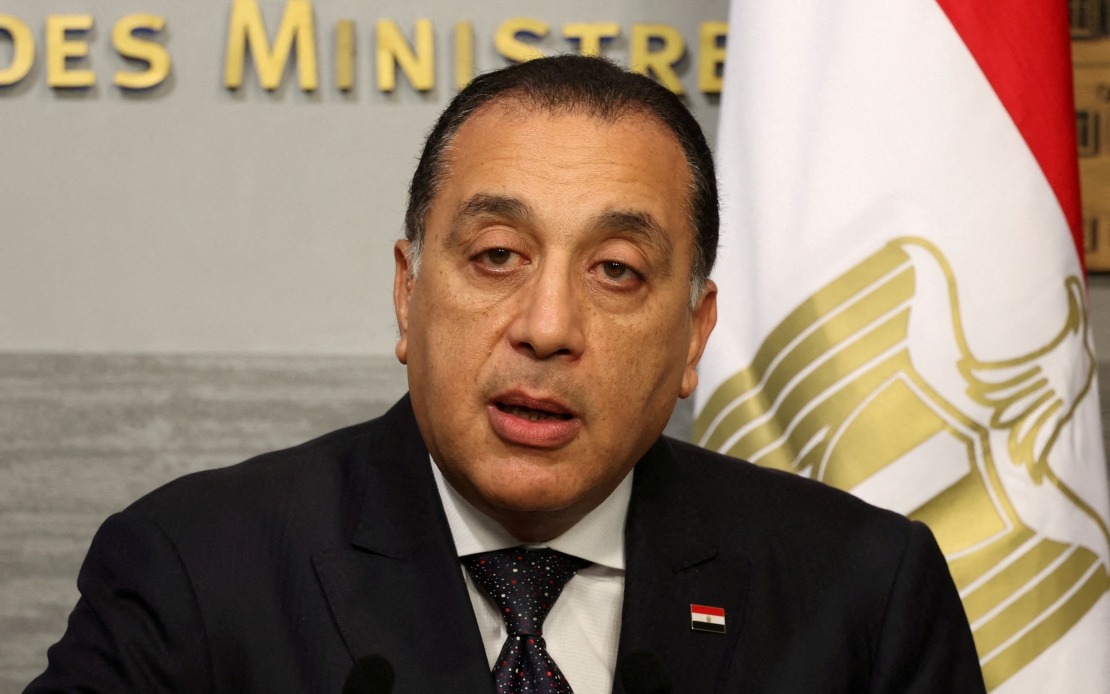
Egypt is moving forward with its landmark entry into nuclear energy, with Prime Minister Mostafa Madbouly confirming that the country's first atomic power station remains on track for initial grid connection in 2028. The reassurance came during discussions with Alexey Likhachev, chief of Russia's Rosatom state corporation, as engineers celebrated a significant construction milestone by installing the reactor pressure vessel for the facility's second unit. This achievement underscores the tangible progress being made on what represents one of the most consequential infrastructure undertakings in modern Egyptian history.
The El Dabaa Nuclear Power Plant, situated along the Mediterranean coast in Matrouh Province approximately 300 kilometres northwest of Cairo, represents a transformative investment in Egypt's energy future. The four-reactor complex, with each unit generating 1,200 megawatts, will substantially expand the nation's generating capacity while addressing chronic electricity shortages that have constrained economic growth. The facility's location in the sparsely populated northwestern region positions it to serve the growing demand centres along the Nile Valley and Delta while minimising environmental and social disruption in heavily populated zones.
The project framework emerged from contracts signed between Cairo and Moscow that took effect in December 2017, establishing a formal partnership that extends beyond mere commercial transaction into strategic cooperation on critical infrastructure. Russian involvement brings technical expertise and financing mechanisms that have proven essential for realising Egypt's atomic ambitions, a sector where regional expertise remains limited. This international dimension also reflects broader geopolitical alignments, with Russia leveraging its nuclear technology as a tool for deepening ties with significant Middle Eastern partners.
Madbouly characterised the nuclear plant as a realisation of long-standing national aspirations, one that could only materialise through sustained bilateral cooperation. The government's commitment to adhering to the agreed implementation schedule signals confidence in the project's viability despite historical delays that have plagued other major Egyptian infrastructure schemes. By explicitly reaffirming this dedication during a high-level meeting, the prime minister sought to reassure investors, international partners, and domestic constituencies of the administration's seriousness in seeing the undertaking through to completion.
The energy implications for Egypt are substantial. The country's electricity sector faces mounting pressure from rapid population growth, urbanisation, and industrial expansion, with demand projected to continue rising sharply through the 2030s. Current generation relies heavily on fossil fuels, particularly natural gas, supplemented by hydroelectric capacity from the Aswan High Dam and increasingly from renewable sources. The nuclear facility would provide a significant baseload power supply, operating continuously to meet baseline demand while renewable resources handle variable loads, creating a more resilient and balanced energy portfolio.
Climate considerations add weight to the nuclear investment. As a Mediterranean nation vulnerable to rising seas and desertification, Egypt faces existential environmental pressures. Nuclear generation produces no direct carbon emissions, aligning with the nation's international climate commitments and enhancing its credentials in global decarbonisation efforts. The plant thus serves multiple policy objectives simultaneously: meeting energy demand, reducing carbon footprint, and demonstrating technological sophistication on the world stage.
The timeline outlined by Likhachev provides clarity on deployment schedules, with the first reactor operational by 2028 and the remaining three units entering service by 2030. This phased approach allows engineers to operate and optimise the initial unit before scaling up to full capacity, reducing technical risk while building domestic expertise in nuclear operations. The concentrated completion window also distributes grid integration challenges across manageable intervals rather than introducing massive capacity in a single disruptive event.
For Southeast Asian observers, Egypt's nuclear programme holds instructive lessons. The region faces similar energy transition pressures, with several nations pursuing atomic power as part of their clean energy strategies. Vietnam, for instance, suspended its ambitious nuclear programme, while other regional states remain cautious despite electricity demands. Egypt's experience, including the logistics of securing foreign partnerships, managing construction timelines, and establishing regulatory frameworks, offers a practical case study in implementing major nuclear projects in developing economies.
The reactor pressure vessel installation represents more than symbolic progress—it demonstrates that manufacturing and logistics chains for complex nuclear equipment function effectively across international supply lines. These components cannot be improvised or sourced from multiple vendors; their fabrication and transport require extraordinary precision and security measures. Successfully moving such equipment through global supply networks and installing it according to specification validates the entire project's organisational capability.
Financial arrangements underpinning the El Dabaa complex remain largely opaque to public scrutiny, though Russian state financing mechanisms have reportedly enabled the venture to proceed despite Egypt's constrained budgetary environment. The commercial terms, including equipment pricing, construction costs, and operational parameters, reflect negotiations between governments rather than purely market-driven arrangements. Understanding these financial structures matters for Malaysian policymakers evaluating similar partnerships, as they illuminate how energy security objectives interact with fiscal constraints in developing economies.
The broader energy diversification agenda that Egypt pursues through nuclear investment complements parallel investments in solar and wind generation. The Mediterranean and Red Sea coasts offer substantial renewable potential, while desert regions provide exceptional insolation for photovoltaic arrays. A mixed portfolio combining nuclear baseload, variable renewables, and natural gas peaking capacity creates resilience that any single source cannot provide, positioning Egypt's grid for reliability amid climate volatility.
Successful completion of El Dabaa would establish Egypt as the Arab world's second operational nuclear power generator, following the United Arab Emirates. This positioning carries geopolitical significance in regional energy politics and technological development hierarchies. For Malaysian analysts monitoring Middle Eastern energy transitions and infrastructure development, Egypt's progress signals the feasibility of ambitious nuclear ventures in the region despite historical scepticism and technical challenges.

