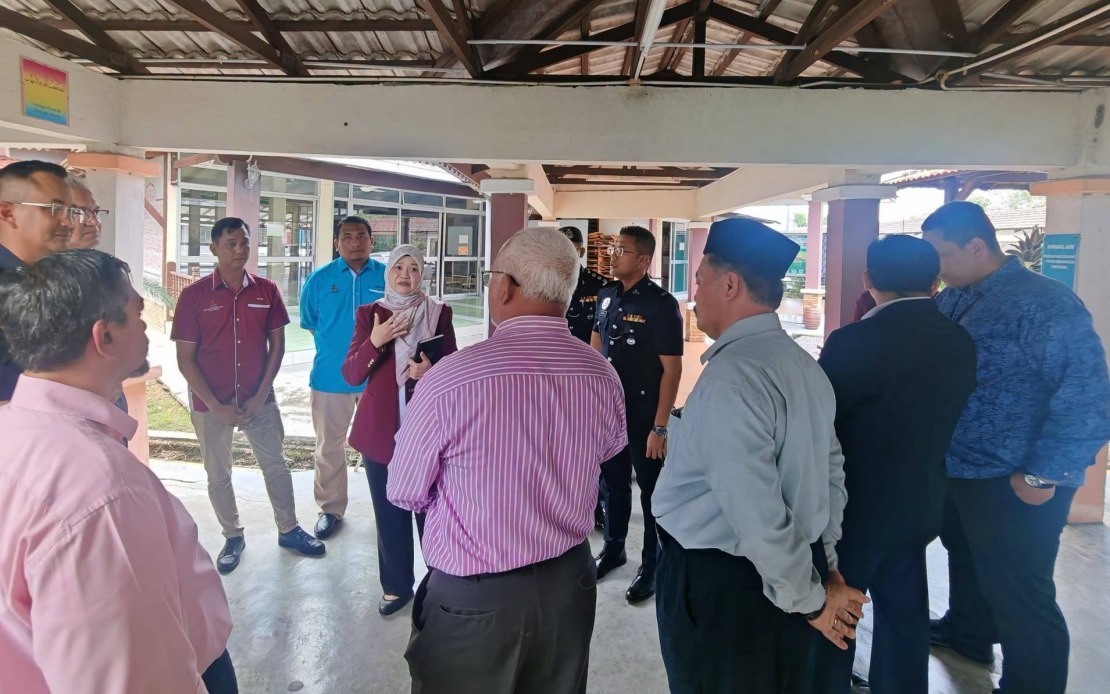
Education Minister Fadhlina Sidek made a visit to a secondary school in Banting, Kuala Langat, on July 6 to assess the situation after a Form Three student was stabbed by a fellow pupil that morning. The minister arrived at the institution at 1.20 pm to meet with school management and gather details about the incident, which unfolded during regular school hours and has raised fresh concerns about safety in Malaysian educational institutions.
According to police records, authorities received notification of the stabbing at 9.50 am. The victim, a female student, sustained injuries from a knife wielded by another girl in the same year group. Despite the severity of the attack, the student remained in stable condition while receiving treatment at Banting Hospital, where medical staff continued to monitor her progress. Police moved swiftly to secure the premises and detained the suspect for questioning, effectively containing the immediate threat to other pupils and staff members.
Fadhlina's response emphasised the government's commitment to supporting affected students and their families through this traumatic experience. In her public statement, she stressed that securing immediate medical care for the victim represented the administration's foremost concern, while simultaneously pledging to make psychological counselling available to all students and staff members affected by the incident. Her remarks underscored the emotional toll that such violence can inflict across an entire school community, particularly among young people still developing their emotional resilience.
The minister appealed to Malaysians to exercise responsibility when discussing the matter, explicitly cautioning against spreading unverified accounts or conjecture while the police investigation remained active. This appeal reflects growing concern about how social media can amplify anxiety and misinformation during school crises, potentially causing additional distress to families and compromising investigative efforts. Fadhlina assured the public that more information would be released once law enforcement agencies had thoroughly assessed the circumstances and authorities deemed it appropriate to share further details.
V. Paparaidu, the Selangor Human Resources and Poverty Eradication Committee chairman and assemblyman for Banting, commended the State Education Department's rapid deployment of psychosocial support services to the victim, her parents, and classmates affected by the incident. His intervention highlighted the multi-agency coordination that accompanies such emergencies in Malaysia's education system, where district-level political representatives often play a coordination role between schools, health services, and police.
Pararaidu used the incident as an opportunity to reinvigorate discussion about school security protocols, arguing that the safety measures currently in place require substantial strengthening. He specifically highlighted the need for security personnel to maintain heightened vigilance, particularly during peak arrival and departure times when students are most vulnerable and external access is typically higher. The assemblyman contended that monitoring who enters and exits school compounds represents an essential first line of defence against unauthorised individuals who might pose a threat to young people.
The emphasis on gate security reflected a broader reality facing Malaysian schools: many institutions struggle to balance accessibility with protection, often operating with limited security budgets and staff. Paparaidu's call for enhanced entry-point screening suggested that physical barriers and systematic checks could deter potential attackers, though implementing such measures requires sustained funding and training. His statement positioned school safety not merely as an administrative concern but as a fundamental responsibility that cannot be deprioritised in pursuit of operational convenience.
Pararaidu further articulated a vision of schools as sanctuary spaces where educational development can proceed without the spectre of violence or intimidation. This framing acknowledges that effective learning depends on a foundation of physical and psychological safety, and that disruptions caused by violent incidents can undermine academic progress across entire cohorts. His remarks resonated with concerns frequently expressed by parents and educators across Southeast Asia, where school violence, though comparatively rare, generates significant alarm when incidents do occur.
The Kuala Langat district police chief, Supt Mohd Akmalrizal Radzi, provided technical details confirming that the stabbing occurred between students within the school premises. The rapid police response and the apprehension of the suspect within hours of the incident demonstrated operational effectiveness, though questions inevitably emerge about the circumstances that allowed a knife to be brought into a school environment and deployed during school hours. These investigative angles will likely form the focus of police inquiries as they work to establish motive and assess any warning signs that might have been missed.
The incident underscores persistent challenges in creating truly secure school environments that remain welcoming and conducive to learning. While Malaysian schools have implemented various security measures over recent years, the fact that such attacks can still occur suggests that more comprehensive approaches may be needed. These could encompass not only physical security but also mental health support, conflict resolution training, and early intervention programmes targeting at-risk students.
For Malaysian policymakers and school administrators, the Banting incident serves as a stark reminder that complacency regarding student welfare invites tragedy. The swift response by government officials and security agencies, while commendable, also illustrates that reactive measures alone cannot guarantee safety. Moving forward, the education sector may need to invest more substantially in preventive strategies that address underlying factors contributing to school violence, including student mental health, bullying prevention, and access to counselling services.
The broader implications extend throughout Southeast Asia, where education systems face mounting pressure to balance academic excellence with student wellbeing and safety. As Malaysia continues developing its education policies, incidents like this in Banting will likely drive further discussion about what constitutes adequate security, appropriate psychological support, and genuine prevention rather than merely managing crises after they emerge. The victim's recovery and the school community's resilience in the coming weeks will partly depend on whether the initial burst of official attention translates into sustained, systematic improvements to how Malaysia protects its students.

