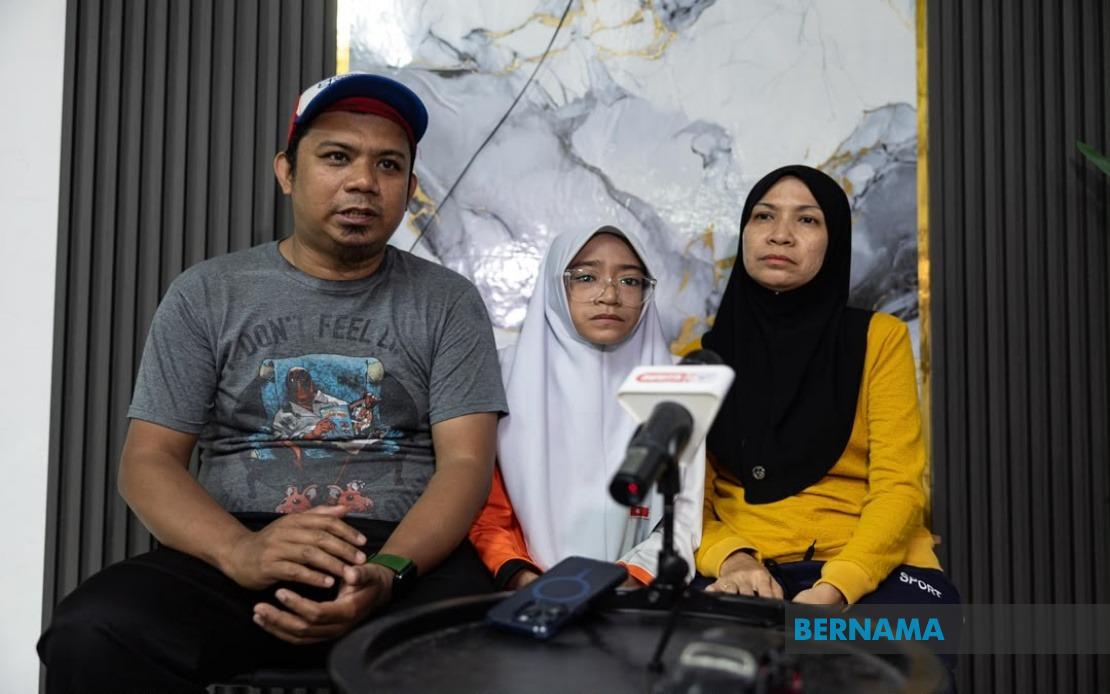
Education Minister Fadhlina Sidek has announced that she and the Tun Hussein Onn Teachers' Foundation (YGTHO) will jointly finance a RM10,000 surgical intervention for 13-year-old Arissa El Zahra Reduan, whose corrective procedure is scheduled for September 8 at Raja Permaisuri Bainun Hospital (HRPB) in Ipoh. The financial commitment aims to remove a significant barrier preventing the teenager from continuing her education, addressing both her medical needs and aspirations to return to the classroom alongside her peers.
Fadhlina disclosed the contribution through a Facebook announcement, noting her emotional response to the case. The minister articulated her motivation by reflecting on the determination displayed by the young patient, emphasising the personal connection that motivated the intervention. This public declaration served to highlight government responsiveness to community welfare needs and demonstrated the willingness of state institutions to step in when families face medical hardship that could impede a child's educational trajectory.
The announcement followed a video call between Fadhlina and both Arissa and her mother, during which the minister conveyed the support directly to the beneficiary. In the recorded conversation, Fadhlina reassured the teenager that the financial obstacle would be removed, explicitly linking the surgical outcome to Arissa's ability to resume schooling. The minister's personalised approach—speaking directly to the patient and her family—underscored the human dimension of government assistance and moved beyond mere bureaucratic dispensation of funds.
Arissa's father, Reduan Saad, aged 41, had previously made a public appeal for financial assistance to cover the surgical costs. The condition of scoliosis, a curvature of the spine, required professional medical intervention at a government facility, presenting significant financial strain for the family. The timing of the minister's response, coming immediately after the appeal became known, demonstrated the capacity of political leadership to mobilise resources quickly when cases gain public attention.
The involvement of YGTHO alongside the Education Ministry signals the broader institutional framework supporting educational access in Malaysia. The foundation, named after former Prime Minister Tun Hussein Onn, operates within the education sector and regularly channels support to students facing barriers to schooling. By co-funding this intervention, the foundation reinforced its mission of removing obstacles that prevent children from participating in education, recognising that health crises can derail academic progress if left unaddressed.
For Malaysian families navigating complex medical scenarios, this case illustrates both the availability of government-supported healthcare facilities and the potential for ministerial intervention when conditions receive publicity. Raja Permaisuri Bainun Hospital, where Arissa's surgery will take place, is a major government facility in Perak, suggesting that sophisticated orthopedic care remains accessible through the public healthcare system. However, the need for external funding to cover costs highlights ongoing challenges in making advanced surgical procedures financially accessible to middle and lower-income families.
The framing of this assistance by the minister explicitly connected medical recovery to educational continuity, recognising that prolonged illness or untreated conditions can result in school absences and academic setbacks. This perspective aligns with broader international understanding that health and education are interconnected determinants of child development. By ensuring Arissa could undergo necessary treatment without financial catastrophe, the intervention removed a significant risk factor for educational dropout or delayed progression.
Fadhlina's public appeal for prayers and expressions of encouragement toward full recovery extended beyond the immediate financial transaction, incorporating spiritual and emotional support within the policy response. This approach resonates within the Malaysian cultural context, where religious invocations and community well-wishes are integrated into public life. The minister's language choice reflected sensitivity to local values while maintaining the professional framework of government assistance.
The case raises broader questions about the sustainability of ad-hoc ministerial interventions in addressing medical financial hardship among students. While this instance demonstrates positive responsiveness, reliance on individual cases gaining political attention as a mechanism for accessing assistance may leave many similar situations unaddressed. The involvement of YGTHO suggests the existence of more systematic support channels, though their availability and accessibility to families in need remain important considerations for education policy.
For regional observers, Malaysia's approach illustrates how political leaders can leverage institutional resources and personal platforms to address community welfare gaps. The partnership between ministerial authority and foundation structures demonstrates institutional flexibility in responding to specific cases. The public nature of the announcement also serves a secondary function, potentially encouraging other families facing similar challenges to seek assistance through official channels and demonstrating that such support mechanisms exist.
Arissa's case ultimately represents a convergence of medical need, family hardship, political responsiveness, and the institutional capacity of the Malaysian education and health sectors. The successful mobilisation of funds within a compressed timeframe before the scheduled September 8 surgery suggests efficient administrative coordination between the minister's office and relevant institutions. As Arissa prepares for her procedure, the case stands as a concrete example of how targeted intervention at critical moments can reshape a young person's life trajectory by ensuring access to necessary medical care and preserving educational opportunities.

