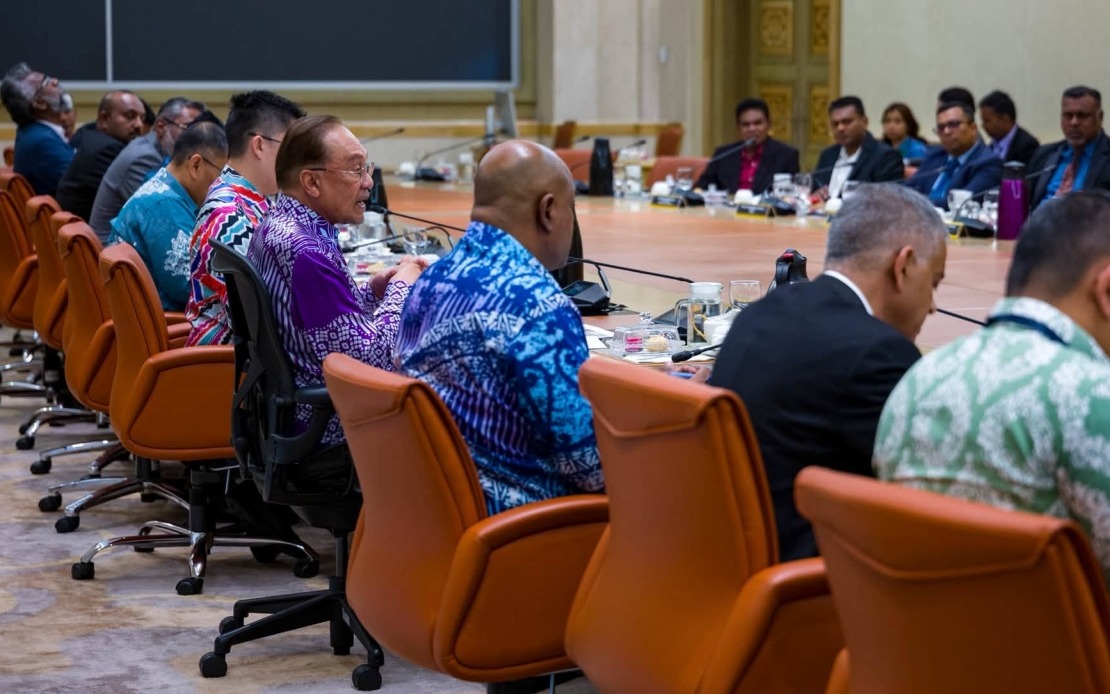
Prime Minister Datuk Seri Anwar Ibrahim has outlined a comprehensive framework for strengthening Malaysia's Indian community, anchoring his vision on four interconnected pillars: enhanced educational access, expanded welfare systems, targeted skills development, and meaningful employment pathways. Speaking through a social media statement following discussions with Indian community representatives, Anwar stressed that sustainable empowerment cannot be achieved through isolated initiatives but requires a holistic strategy that addresses fundamental socioeconomic needs.
The emphasis on education reflects longstanding concerns within the Indian community about disparities in academic achievement and school completion rates. Quality schooling serves as the foundation for breaking intergenerational cycles of limited opportunity, enabling younger Indians to compete effectively in Malaysia's increasingly skill-dependent job market. By prioritizing educational infrastructure and support systems, the government aims to ensure that talented students from economically disadvantaged backgrounds receive the resources necessary to realize their potential, whether through improved facilities, teacher training, or targeted scholarship programmes.
Welfare provision emerged as equally critical in Anwar's vision. Many Indian Malaysians, particularly in urban informal settlements and rural areas, face vulnerability to economic shocks and lack comprehensive safety nets. Strengthening welfare mechanisms—from healthcare access to income support during crises—addresses immediate hardship while creating stability that enables families to invest in longer-term development. This approach recognises that education and skills training prove ineffective when people struggle to meet basic needs.
Skills development constitutes the practical bridge between education and employment. Vocational training, technical certifications, and digital literacy programmes must be tailored to emerging economic demands, ensuring that Indian Malaysians can transition into well-remunerated sectors such as technology, healthcare, and advanced manufacturing. Such programmes require coordination between educational institutions, industry bodies, and government agencies to align training with actual labour market requirements rather than generic offerings disconnected from employment realities.
Anwar's directive to the Malaysian Indian Transformation Unit (MITRA) and related agencies emphasizes operational activation at grassroots levels. Government agencies frequently develop well-intentioned policies that fail to reach intended beneficiaries due to implementation gaps, bureaucratic inertia, or misalignment between centralized planning and community realities. By mandating proactive engagement, Anwar effectively signals that MITRA must transition from administrative passivity to continuous community dialogue, identifying emerging needs and adapting interventions accordingly.
The accountability dimension deserves particular attention. Anwar explicitly stated that initiatives must benefit those "truly in need," implying scrutiny of programme effectiveness and beneficiary targeting. In contexts where resources are limited and competing demands abundant, directing assistance to genuinely vulnerable populations rather than politically connected groups requires transparent mechanisms, independent monitoring, and willingness to terminate underperforming schemes. This framing suggests the government recognizes past criticism regarding uneven resource distribution.
The principle of inclusive governance articulated by Anwar extends beyond rhetorical commitment to substantive policy architecture. Ensuring that no community segment falls behind requires deliberate mechanisms preventing marginalization. The Indian community's historical concerns about underrepresentation in professional services, business opportunities, and policy-making circles demand affirmative measures—from targeted entrepreneurship support to meaningful participation in decision-making bodies. Without such structural interventions, broad statements about equal opportunity risk remaining aspirational rather than transformative.
For Malaysian context, this initiative carries regional implications. Southeast Asia's ethnic Indians constitute diverse, economically stratified populations with particular vulnerabilities during economic downturns and structural economic transitions. Malaysia's approach—if implemented effectively—could provide a model for how multiethnic democracies can address community-specific development challenges while maintaining broader national cohesion. Successful outcomes would demonstrate that targeted support for disadvantaged groups strengthens rather than fractures national unity.
The framing through compassion, accountability, and good governance reflects contemporary governance discourse emphasizing human-centered policymaking. Compassion acknowledges the moral imperative to assist vulnerable populations; accountability ensures resources achieve stated objectives; good governance provides transparent, participatory mechanisms preventing elite capture. This tripartite approach resonates with international development best practices whilst grounding them in Malaysian political discourse.
Implementation will ultimately determine whether Anwar's pronouncements translate into material improvement. MITRA's operational capacity, budget allocation, inter-agency coordination effectiveness, and political will to prioritize Indian community development over competing demands will shape outcomes. Community leaders and civil society organizations monitoring progress will provide crucial feedback mechanisms, though independent assessment remains essential given inherent incentives for agencies to portray initiatives favourably.
The timing of this emphasis reflects broader national discourse regarding inclusive development as Malaysia navigates post-pandemic recovery and structural economic transformation. Ensuring that all communities benefit from economic opportunities and possess capabilities to navigate technological change strengthens overall national resilience whilst addressing legitimate grievances that fuel social fragmentation when left unaddressed.

