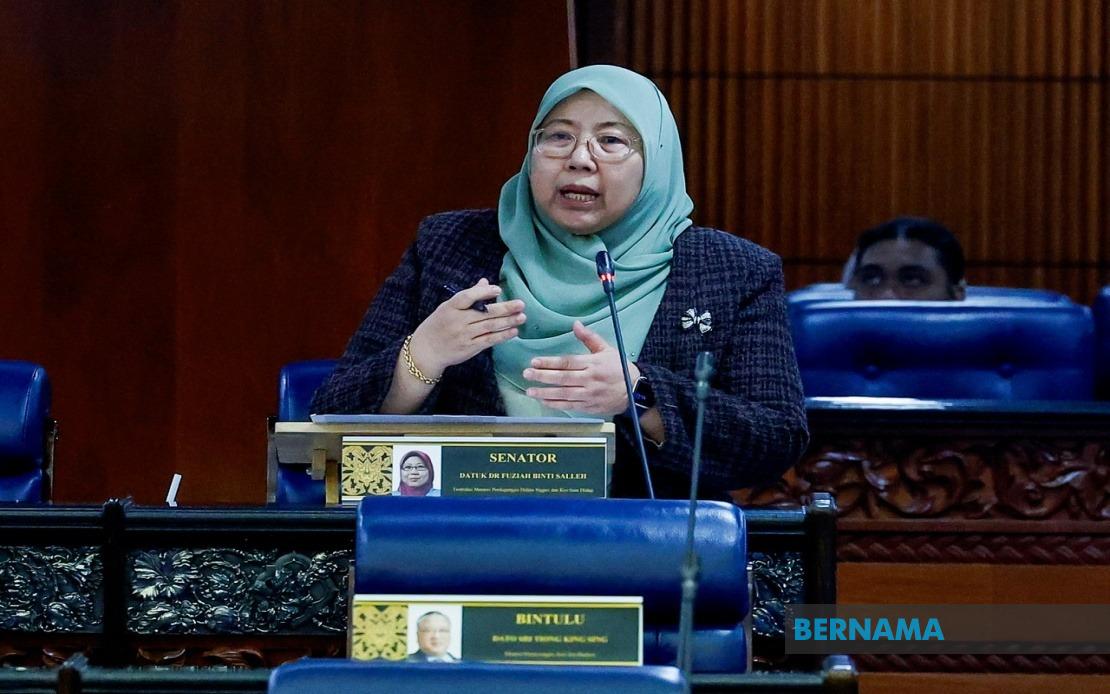
Deputy Domestic Trade and Cost of Living Minister Datuk Dr Fuziah Salleh has declared the eCOSS mobile application a success in stemming the loss of subsidised one-kilogramme packet cooking oil to the black market and unauthorised users since its rollout commenced in May last year. The assessment, tabled during parliamentary question time, relies on two primary yardsticks: steady market availability of the subsidised product and the modest volume of complaints lodged by consumers seeking to obtain it through legitimate channels.
As of early July, the tracking system had accumulated registrations from 5.261 million Malaysians, demonstrating substantial public uptake of the digital mechanism designed to tie subsidy access to verified citizenship. Concurrent with this registration milestone, monthly consumption patterns show retailers moving an average of 18 million packets of the heavily subsidised cooking oil, a figure that suggests both healthy demand and orderly distribution through formal retail networks. These dual indicators, the minister contended, reflect the application's capacity to deliver genuine benefit to intended recipients whilst denying access to those ineligible for the government's price-support arrangement.
Johor's experience as one of the scheme's pilot jurisdictions offers granular insight into operational performance. The southern state achieved penetration of 580,000 app downloads among its consumer base, whilst approximately 1,093 retailers among the state's 2,822 registered outlets had incorporated the eCOSS system into their transaction workflows. Most tellingly, formal complaints regarding shortages of subsidised cooking oil in Johor contracted dramatically from nine incidents in June 2025 to merely two by June this year, a reduction that ministry officials attribute directly to improved tracking and predictability within supply chains once retailers deploy digital verification tools.
The scheme operates as a counterweight to historical vulnerabilities in Malaysia's cooking oil subsidy architecture. For decades, leakage—the diversion of government-supported product to unqualified purchasers, foreign nationals, and illicit traders—has eroded the fiscal efficiency and equity of subsidy programmes. By anchoring access to a verifiable digital identity tied to the MyKad system, authorities can theoretically ring-fence benefits to eligible Malaysian consumers alone, preventing what has been a persistent drain on public resources. The eCOSS application thus represents a technological intervention into a fundamentally political challenge: ensuring that welfare transfers reach their intended beneficiaries without wastage or abuse.
Yet the rollout has confronted genuine obstacles rooted in Malaysia's uneven digital infrastructure and demographic composition. Senior citizens and rural dwellers with minimal exposure to smartphone technology initially faced barriers to participation. Recognising these friction points, the ministry has layered complementary support mechanisms into the scheme's operational footprint. Retail outlets now provide hands-on assistance to customers navigating the application interface, whilst public awareness campaigns and explanatory video materials have proliferated through community channels. Crucially, the ministry has retained the option of manual, offline purchases for those without mobile devices, ensuring that the subsidy's reach does not inadvertently narrow to only digitally proficient segments of the population.
This dual-track approach—digital verification for the equipped and traditional over-the-counter transactions for others—reflects pragmatic acknowledgment that technological solutions cannot supersede human and institutional capacity constraints, particularly in resource-constrained regions. Malaysia's experience with prior e-governance initiatives demonstrates that digital exclusion can undermine policy effectiveness if vulnerable populations fall outside the system entirely. By preserving analogue pathways whilst scaling digital ones, the eCOSS framework attempts to capture efficiency gains without sacrificing inclusivity, though implementation quality likely varies significantly across states and municipal authorities.
The eCOSS mobile application functions as an outer layer of a broader tracking architecture encompassing the entire supply chain from oil refineries and repackaging facilities through wholesalers and retailers to end-point consumers. This comprehensive visibility permits authorities to identify blockages, anomalies, and suspicious transaction patterns that might signal diversion or hoarding. The data stream flowing from the application feeds into analytical systems that flag irregularities and inform enforcement priorities, though the minister clarified that monitoring and enforcement remain operationally distinct. In other words, eCOSS provides the surveillance apparatus; deployment of that intelligence remains a separate institutional function, presumably conducted by trade regulators and law enforcement agencies.
Fuziah's parliamentary testimony also signalled the ministry's openness to iterative refinement based on user feedback. Accumulating operational data and consumer input are being evaluated to identify pain points and optimisation opportunities, suggesting a recognition that the current iteration, whilst broadly effective, likely contains inefficiencies or features that frustrate legitimate users. This feedback loop is essential for maintaining public confidence in the scheme; if residents perceive the system as unduly burdensome or capricious, voluntary compliance deteriorates and workarounds proliferate. The willingness to solicit and act upon user experience data therefore carries strategic importance beyond mere technical optimisation.
For Malaysia's broader subsidy governance framework, the eCOSS case study illuminates the potential—and limits—of technological solutions to persistent distribution problems. Digital verification systems can reduce certain categories of leakage, particularly the incidental diversion that occurs through casual trading or opportunistic foreign access. However, they cannot address structural factors driving subsidy loss: the gap between controlled domestic prices and regional market rates that incentivises smuggling; weak enforcement capacity in border zones; and corruption within official retail and distribution networks. As Malaysia grapples with fiscal pressures from its expansive subsidy envelope, targeted digital interventions like eCOSS represent necessary but insufficient components of a broader modernisation agenda encompassing pricing reform, supply chain strengthening, and institutional accountability.

