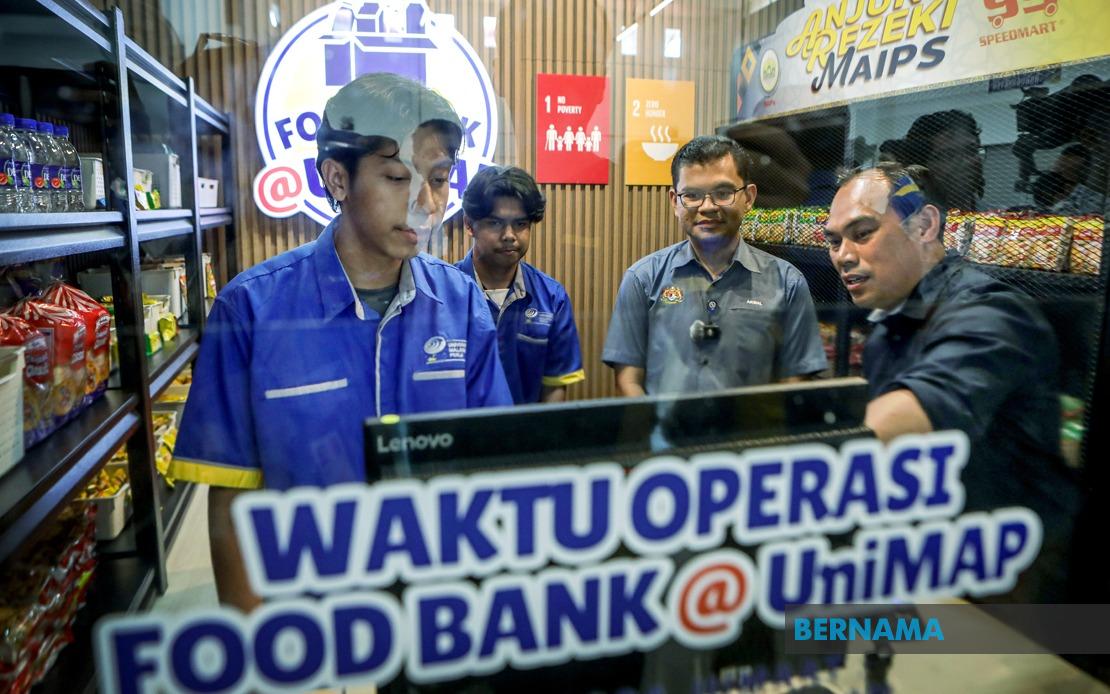
Economy Minister Akmal Nasrullah Mohd Nasir has announced that the Ministry of Economy will petition the Ministry of Finance to extend the People's Income Initiative – Food Entrepreneur Initiative (IPR-INSAN), citing substantial evidence that the scheme delivers tangible benefits to both low-income business operators and cost-conscious consumers. The minister made this declaration following a working visit to Universiti Malaysia Perlis (UniMAP) in Arau on July 10, where he witnessed the programme's real-world implementation across campus locations.
The IPR-INSAN programme represents a targeted policy response to economic inequality by leveraging technology and institutional partnerships to create market access for entrepreneurs classified in the B40 income bracket. Rather than relying on traditional subsidy mechanisms, the initiative operates through a network of automated vending machines positioned on university campuses, effectively creating a direct commercial channel between low-income food producers and a guaranteed consumer base. This model addresses a structural problem in Malaysia's informal food economy: many capable entrepreneurs lack the capital, regulatory certifications, or distribution networks needed to scale their operations beyond household-level production.
During his campus visit, Akmal Nasrullah observed the vending machine operations firsthand at two residential colleges within UniMAP. The minister also toured the university's Food Bank and MADANI Dapur Siswa (student kitchen) facilities, programmes that intersect with the broader policy agenda around student welfare and food security. His remarks to reporters emphasised that field monitoring data confirmed the scheme's multi-directional impact—entrepreneurs gain access to systematic sales channels while students and the wider campus community benefit from meals priced significantly below conventional food retail levels.
The quantitative performance data presented by UniMAP provides compelling justification for the extension request. At the Tuanku Abdul Rahman Residential College, entrepreneur Norleyana Nordin, operating a homemade food business through the vending machine system, achieved average monthly sales of RM2,178.80, with a peak revenue of RM4,905 recorded in January. Similarly impressive results materialised at the Tuanku Tengku Fauziah Residential College, where operator Noor Hasfalela Mohd Noor recorded average monthly sales of RM4,595, reaching a monthly high of RM10,012 in January, with sustained revenues of RM5,049 in February 2026 and RM4,868 in April 2026. These figures demonstrate that the vending machine model generates income levels substantially above what many informal food vendors might achieve through traditional street vending or home-based operations.
For Malaysian policymakers and regional observers, the IPR-INSAN programme exemplifies a pragmatic approach to poverty alleviation that combines technology adoption with entrepreneurial empowerment. Rather than creating dependency through direct cash transfers or price controls, the initiative strengthens participants' commercial capabilities by providing reliable sales infrastructure. This approach aligns with broader MADANI framework objectives around inclusive economic growth and social safety nets, addressing concerns that rapid inflation and rising living costs disproportionately affect households in the bottom income quintile.
The university's role in hosting the vending machines reveals important synergies between institutional procurement and poverty reduction. University campuses represent stable, high-traffic commercial environments where food demand is consistent and predictable. By integrating B40 entrepreneurs into this existing demand structure, the programme removes significant market risks that typically deter formal financial institutions from lending to informal food businesses. The resulting income security enables participants to invest in equipment, ingredients, and skills development, potentially creating pathways toward business formalisation and tax compliance.
From a consumer perspective, the affordability dimension addresses a genuine pain point in Malaysia's student demographic. Rising accommodation costs, tuition fees, and general inflation have compressed student budgets, and even modest reductions in meal costs—achieved through the efficiency of direct vending machines and reduced intermediation—provide meaningful relief. This welfare improvement indirectly supports educational outcomes by reducing financial stress that might otherwise distract from academic engagement.
The extension request also reflects growing recognition within the government that programmes demonstrating measurable positive outcomes warrant sustained funding commitment. The documentation of individual entrepreneur success stories, combined with systematic sales tracking, creates an evidence base that distinguishes IPR-INSAN from other initiatives that may lack rigorous monitoring. This data-driven approach strengthens the ministry's negotiating position with the Finance Ministry when requesting budget allocations or programme continuations.
Sector observers note that the IPR-INSAN model carries potential for geographical expansion beyond university settings. Similar vending machine networks could theoretically be deployed in other institutional environments—government offices, hospital complexes, public transport hubs—where large captive populations require affordable meals and entrepreneurs could be reliably accessed. Such scaling would require standardised operational protocols, quality assurance mechanisms, and vendor training frameworks, but the UniMAP case study suggests the operational challenges are manageable.
The programme's success also underscores the importance of public-private collaboration in inclusive economic policy. UniMAP's provision of prime vending locations, student volunteer coordination, and operational support represents in-kind contributions that reduce programme costs while deepening institutional buy-in. Private sector participation in equipment provision or maintenance services further distributes implementation responsibilities beyond government resources.
Looking ahead, the extension request will likely feature in broader government discussions about B40 support mechanisms, particularly as Malaysia navigates persistent economic pressures and income inequality concerns. The quantitative results from UniMAP demonstrate that well-designed programmes can achieve poverty reduction objectives while maintaining commercial sustainability—neither subsidy-dependent nor requiring lifestyle restrictions on beneficiaries. This balance positions IPR-INSAN as a potentially replicable model for other Southeast Asian economies grappling with similar challenges around informal employment and income inequality.

