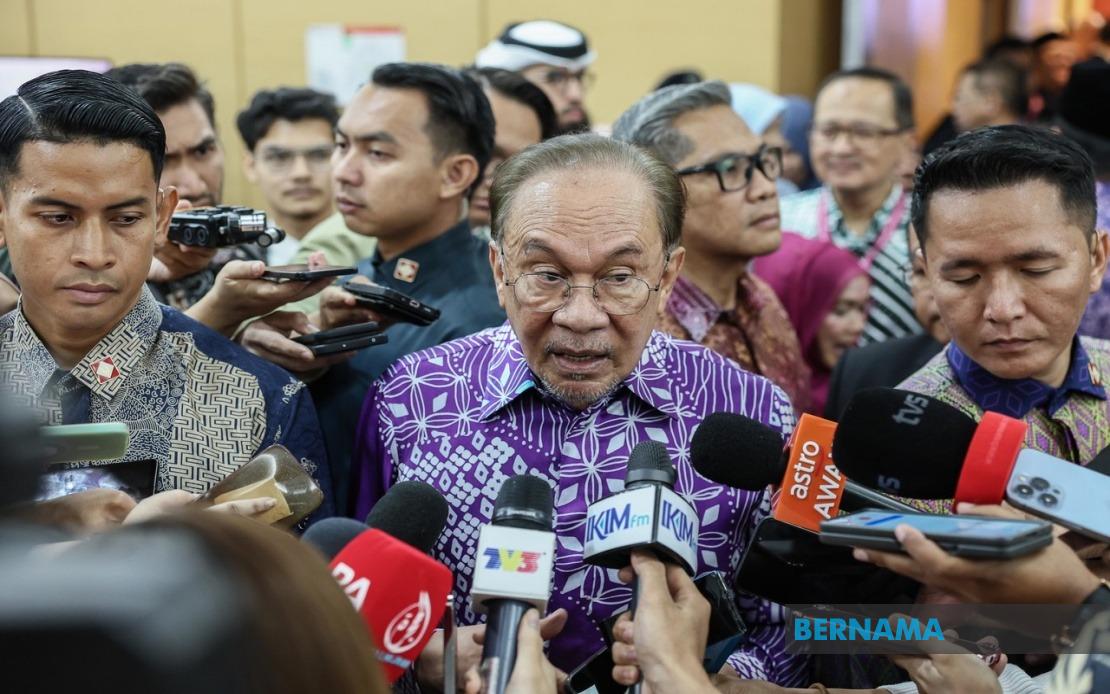
Prime Minister Datuk Seri Anwar Ibrahim has articulated a philosophical framework for Malaysia's economic future that challenges conventional growth-focused development models, insisting that prosperity must ultimately serve the wellbeing and dignity of ordinary Malaysians rather than become an end in itself. Delivering the keynote address at the Humane Economy Global Discourse (HEGD) 2026 in Kuala Lumpur, Anwar positioned economic advancement as a means to human flourishing, reflecting a broader philosophical shift in how policymakers approach the relationship between markets, technology and society.
The Prime Minister's intervention comes at a critical juncture as Malaysia confronts transformative technological forces that are reshaping global economic structures. Emerging technologies including artificial intelligence, renewable energy systems, advanced manufacturing capabilities and biotechnology innovations are fundamentally altering labour markets, supply chains and competitive advantage globally. Rather than viewing these developments purely through an economic lens focused on growth rates and investment returns, Anwar argued that Malaysia must consciously integrate ethical and humanitarian considerations into how it adopts and deploys these technologies.
Anwar's emphasis on "reclaiming humanity" addresses a widely observed tension in contemporary development economics: the contradiction between rising gross domestic product figures and stagnant or declining living standards for significant population segments. This paradox has become increasingly visible across developing nations, where rapid economic growth has sometimes coexisted with widening inequality, community disruption and erosion of social cohesion. By foregrounding human dignity as the ultimate measure of successful policy, the Prime Minister is reframing how Malaysia should evaluate its development trajectory.
The distinction Anwar drew between economic life connected to moral purpose and economically-focused development without ethical grounding represents a substantive policy orientation with practical implications. This framework suggests that future Malaysian government policies—from fiscal spending priorities to regulatory decisions affecting technology adoption—should explicitly consider distributional impacts and social consequences alongside efficiency metrics. Industrial policies, labour regulations, and investment incentives would be evaluated not merely by their contribution to aggregate growth but by their effect on workers' capabilities, community stability and equitable opportunity distribution.
Malaysia's particular position within Southeast Asia makes this philosophical stance strategically significant. As a middle-income nation seeking to progress toward advanced economy status, Malaysia must compete globally for investment and talent while managing domestic social expectations and political consensus. The emphasis on humanity and moral purpose provides intellectual scaffolding for policies that might prioritise inclusive growth, skills development and social protection alongside technological advancement. This balancing act has proven challenging for regional peers facing similar pressures.
The presence of Minister in the Prime Minister's Department (Religious Affairs) Dr Zulkifli Hasan and Forum Ekonomi Manusiawi Chairman Prof Datuk Dr Saadiah Mohamad at the discourse indicates institutional commitment to integrating moral and religious perspectives into economic governance. This institutional configuration suggests that Malaysia is attempting to develop policy frameworks that explicitly bridge secular economic analysis with moral and spiritual principles—a distinctive approach within Southeast Asian governance contexts where such integration remains less institutionalised.
Anwar's call for Malaysia to remain "competitive, productive and open to investment" while simultaneously embedding economic activity within moral frameworks demonstrates the tension inherent in navigating contemporary global capitalism. The Prime Minister was neither rejecting market mechanisms nor embracing anti-growth ideology, but rather advocating for what might be termed "bounded capitalism"—economic dynamism constrained and directed by ethical principles and social objectives. This positioning seeks to attract international investment and talent while establishing guardrails against unconstrained commercialisation of social life.
The timing of these remarks reflects Malaysia's broader policy evolution following recent elections and government transitions. The emphasis on moral economy connects with contemporary global movements questioning whether conventional development metrics adequately capture human progress. From Pope Francis's advocacy for integral ecology to New Zealand's wellbeing budget frameworks, there is growing international momentum to move beyond GDP as the primary policy target. Malaysia's articulation of this position places it within an evolving global conversation about development alternatives.
For Malaysian audiences, Anwar's framework has immediate relevance to current policy debates around artificial intelligence regulation, green energy transition, labour standards in technology sectors, and wealth redistribution. These conversations will determine whether Malaysia's technological advancement predominantly benefits concentrated economic interests or translates into broad-based improvements in living standards, job quality and social mobility. The Prime Minister's moral economy framework provides philosophical grounding for policies that might prioritise these broader benefits.

