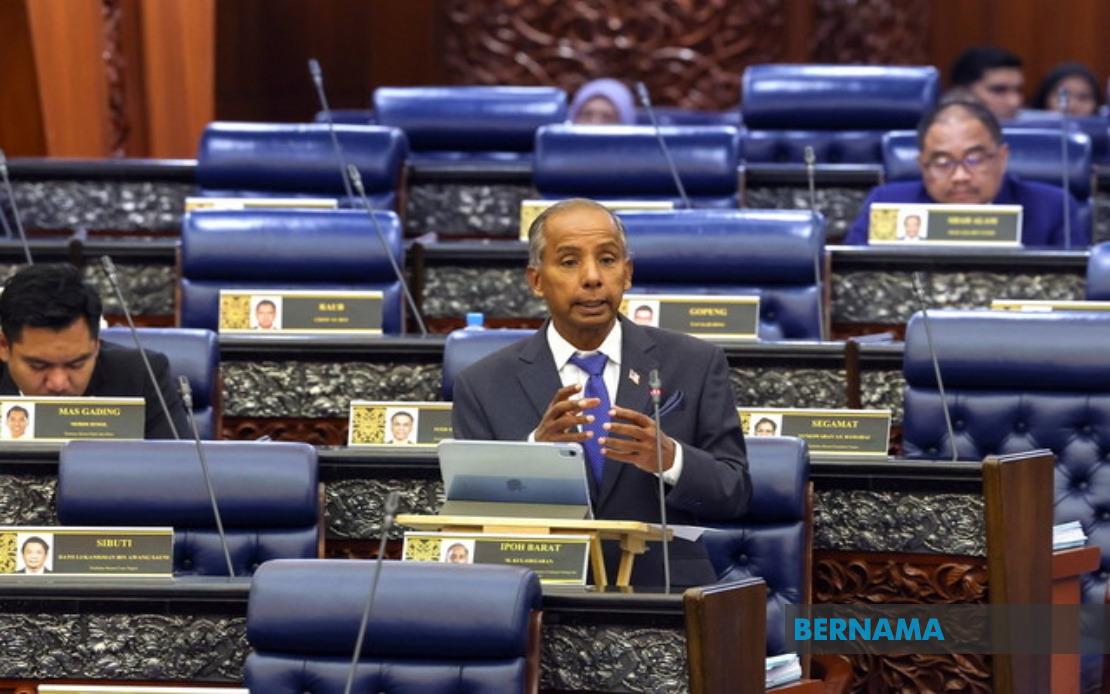
The Election Commission is undertaking a comprehensive examination of how domestic postal voting could be introduced across Peninsular Malaysia, Sabah and Sarawak, with findings anticipated by next year. The proposal represents a significant potential shift in Malaysia's electoral infrastructure, potentially affecting how millions of voters exercise their franchise across the country's three main regions.
Deputy Minister in the Prime Minister's Department (Law and Institutional Reform) M. Kulasegaran outlined the timeline during parliamentary proceedings on July 14, responding to concerns raised by Isnaraissah Munirah Majilis of WARISAN representing Kota Belud. The legislator had pressed for urgent electoral modernisation and expanded postal voting access, reflecting growing demands for more flexible voting mechanisms that accommodate Malaysia's increasingly mobile population and those with mobility constraints.
The EC's deliberation process extends beyond internal review. Kulasegaran emphasised that the study necessitates extensive consultation with multiple stakeholders, particularly political parties whose cooperation remains essential for any electoral reform of this magnitude. This collaborative approach reflects the sensitive nature of voting procedures in Malaysian democracy, where constitutional changes and electoral modifications typically require broad political consensus to ensure legitimacy and public confidence.
Postal voting systems exist in various democracies worldwide, offering advantages for voters unable to cast ballots physically on election day. In Malaysia's context, such a system could benefit overseas workers, individuals with disabilities, elderly voters, and those in remote areas. However, implementation raises practical questions about security, fraud prevention, identity verification, and administrative capacity across the nation's diverse geography.
Beyond postal voting, the government indicated receptiveness to reconsidering the institutional architecture governing electoral administration. Kulasegaran signalled that a proposal to relocate EC oversight from the Prime Minister's Department to Parliament warrants serious consideration. This structural change would theoretically enhance the commission's independence and insulate electoral processes from executive influence—a concern some analysts argue has periodically clouded public perception of electoral neutrality.
The suggestion reflects broader debates within Southeast Asia regarding election management bodies. Many regional democracies have progressively strengthened institutional safeguards around electoral commissions to bolster transparency and public trust. A parliamentary framework could provide additional layers of accountability while maintaining the EC's operational autonomy in conducting elections and electoral dispute resolution.
Kulasegaran's acknowledgment that the proposition "should be taken into consideration" stops short of firm commitment but signals genuine openness. The deputy minister indicated the matter would be elevated to relevant government bodies for formal decision-making, suggesting this reform possibility will enter Malaysia's policy pipeline alongside the postal voting study.
Addressing another electoral concern, Kulasegaran rejected calls for stricter enforcement of mobile phone restrictions at polling streams. The government position holds that current control mechanisms suffice and that no legislative amendments introducing mobile phone use as a specific offence under the Election Offences Act 1954 are contemplated. Critics argue that smartphone use at polling stations poses risks to ballot secrecy and electoral integrity, particularly given concerns about vote-buying documentation or coerced voting evidence.
This conservative stance on mobile phone regulation contrasts with the more receptive attitude toward postal voting and institutional reform. The government appears to distinguish between expanding electoral access through postal mechanisms and tightening procedural controls at existing voting points. This differentiation reflects complex trade-offs inherent in electoral design—balancing accessibility against security, convenience against integrity.
For Malaysian voters and election observers, these parallel developments suggest measured evolution rather than revolutionary reform. The two-to-three year timeline for the postal voting study allows comprehensive analysis of international best practices, consultation with political parties across the spectrum, and assessment of administrative feasibility. Whether Malaysia ultimately adopts postal voting will depend significantly on whether consensus emerges regarding implementation safeguards.
The potential parliamentary repositioning of the EC touches deeper questions about democratic governance. If implemented, such restructuring would mark a notable institutional adjustment, rebalancing relationships between the electoral commission, executive government, and legislature. Yet concrete movement on this front remains conditional on interagency deliberation and political consensus.
These initiatives collectively indicate recognition within government that Malaysia's electoral systems warrant periodic reassessment. Globalisation, urbanisation, and demographic changes create pressures for voting procedures that accommodate modern realities. The challenge lies in implementing reforms that genuinely enhance voter participation and electoral integrity without creating new vulnerabilities or undermining public confidence in democratic processes.

