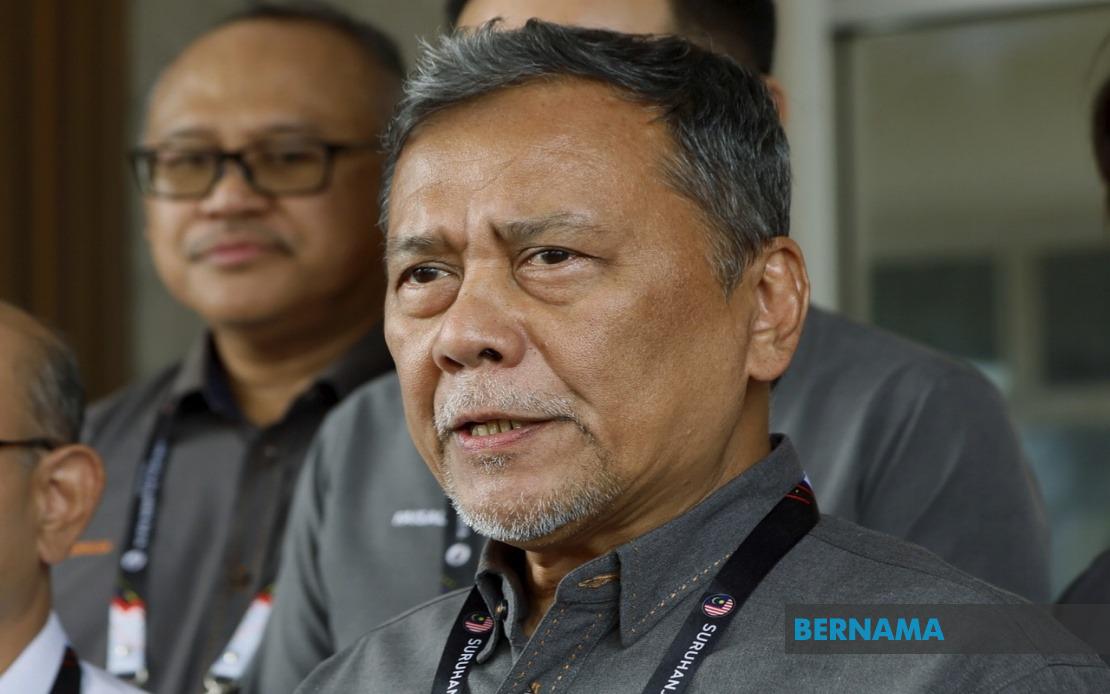
The Election Commission has tracked a significant volume of alleged misconduct during the campaign phase of the 16th Johor State Election, receiving 588 complaints centred on various election offences by the close of Tuesday. EC chairman Datuk Seri Ramlan Harun disclosed the tally while overseeing the early voting operations at polling centres across the Kluang district, signalling the organisation's active monitoring of compliance throughout the electoral process.
Of the complaints received, 44 have already progressed to formal police investigations, reflecting the gravity with which authorities are treating violations of electoral law. The range of reported misconduct has been sufficiently serious in three instances to warrant escalation to the Malaysian Anti-Corruption Commission, suggesting that breaches involving potential graft or abuse of resources have occurred during the campaign period. This layered reporting structure, involving the EC, the police, and the anti-corruption body, demonstrates Malaysia's multi-agency approach to maintaining electoral integrity at the state level.
The early voting phase itself proceeded without incident, accommodating 20,607 voters across designated centres including the Kluang District Police Headquarters and Kem Mahkota. The eligible early voters comprised two distinct groups: 8,544 members of the Malaysian Armed Forces together with their spouses, and 12,063 police personnel along with their dependents. This cohort represents personnel whose operational commitments on polling day would prevent them from casting ballots at regular voting stations, necessitating the advance voting arrangement.
The involvement of the Army Chief, General Tan Sri Azhan Md Othman, alongside the EC chairman in monitoring these early voting centres underscores the institutional importance placed on the election's conduct. The joint observation by defence and election officials serves multiple purposes: reassuring voters that their participation is being properly safeguarded, demonstrating inter-agency coordination, and gathering direct observations about any procedural irregularities that might surface during the casting and counting processes.
The 16th Johor State Election represents a significant democratic exercise in Malaysia's largest state by area. With 172 candidates competing for 56 seats, the contest reflects a multi-party environment that extends beyond the traditional two-coalition framework. The candidate-to-seat ratio of approximately 3.1 indicates moderately competitive conditions across constituencies, though this average masks considerable variation likely present in different electoral divisions within the state. Saturday's polling will determine the composition of the Johor State Assembly and, consequentially, the state government for the next five years.
The filing of complaints during the campaign period is not unusual in Malaysian elections, and their volume must be contextualised within the scale of the electoral process. With nearly 200 candidates operating across dozens of constituencies, and potentially thousands of campaign volunteers, the contact surface for alleged breaches naturally expands. However, the fact that authorities have already categorised sufficient complaints as warranting police or MACC investigation suggests that some allegations extend beyond technical infractions into potentially serious violations of electoral law or corrupt practices.
Election offences in Malaysia encompass a broad spectrum of behaviours. These range from procedural violations, such as unauthorised campaign materials in restricted zones, to more substantive breaches involving undeclared campaign finance, voter intimidation, or false statements about candidates or parties. The complaints registered with the EC will be examined for their individual merits, and those proceeding through police channels will follow standard criminal investigation protocols. The MACC referrals indicate suspicions of gratification or resource misuse, offences that carry separate statutory penalties.
The advance voting arrangement for security personnel and military staff reflects a practical accommodation common to elections in countries with substantial armed and police establishments. Malaysia has long permitted such early voting to ensure that essential personnel can participate without compromising operational readiness or public security. The smooth conduct of this phase, as monitored by senior officials, provides early confidence that the main polling day operations are likely to proceed without major logistical disruptions.
As the election approaches its culmination on Saturday, the Election Commission's attention will shift increasingly toward ensuring smooth conduct of the main polling day itself. The complaints lodged during the campaign period will continue to be processed through appropriate channels, but the immediate focus will be on deploying polling officials, securing ballot papers and materials, and managing voter flows across the 56 constituencies. The early voting data provides a baseline against which turnout on the main day can be measured, offering insights into participation patterns that may vary by constituency or region.
For Malaysian observers and regional election watchers, the Johor election serves as a barometer of state-level political sentiment and voter behaviour in one of the nation's most demographically and economically significant states. The complaints mechanism and the apparent willingness of authorities to investigate alleged breaches demonstrate the institutional maturity of Malaysia's electoral framework, even as questions about the robustness of enforcement mechanisms persist in academic and political circles. The outcome on Saturday will reflect not only which parties gain control of the state apparatus, but also broader patterns in how Malaysian voters engage with competitive democracy at the sub-national level.

