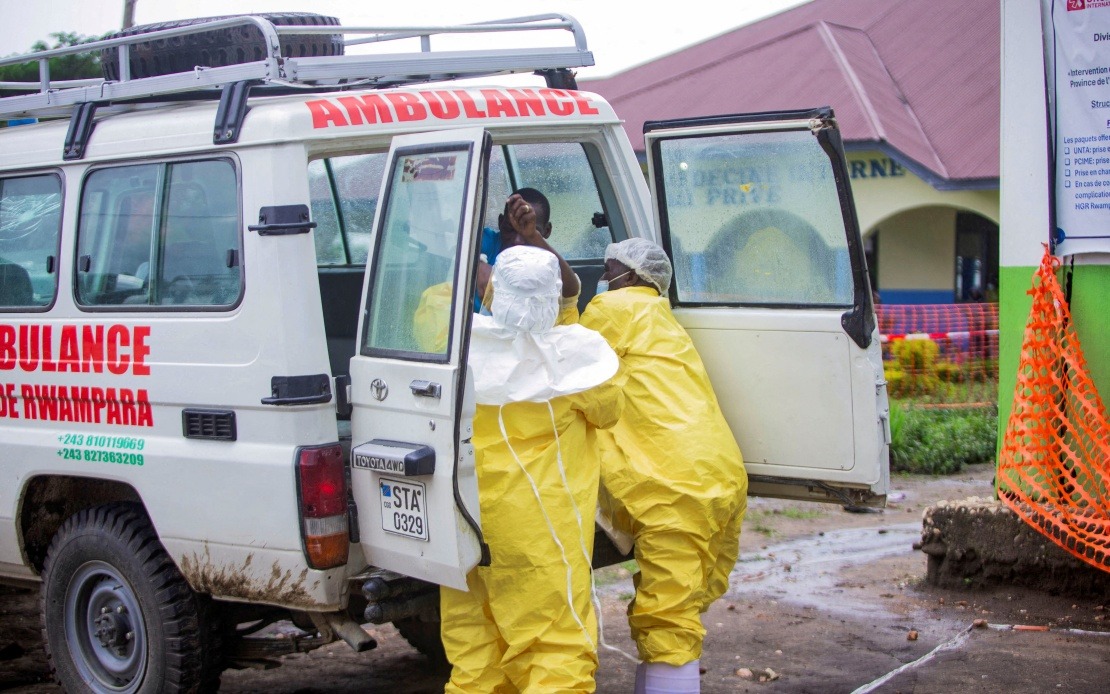
The Ebola outbreak in the Democratic Republic of the Congo has expanded beyond its initial epicentre, with health authorities confirming cases across five provinces as the humanitarian crisis deepens. As of Friday, the nation's health ministry reported 1,873 confirmed cases and 672 deaths from the Bundibugyo ebolavirus strain, which was officially declared on May 15. The geographic spread signals a significant challenge for disease containment efforts in a region already strained by limited healthcare infrastructure and ongoing security concerns.
The five affected provinces paint a picture of an outbreak that has moved beyond its original boundaries. Ituri province remains the primary epicentre of transmission, but health officials have now documented cases in North Kivu and South Kivu, neighbouring territories that share porous borders and significant population movement. Most significantly, the provinces of Haut-Uele and Tshopo were included in the official situation report for the first time, indicating the virus has penetrated new areas and amplified transmission chains that investigators are working to trace.
Public health investigations have established epidemiological links between the newly affected regions and the original outbreak zone. The documented cases in Haut-Uele and Tshopo demonstrate clear connections to Ituri province through contact networks and population movements, a pattern typical of Ebola transmission in regions with limited mobility restrictions. This traceable pathway suggests that while the virus is spreading, health authorities retain enough surveillance capacity to map transmission patterns, though operational challenges remain significant.
The healthcare system is under immense strain as the outbreak accelerates. At present, 763 patients are isolated or receiving inpatient treatment across DRC facilities, placing enormous pressure on a medical infrastructure already tested by years of conflict and economic hardship. The overall bed occupancy rate at designated treatment centres stands at 95.1 percent, indicating that the system is operating near maximum capacity. This critical occupancy level leaves minimal room for surge capacity if case numbers continue their upward trajectory, a particularly alarming prospect given the recent provincial expansion of confirmed cases.
While some progress has been achieved in disease management, the scale of recovery remains modest relative to total infections. The health ministry reports 306 people have recovered from confirmed cases, representing a recovery rate of approximately 16 percent of confirmed cases, though the true survival rate varies considerably by factors including early treatment access and supportive care quality. An additional 299 suspected cases, accompanied by 91 suspected deaths, are under investigation and await laboratory confirmation. These figures underscore that the true burden of the outbreak extends beyond confirmed statistics.
For Southeast Asian nations and particularly Malaysia, this outbreak carries relevance on multiple levels. The DRC's struggle to contain Ebola in a complex humanitarian environment highlights the vulnerability of developing nations to viral outbreaks, a concern that transcends borders in our interconnected world. Malaysia's robust public health infrastructure and early-warning systems position the nation favourably, yet the DRC situation serves as a reminder of global health interdependence. International cooperation in disease surveillance, vaccine distribution, and technical support remains essential to prevent such crises from metastasizing into regional or global health emergencies.
The choice of Bundibugyo ebolavirus as the causative agent is notable within the broader context of Ebola epidemiology. This variant, while generally less transmissible than Zaire ebolavirus responsible for the devastating 2014-2016 West African outbreak, nevertheless demonstrates significant virulence with a mortality rate approaching 40 percent among confirmed cases in this outbreak. The specific viral strain influences both the trajectory of transmission and the effectiveness of response strategies, making accurate identification and characterization essential for mounting an appropriate public health response.
Health authorities face the dual challenge of expanding treatment capacity while simultaneously implementing preventive measures in newly affected areas. The concentration of cases in specific provinces allows for geographically targeted interventions, including contact tracing, public education, and coordinated case isolation. However, the expansion into Haut-Uele and Tshopo suggests that previous containment efforts may not have fully prevented onwards transmission, or that certain transmission chains evaded initial surveillance detection.
The outbreak's trajectory over the coming weeks will determine whether the current provincial spread represents the ultimate geographical extent or merely an intermediate stage in further expansion. Historical patterns from other Ebola outbreaks demonstrate that early intensive response can arrest geographic spread, while delays or insufficient resources can lead to exponential growth across wider territories. The DRC's continued engagement with international partners and deployment of resources to newly affected provinces will prove decisive in shaping the outbreak's ultimate scope and severity across the Central African region.

