The East Coast Rail Link (ECRL) is positioned to become a transformative economic asset for Malaysia, with government projections indicating the megaproject will contribute between RM80 and RM90 billion in cumulative value added to the country's gross domestic product over the next two decades. Deputy Economy Minister Datuk Mohd Shahar Abdullah outlined these figures in Kuantan recently, underscoring the government's confidence that the RM50.27 billion railway infrastructure will transcend its primary role as a transportation conduit to function as an engine of regional economic expansion.
Central to this economic strategy are 21 Economic Accelerator Projects (EAPs) identified along the 665-kilometre corridor, which authorities view as the primary mechanisms through which ECRL will generate returns. Rather than relying solely on passenger and cargo traffic, the development framework emphasises complementary infrastructure and business activity that will flourish in proximity to the railway. This approach reflects a deeper understanding that major transport projects succeed economically when surrounded by purposeful land use and commercial development rather than operating in isolation.
Three locations have been specifically earmarked for transformation into logistics hubs, representing a strategic attempt to rebalance economic activity between Malaysia's developed west coast and its comparatively underutilised eastern regions. Pasir Puteh in Kelantan will feature 213 acres of designated logistics development, while Kemaman in Terengganu will utilise 68 acres and Temerloh in Pahang a further 50 acres. These allocations signal serious intent to create functional commercial infrastructure rather than merely symbolic development.
Mohd Shahar framed the ECRL not as a transportation project with economic sidelines, but fundamentally as a regional development initiative, emphasising that quality employment creation and sustainable business expansion represent the core objectives. This messaging seeks to address longstanding regional disparities and respond to criticisms that Malaysia's growth has concentrated excessively in the Klang Valley and northern Selangor. The rail link thus represents an attempt to distribute opportunity more equitably across the peninsula's geography.
A particularly noteworthy development is the planned completion of the first phase of the Perodua logistics hub in Paya Besar, Kuantan, scheduled for 2029. This facility, operated by Malaysia's national automotive manufacturer, represents a concrete example of how anchor tenants can catalyse broader ecosystem development. When Perodua's logistics operations commence, they are expected to generate subsidiary demand for warehousing, transport services, and supply chain functions, creating a multiplier effect throughout the local economy.
Mohd Shahar, who represents Paya Besar as the area's Member of Parliament, was careful to position the ECRL as complementary rather than competitive to existing international shipping routes. This framing matters significantly for managing expectations and addressing concerns among shipping industry participants who might view the project as cannibalising existing trade flows. Instead, the ECRL is presented as enhancing Malaysia's overall logistics competitiveness by offering shippers additional routing options and reducing transport costs for certain commodity types and destinations.
The government's approach aligns with the broader MADANI Economy framework, which emphasises inclusive and sustainable growth benefiting all socioeconomic groups. Officials characterise the ECRL as consistent with this philosophy, arguing that by stimulating activity across underperforming regions and creating diverse employment opportunities, the project embodies inclusive development principles. Whether this rhetoric translates into tangible benefits for local communities rather than merely enriching well-connected businesses will be crucial to the project's ultimate success and acceptance.
Implementation pathways are specified under Malaysia's 13th National Plan, which employs the Malaysia Development Composite Index and MyRMK system to direct resources toward areas with greatest need. This institutional framework theoretically ensures that ECRL-related development benefits distribute equitably rather than concentrating among politically favoured entities. The transparency and effectiveness of these mechanisms will significantly influence whether projected GDP contributions materialise as broadly distributed prosperity or concentrate among relatively few beneficiaries.
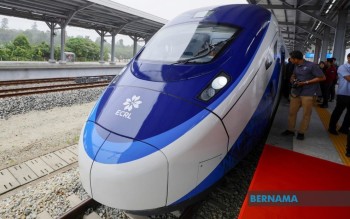
Temporary setbacks notwithstanding, the ECRL remains scheduled for completion in December 2026, with operational commencement targeted for January 2027. The project incorporates substantial capacity for both passenger and freight services, with 11 electric multiple unit train sets allocated for passenger movements and 12 electric locomotives dedicated to cargo operations. This dual focus reflects the government's recognition that sustainable railway projects must serve diverse market segments rather than depending entirely on passenger or freight revenue streams.
For Southeast Asia more broadly, the ECRL represents an important test case in whether megaprojects can successfully drive regional economic transformation. Thailand's developing eastern seaboard and Indonesia's emerging logistics corridors will be watching Malaysian outcomes closely. The project's success in genuinely distributing economic benefits beyond infrastructure construction itself could establish a template for similar initiatives across the region. Conversely, if the RM80 to RM90 billion GDP projection proves overly optimistic or benefits concentrate narrowly, scepticism about comparable regional projects will intensify significantly.
The pathway to realising these economic projections depends critically on factors beyond railway construction itself. Quality governance of the Economic Accelerator Projects, effective land development at designated logistics hubs, and genuine attraction of high-value business activity will ultimately determine whether the ECRL fulfils its transformative potential. Malaysia's track record with major infrastructure projects has been mixed, with some delivering expected benefits while others have underperformed relative to initial projections. The ECRL's performance over the next two decades will offer important lessons about whether ambitious regional development ambitions can translate into tangible prosperity for peripheral Malaysian communities.

