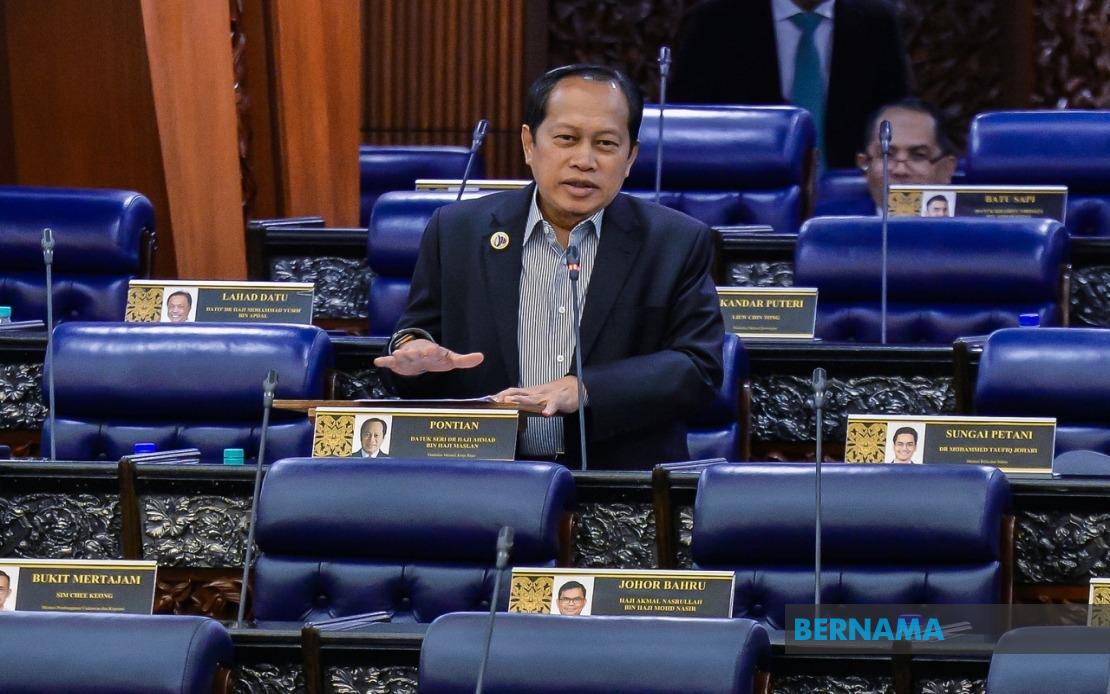
The Federal Government has opted for a public-private partnership model to develop the East Coast Expressway Phase 3 (LPT3), citing budgetary constraints that prevent direct state funding of the infrastructure project. Deputy Works Minister Datuk Seri Dr Ahmad Maslan made the announcement during parliamentary question time, explaining that the decision reflects current fiscal realities while maintaining the nation's transport development agenda.
Under the proposed framework, the government will invite private sector bids through a Request for Proposal process, with the winning consortium assuming full responsibility for financing, constructing and operating the expressway. This approach transfers both the financial burden and operational risk from the public purse to the private developer, a growing trend in Malaysian infrastructure delivery as the state seeks alternatives to direct capital expenditure. The successful bidder will bear all development costs while recovering investments through toll collection over the concession period.
The 122-kilometre expressway will connect Kampung Gemuruh in Kuala Terengganu to Tunjung in Kota Bharu, incorporating five interchanges along its dual two-lane carriageway alignment. A 2022 feasibility study estimated the total development cost at RM9.8 billion, though this figure may shift depending on construction market conditions and the final design specifications adopted by the chosen private partner. The route essentially bisects the East Coast peninsula, offering a direct corridor for inter-state commerce and passenger travel.
Currently, the existing East Coast transport corridor experiences meaningful congestion only during peak travel periods such as Hari Raya celebrations and school holidays, when residents from Terengganu and Kelantan travel to the Klang Valley for festivities and business. However, Ahmad Maslan contextualised LPT3 within a broader network of complementary transport infrastructure that will fundamentally reshape East Coast connectivity over the coming years. The completion of these parallel projects will create unprecedented travel alternatives for the region's 1.7 million residents.
The East Coast Rail Link (ECRL), substantially funded by China and currently nearing completion, will provide a high-capacity passenger alternative for Klang Valley-bound travellers, potentially absorbing significant traffic volumes from highway corridors. Simultaneously, the Kota Bharu-Kuala Krai Expressway (KBKK) and the Lingkaran Tengah Utama (LTU) Expressway are under development, each offering regional routing options that will fragment traffic demand across multiple corridors. Rather than competing directly with these initiatives, LPT3 positions itself as a third choice within an integrated transport ecosystem, catering to specific route preferences and journey purposes.
The toll structure for LPT3 remains unfinalized, pending further analysis of multiple interdependent variables. The eventual tariff will reflect construction expenses, debt servicing costs, operational and maintenance outlays, anticipated traffic volumes over the concession period, and the duration of the private operator's revenue rights. These calculations represent a complex financial engineering challenge, as toll rates must simultaneously remain attractive to users while guaranteeing adequate returns to justify private capital investment.
For Malaysian readers and particularly East Coast stakeholders, the PPP model carries both opportunities and uncertainties. Private sector involvement typically expedites project delivery and introduces professional management practices, yet toll-based funding mechanisms shift costs directly onto end-users. Commercial operators prioritise profitability, potentially resulting in toll levels that discourage regional economic integration or disadvantage lower-income commuters reliant on affordable transport. The decision to proceed via PPP rather than direct government funding signals the administration's recognition that fiscal space for major infrastructure remains constrained, a reality shaped by earlier pandemic spending and persistent revenue challenges.
The concession period, toll collection systems, and the number and location of toll gantries have not been determined, meaning private bidders will propose varying operational models during the RFP process. This flexibility allows developers to optimize revenue extraction strategies but creates uncertainty for potential users regarding ultimate trip costs. Longer concession periods will reduce toll rates by spreading revenue recovery across more years, whereas shorter periods necessitate higher tariffs to ensure project viability.
The timing of LPT3 relative to ECRL completion gains strategic significance for East Coast development. Should rail services commence before expressway construction reaches advanced stages, early traffic patterns will provide empirical data on modal preferences, potentially informing toll pricing and traffic forecasting models. Conversely, if highway construction precedes rail service commencement, the expressway may capture market share that rail operators initially projected, creating dynamics that neither corridor operator anticipated.
Regionally, Malaysia's shift toward PPP infrastructure delivery aligns with broader Southeast Asian trends, as governments across Thailand, Vietnam and Indonesia similarly leverage private capital to bridge infrastructure funding gaps. The LPT3 approach offers a template replicable for other Malaysian corridor projects, potentially hastening the completion timeline for overdue transport networks. However, this model also raises questions about the long-term fiscal impact of toll obligations on household budgets and freight costs, considerations that merit public debate despite political expediency.
Ahmad Maslan's parliamentary response to Wan Hassan Mohd Ramli of Dungun indicated the government views LPT3 not as a standalone project but as an integrated component within comprehensive East Coast development strategy. The emphasis on multiple transport options reflects sophisticated planning that acknowledges modal competition and recognizes that no single corridor can efficiently serve all journey types and user preferences. Success will depend on whether toll structures ultimately support equitable access while providing adequate private sector returns.

