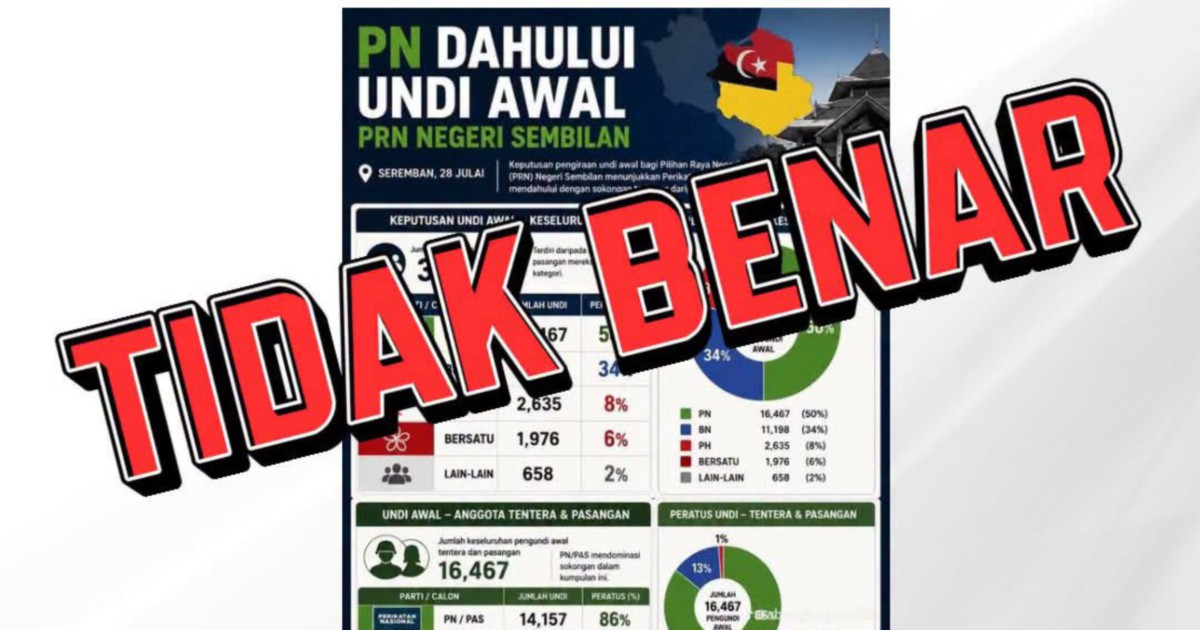
The Election Commission announced on Friday that the tallying of early ballots cast for the 16th Negeri Sembilan state election will commence at 5pm on Saturday, providing an official timeline for the first count of the day. The timing clarification comes as the poll approaches, and follows reports of misleading information spreading across social media platforms regarding preliminary voting results and purported leads by the Perikatan Nasional coalition.
Such announcements have become routine in recent Malaysian electoral cycles, as the EC seeks to manage public expectations and prevent confusion over counting procedures. The distinction between early votes—cast by eligible voters before polling day—and regular ballots remains important for observers tracking election progression. Early voting counts traditionally appear first because fewer votes need processing, giving an initial snapshot that experienced analysts caution against treating as predictive of final outcomes.
The viral claims about an emerging PN lead that circulated ahead of the official announcement underscore persistent challenges with election misinformation in Malaysia. Social media platforms have become vectors for unfounded predictions and fabricated tallies, particularly when genuine results remain pending. The EC's decision to publicly deny such claims suggests the commission views public clarity as essential to maintaining electoral integrity and public confidence.
Negeri Sembilan, a central peninsular state with moderate population and economic significance, has historically served as a bellwether for broader Malaysian political trends. The 16th state election represents another test of coalition support in a region where the Barisan Nasional has traditionally held sway, though recent national results have demonstrated shifting voter preferences. The state's outcome may carry symbolic weight beyond local governance questions.
The early vote mechanism in Malaysian elections serves practical and symbolic functions. It allows registered voters unable to cast ballots on polling day—including security personnel, healthcare workers, and those abroad—to participate beforehand. By processing these votes separately, the EC creates a visible first checkpoint in the counting process, allowing media coverage to begin while polling day votes are still being verified and prepared for tabulation.
Election observers and political analysts typically counsel caution when interpreting preliminary counts. A lead in early votes does not necessarily translate to victory, as different constituencies, demographic segments, and time periods of voting can produce varying patterns. Malaysian political history contains examples of significant reversals between early counts and final tallies, making live interpretation of incomplete results unreliable.
The timing of the Saturday count also reflects standard EC protocols that have evolved over multiple election cycles. Beginning at 5pm allows for completion of other administrative tasks earlier in the day and provides a defined window for media coverage and public attention. The specific hour chosen has become familiar to Malaysian voters and observers, reducing confusion about procedures.
For regional observers monitoring Malaysia's democratic processes, election integrity and public information management represent ongoing themes. Misinformation campaigns during voting periods can influence voter behaviour and public perception of legitimacy, regardless of factual accuracy of tallies. The EC's proactive approach to denying false claims demonstrates recognition that electoral credibility depends on both actual accuracy and sustained public belief in accuracy.
Negeri Sembilan's centrality to peninsular commerce, transportation, and government functions means its election receives sustained coverage from both mainstream and social media outlets. This amplification of scrutiny can magnify both legitimate interest and unfounded speculation. The state's role as a traditional Barisan stronghold also invests the result with significance for assessing the ruling coalition's current standing amid broader political realignments at national level.
Election Commission statements serve multiple audiences: they signal official procedures to the public, establish the factual record against future disputes, and demonstrate institutional authority over the electoral process. By explicitly addressing viral false claims, the EC positions itself as a credible arbiter of electoral information, though the effectiveness of such corrections remains contested among researchers studying misinformation dynamics.
The Saturday count will mark the formal beginning of official results for the 16th Negeri Sembilan election. Media organisations, political parties, and engaged citizens will monitor the early tally closely, though experienced observers will await the complete count before drawing conclusions. The EC's advance clarification of procedures and denial of false preliminary claims represents an attempt to establish procedural clarity and factual authority before results begin appearing in the public record.

