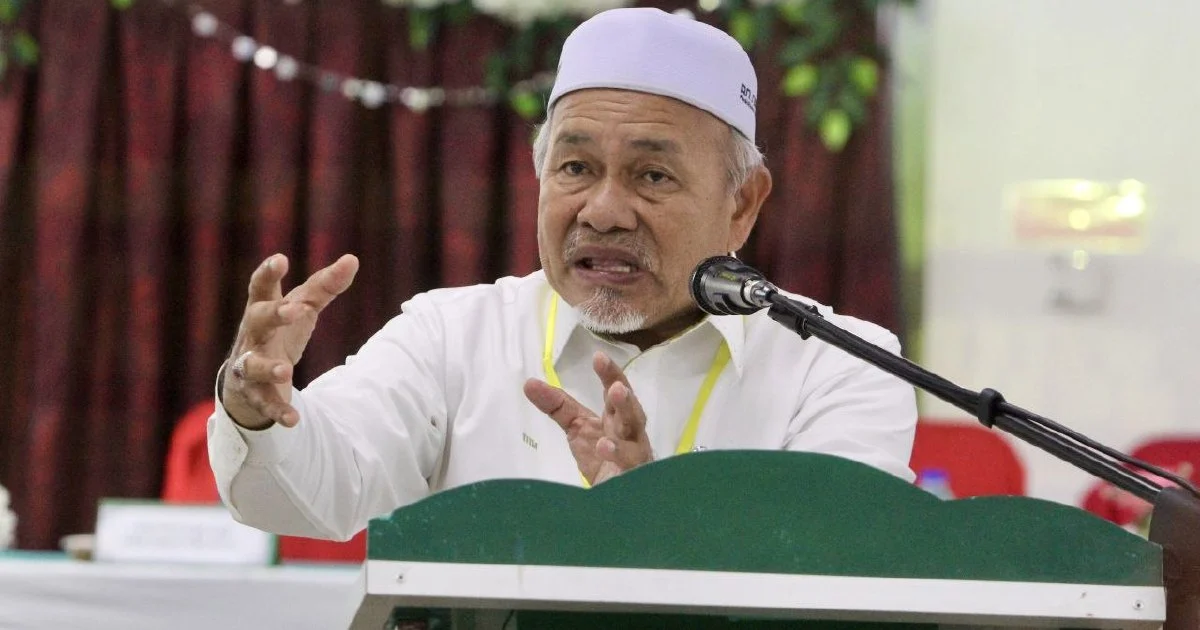
The likelihood of Prime Minister Datuk Seri Anwar Ibrahim calling a snap general election in the near term has diminished following Barisan Nasional's commanding victory in Johor's state elections, according to PAS deputy president Datuk Seri Tuan Ibrahim Tuan Man. His assessment reflects the significant political momentum gained by the ruling coalition in one of Malaysia's most economically important states, where BN secured a resounding mandate that has shifted the electoral landscape heading into the next general election cycle.
Barisan Nasional's performance in the Johor state election represents a watershed moment for the governing coalition, which has spent considerable effort rebuilding its political credibility following its 2018 defeat. The scale of the victory provides the administration with renewed confidence in its standing among voters and validates the government's policy direction over the preceding months. For Anwar Ibrahim's cabinet, this electoral endorsement in a state that accounts for a substantial portion of the nation's economic output carries particular weight, as it demonstrates voter confidence in the government's management of key constituencies.
Tuan Ibrahim's statement carries significance because PAS, as a coalition partner in the government, occupies a position where it must balance its own political interests with broader coalition stability. The party's deputy president is effectively signalling that BN's electoral strength removes the immediate impetus for Anwar to engineer a fresh election call. In Malaysian politics, prime ministers typically dissolve parliament when they perceive electoral advantage, but Tuan Ibrahim's comments suggest the current political arithmetic appears stable enough that such a drastic measure appears unnecessary in the short term.
The Johor victory carries implications that extend beyond the immediate state level. Johor has traditionally functioned as a bellwether for national sentiment, and its electorate's endorsement of BN could influence calculations in other states where elections may be pending. For opposition parties, the result underscores the challenge they face in dislodging a reinvigorated government that appears to be rebuilding its grassroots support systematically. The timing of Tuan Ibrahim's assessment suggests BN leadership is interpreting the result as validation for maintaining the current parliamentary composition rather than risking voter sentiment through an early dissolution.
From an economic perspective, avoiding an early general election aligns with the government's stated priorities around financial stability and investor confidence. Snap elections introduce periods of political uncertainty that can unsettle currency markets, delay policy implementation, and create bureaucratic paralysis as civil servants navigate caretaker conventions. Anwar's administration, focused on economic recovery and managing inflation, would logically prefer to consolidate governance over the coming months rather than enter another expensive election campaign that would interrupt policy initiatives and development projects.
The Johor result also demonstrates that within the coalition framework, different partners retain distinct perspectives on strategic matters. While Tuan Ibrahim speaks on behalf of PAS, other coalition members like UMNO and MIC would naturally hold their own assessments about election timing. However, his public statement carries the weight of party leadership and signals that at least one significant coalition component does not anticipate imminent electoral disruption. This messaging is important for investor and international observer confidence, as it suggests coalition stability and predictable governance continuity.
Historically, Malaysian state elections have frequently preceded general elections by varying intervals, but they do not automatically trigger snap parliamentary dissolution. The Johor victory appears to have persuaded key decision-makers that the government's position is sufficiently strong that it need not rush toward another election cycle. For opposition parties, this probably translates into a longer timeframe for rebuilding their own organisational strength and crafting alternative policy narratives to present when GE16 eventually occurs under the normal parliamentary schedule.
The financial implications of avoiding an early election extend to both the government and the opposition. The ruling coalition can redirect campaign funds and party machinery toward strengthening administrative delivery in Johor and maintaining momentum in preparation for the general election that must occur within the next several years. Opposition parties, meanwhile, gain time to reorganise after the Johor setback and address internal divisions that have plagued their overall performance. Early elections benefit parties that possess superior financial resources and organisational capacity, so the decision to proceed along normal timelines arguably levels the playing field somewhat.
Tuan Ibrahim's assessment also reflects the mathematics of parliamentary arithmetic. Anwar's coalition commands a working majority in the Dewan Rakyat, and the Johor victory bolsters confidence that this majority could be maintained or even expanded if elections were held. However, the absence of pressing electoral urgency removes the motivation for Anwar to gamble on calling an election when his government can continue functioning with its current majority. Political strategy involves recognising when momentum is sufficient and when pushing further invites unforeseen risks.
The PAS deputy president's remarks arrive at a moment when Malaysian politics continues to demonstrate its complexity and unpredictability. Coalition arrangements remain fluid, with various partners jockeying for position and influence. Tuan Ibrahim's prediction about election timing provides one window into how senior political figures are currently assessing the landscape. His view that an early GE16 is unlikely suggests that within coalition circles, perceptions of government strength and legitimacy have improved measurably since Johor voted decisively for BN.
For Malaysian voters and international observers, Tuan Ibrahim's comments signal that the administration plans to continue governing beyond the immediate future. This provides clarity for long-term planning, whether for businesses evaluating investment decisions or for opposition parties strategising their approach to the next scheduled general election. The Johor result and the subsequent political analysis it has generated indicate that Malaysia's electoral cycle appears more predictable over the next two to three years, allowing various stakeholders to plan accordingly within a less volatile political environment.

