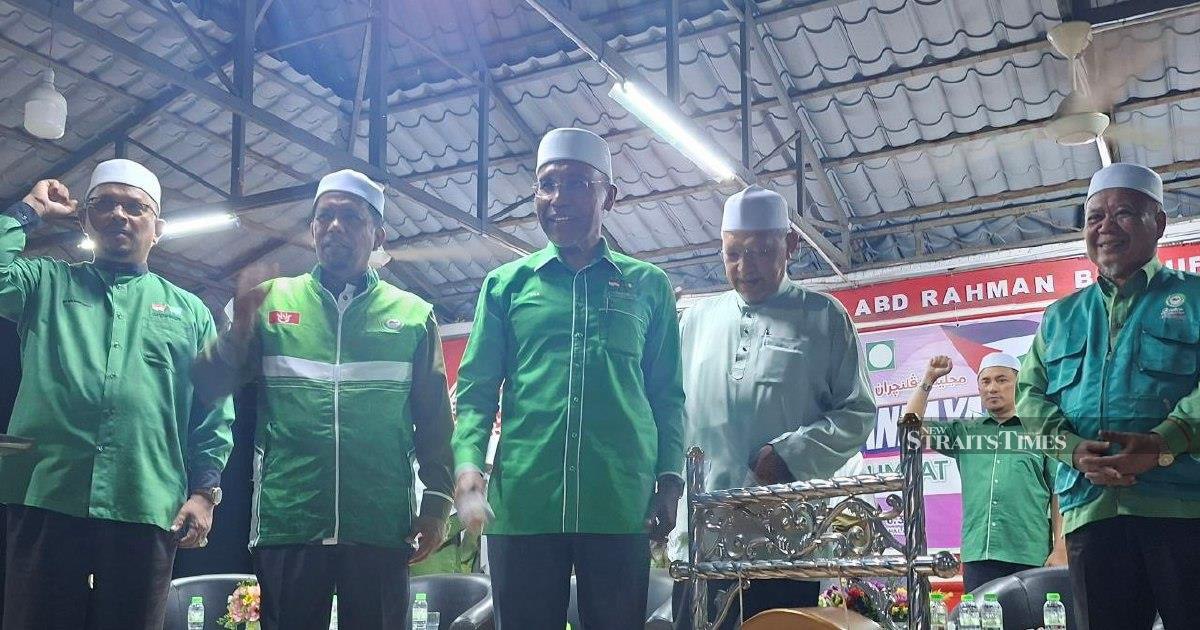
The Islamic party PAS has raised the prospect of an early general election, suggesting that Malaysia could head to the polls sooner than anticipated due to a convergence of political developments affecting both the federal and state levels. Speaking in Tumpat, party officials indicated that several concurrent circumstances could compress the timeline for holding the 16th General Election, with particular emphasis on constitutional deadlines and the fractious relationship between the two major political coalitions currently navigating power-sharing arrangements.
The immediate flashpoint appears to be Melaka state, where the legislative assembly faces the expiry of its term in the coming months. This constitutional deadline would ordinarily trigger state elections, yet the interaction between state-level politics and federal dynamics creates uncertainty about whether authorities might consolidate the Melaka polls with a national election rather than holding them separately. Such a move would not only reshape the electoral calendar but also amplify the stakes of any state contest, transforming it into a de facto referendum on federal political dynamics.
Beyond the Melaka timeframe, PAS has highlighted the deteriorating relationship between Pakatan Harapan and Barisan Nasional as a destabilising factor. The two coalitions have governed in an unprecedented power-sharing arrangement following the 2022 general election, yet their collaboration has been marked by recurring tensions and disagreements. Any significant breakdown in this uneasy alliance could trigger political instability at the federal level, potentially forcing the Prime Minister to dissolve Parliament and call for early elections rather than allow the government to collapse.
The current political configuration emerged from the 2022 election, which produced a hung parliament without any coalition commanding a clear majority. This unprecedented outcome forced Pakatan Harapan and Barisan Nasional into a marriage of convenience, with both blocs sharing ministerial positions and legislative influence. However, this arrangement has proven fragile, with both sides maintaining distinct political agendas and occasionally conflicting priorities. The relationship has been tested repeatedly by disputes over policy direction, ministerial appointments, and fundamental questions about the direction of government.
For Malaysian voters and the broader business community, the prospect of elections arriving at short notice carries significant implications. Political uncertainty tends to discourage investment, delay major policy decisions, and create volatility in financial markets. The construction sector, property development, and foreign direct investment all tend to pause when electoral outcomes remain unclear, making the timing of elections consequential for economic planning. If GE16 were to arrive unexpectedly, businesses would face disruption to their strategic planning cycles and potential delays in project approvals pending government formation.
Regionally, Malaysia's political stability matters considerably to Southeast Asian partners who rely on consistent bilateral relationships and regional cooperation frameworks. Frequent elections or prolonged government formation processes can distract Malaysian administrations from regional engagement, trade negotiations, and security cooperation. For countries such as Singapore, Indonesia, and Thailand, predictability in Malaysia's political calendar facilitates smoother diplomatic and economic coordination within ASEAN structures.
PAS itself holds a strategic position in this equation, as a member of neither the federal ruling coalition nor the main opposition. This positioning gives the party leverage in any potential realignment but also exposes it to shifting political winds. By publicising the possibility of early elections, PAS may be attempting to position itself advantageously for various scenarios, whether consolidation among opposition parties or potential power-sharing negotiations should the current coalitions fracture further.
The Melaka state assembly's constitutional term represents a hard deadline that cannot be indefinitely postponed. Under Malaysian law, state assemblies have fixed maximum terms, and Melaka's approach to this deadline will set important precedents. Whether elections in Melaka proceed independently or become entangled with federal polls depends partly on strategic calculations by the Prime Minister's office and partly on negotiations between the coalition partners about when such a dual election would prove advantageous.
Understanding the mechanics of potential early elections requires appreciation of how Malaysia's constitutional framework operates. The Prime Minister possesses the discretionary power to dissolve Parliament and recommend to the Yang di-Pertuan Agong that fresh elections be called. This prerogative means that any sudden political rupture could rapidly crystallise into an election announcement. Conversely, PH-BN cooperation, however strained, provides institutional anchors preventing hasty dissolution.
Looking forward, the trajectory of Malaysian politics over the next several months will likely clarify whether GE16 arrives on the constitutionally expected timeline or emerges prematurely from political turbulence. The tensions PAS has identified represent genuine pressure points in the current arrangement, even if their intensity fluctuates. For ordinary Malaysians, political observers, and stakeholders in the region, maintaining attention to these developments becomes increasingly important as multiple potential triggers for early elections move closer to maturation.

