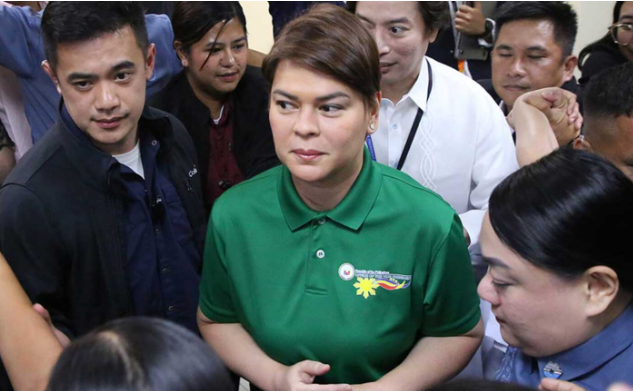
Vice President Sara Duterte mounted a fresh defence against impeachment allegations as the Senate trial entered its fourth day on Tuesday, maintaining her position that the charges involving an alleged assassination plot lack evidentiary support. The complaint, which centres on a purported conspiracy against President Ferdinand R. Marcos Jr, First Lady Liza Marcos and former Speaker Martin Romualdez, remains contested by Duterte's legal team, who contend the prosecution has constructed a narrative built on unverified claims rather than documented facts.
During Tuesday's proceedings, Duterte released a statement challenging the fundamental credibility of the case being presented against her. She underscored that her defence counsel had identified significant discrepancies in the documentation submitted by prosecutors, specifically flagging inconsistencies between dated entries in affidavits and corresponding docket numbers within National Bureau of Investigation records. These technical irregularities, highlighted during cross-examination of the NBI-Bangsamoro Autonomous Region in Muslim Mindanao Regional Director Jeremy Lotoc, form part of a broader strategy to demonstrate procedural and investigative shortcomings underlying the prosecution's case.
The vice president's legal defence frames the impeachment proceedings as a cautionary tale about institutional integrity. Through her statement, Duterte articulated a concern that extends beyond her personal vindication, arguing that repeating unsubstantiated threat allegations, inventing hypothetical perpetrators and constructing supporting evidence fundamentally corrupts both public institutions and the broader pursuit of truth. This rhetorical approach repositions her defence from a narrowly focused rebuttal into a defence of constitutional principles and institutional accountability, suggesting that the manner in which the trial is being conducted carries implications for how the Philippine justice system operates overall.
The impeachment trial is structured around multiple articles, with current deliberations focused on Article IV, which addresses the assassination plot claim that Duterte herself disclosed publicly. The prosecution's presentation remains in early stages, having called only two witnesses thus far while possessing eleven days allocated to present their case on this particular article. This protracted timeline underscores the scale and complexity of the proceedings, indicating that comprehensive judicial examination remains distant.
Though the House prosecution panel continues its case presentation, observers note that the entire impeachment trial framework extends across 92 days, suggesting proceedings could extend well into early 2027. This extended timeline raises questions about judicial efficiency and the political sustainability of such a prolonged constitutional confrontation. For Malaysian observers following Philippine developments, the trial demonstrates how high-level political disputes can consume institutional resources and judicial attention for extended periods, a pattern that may resonate across Southeast Asian democracies grappling with similar tensions between executive and legislative branches.
Duterte's insistence on the evidentiary gap between allegations and substantiation reflects broader debates within Philippine constitutional law regarding the threshold for impeachment proceedings. Her contention that accusations must rest on verifiable facts rather than speculation or manufactured narratives appeals to foundational rule-of-law principles that extend beyond the immediate political context. This framing attempts to position her defence within a principled constitutional argument rather than merely partisan counter-allegations.
A significant aspect of the trial dynamics involves Duterte's continued physical absence from proceedings. Her non-attendance, now extending through multiple trial days, presents a notable contrast to her active media engagement through released statements. This deliberate choice to remain absent while participating rhetorically through counsel suggests a calculated approach to managing her public image and limiting direct confrontation during testimony.
The role of Duterte's chief of staff, Zuleika Lopez, as an expected witness in Tuesday's proceedings introduces another dimension to the case. Lopez's anticipated testimony may provide either damaging admissions or alternative interpretations of events, depending on prosecution and defence questioning strategies. The significance of Lopez's position within Duterte's office means her testimony carries particular weight in establishing whether administrative discussions involved genuine threat assessment or other administrative matters.
For regional context, the impeachment trial reflects tensions that periodically surface within Philippine governance structures, where constitutional provisions for vice-presidential removal through impeachment remain rare exercises of legislative authority. The protracted nature of this trial, should it continue toward its projected conclusion date in early 2027, will establish procedural precedents and demonstrate the durability of Philippine constitutional mechanisms under strain. Malaysian readers, operating within a different constitutional framework lacking equivalent impeachment provisions for the deputy head of state, may find instructive lessons regarding how democracies manage serious institutional conflicts between competing national leaders.

