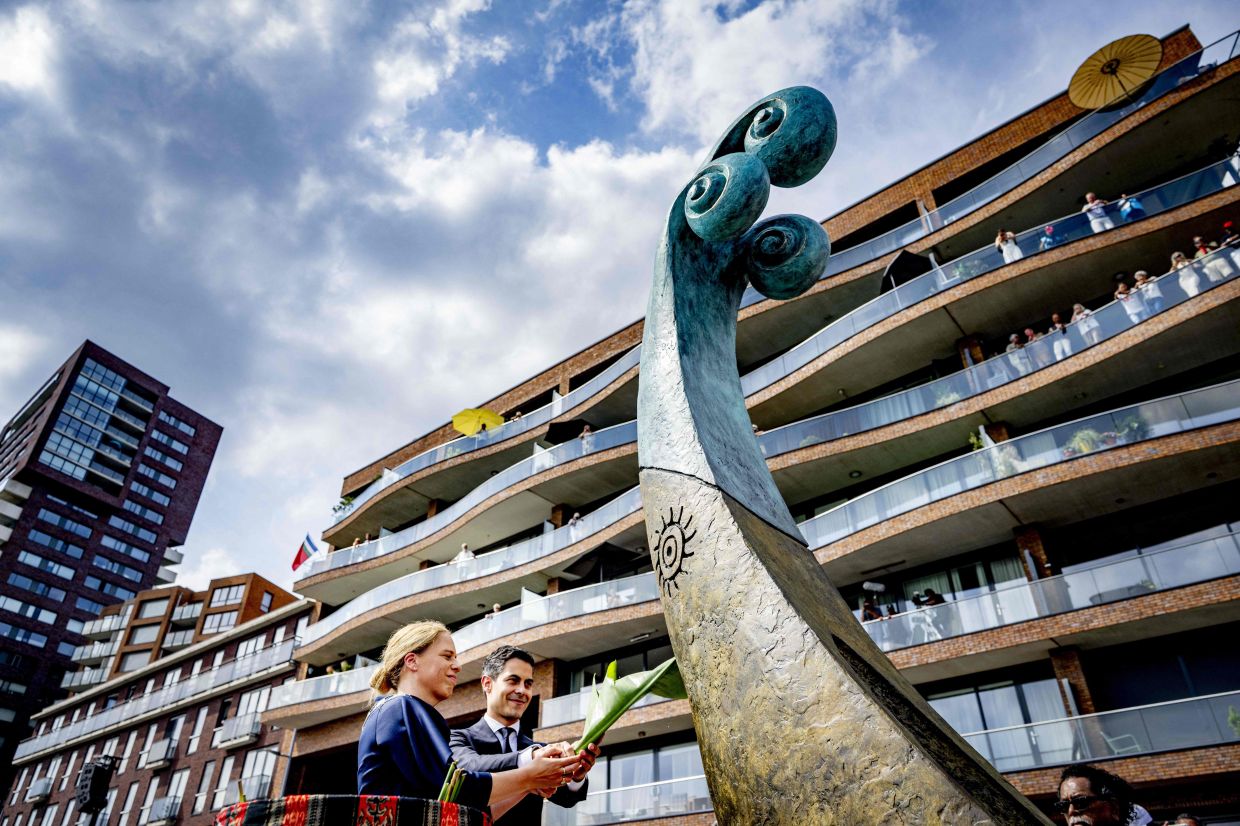
Dutch Prime Minister Rob Jetten delivered a formal state apology on Sunday to members of the Moluccan community, recognising the profound historical injustice they suffered at the hands of the Dutch government following Indonesia's independence from colonial rule. The ceremony, held in Rotterdam where the first ships carrying displaced Moluccans arrived in 1951, marked a significant moment of reckoning for a chapter of European colonial history that had long remained unresolved in official Dutch discourse.
The Moluccans, indigenous to the spice islands of eastern Indonesia, occupied a unique and tragic position in the decolonisation narrative of Southeast Asia. During the latter stages of World War II and the subsequent independence struggle, many Moluccans served in the Dutch colonial military, remaining loyal to the crown even as nationalist sentiment swept across the Indonesian archipelago. This allegiance would ultimately prove catastrophic for their future, as the post-war political landscape transformed in ways that left them stranded and vulnerable.
When Indonesia formally achieved independence in 1949 following years of armed conflict and diplomatic negotiation, the Dutch government faced a difficult question regarding the approximately 12,500 Moluccan soldiers and their families who had fought under its flag. Rather than allow them to remain in an increasingly hostile independent Indonesia where they feared reprisals as collaborators with the colonial power, Dutch authorities organised what was presented as a temporary relocation. The plan was straightforward in theory: transport these individuals to the Netherlands for a brief period, allow tensions to cool, and facilitate their eventual return to their homeland once political circumstances stabilised.
This promise, however, proved to be one of the most consequential broken commitments in modern Dutch history. What began as an intended temporary measure evolved into permanent exile. The Dutch government never fulfilled its obligation to repatriate the Moluccan community, effectively trapping an entire population in a foreign land with no clear pathway home. The consequences for those transferred were severe and multifaceted, extending far beyond mere geographical displacement to encompass profound social and economic marginalisation.
The living conditions imposed upon the arriving Moluccans represented a stark indictment of Dutch government priorities. Rather than facilitating integration into Dutch society through housing assistance and employment support, the authorities relegated many to substandard accommodation and concentrated settlements. Former military barracks and repurposed institutional spaces became homes for families who had expected to return to Indonesia within months. The sense of abandonment was compounded by systematic neglect, as little effort was made to help them secure meaningful work or build lives within their new, unwanted home. Entire families confronted the psychological trauma of indefinite separation from their ancestral homeland, unable even to plan for a future because they clung to the expectation—initially reasonable—that return was imminent.
At the Lloydkade in Rotterdam, where the Ulu Kora monument now stands as testimony to this dark period, Prime Minister Jetten acknowledged the full scope of this historical failure. His apology explicitly enumerated the specific injustices: the inadequate reception, the deplorable housing conditions, the systematic invisibility imposed upon an entire community, the abandonment that defined their experience, and the persistent longing for home that would haunt multiple generations. The carefully chosen words reflected recognition that historical injustice extends beyond physical harm to encompass emotional, cultural, and existential damage.
The situation proved particularly destabilising for second-generation Moluccans who came of age in the Netherlands without ever developing a genuine sense of belonging. Many felt fundamentally Dutch by upbringing yet remained ethnically and culturally distinct, subject to both overt discrimination and subtle institutional barriers. By the 1970s, this accumulated frustration and sense of betrayal exploded into violent incidents perpetrated by younger Moluccans who had lost faith in peaceful resolution. These confrontations, while condemned by mainstream Dutch society, represented a desperate cry for recognition of their grievances—a demand that the original promises made to their parents be honoured.
Prime Minister Jetten's address to the assembled Moluccan community demonstrated careful acknowledgment that formal apologies, while symbolically important, cannot erase historical trauma or restore what was lost. His explicit statement that "the injustice cannot be suddenly removed with apologies" reflected genuine humility about the limitations of state rhetoric in addressing centuries-old wrongs. Yet he positioned the apology not as a mere performative gesture but as an act of recognition—an official validation that injustice occurred, that it was systematic, and that it deserved public acknowledgment.
For Malaysian and broader Southeast Asian observers, this belated Dutch reckoning with colonial-era decisions carries significant resonance. The Moluccan experience represents a cautionary tale about the human costs of geopolitical calculation and broken state promises. It underscores how independence movements, while successful in achieving political sovereignty, often left vulnerable populations—particularly those who had collaborated with colonial administrations—exposed to abandonment by their former masters. The decades-long delay in formal acknowledgment also reflects broader patterns in how former colonial powers address historical grievances, often requiring sustained advocacy and generational passage before institutional apologies materialise.
The unveiling of the Ulu Kora monument and the formal apology represent recognition that historical justice, though delayed, remains both possible and necessary. For the Moluccan community, many of whom clutched photographs of deceased first-generation exiles during the ceremony, the moment offered a form of vindication—acknowledgment that their suffering was real, that it was wrong, and that responsibility lay with the Dutch state. While it cannot reverse seven decades of separation, exile, and loss, it provides official recognition that might help shape how future generations understand this painful chapter of both Dutch and Indonesian history.

