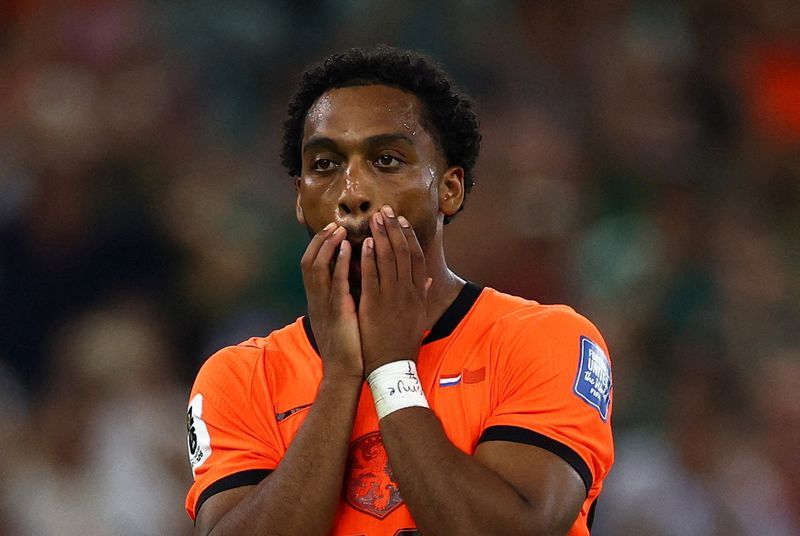
Three Netherlands footballers who failed to convert penalties in a World Cup elimination match against Morocco have become targets of racist harassment on social media platforms, prompting the Dutch football association to take formal action. Justin Kluivert, Quinten Timber, and Crysencio Summerville missed their spot-kicks as Morocco prevailed 3-2 on penalties in a last-32 encounter that ended 1-1 after extra time in Monterrey. The KNVB responded swiftly to reports of the discriminatory abuse, characterizing the online attacks as abhorrent and announcing plans to escalate the matter through official channels.
The mechanism for addressing such incidents involves reporting the abuse to Meld Online Discriminatie, a specialized Dutch platform designed to combat digital discrimination. Once complaints are lodged with this organization, legal specialists evaluate whether the statements constitute criminal offences under Dutch law. Should they meet that threshold, the organization can file formal complaints with the Public Prosecution Service, potentially triggering criminal investigations that may result in prosecutions. This structured approach reflects growing recognition across European footballing nations that online hate speech demands coordinated legal responses rather than reliance on platform moderation alone.
The targeting of these players represents part of a troubling pattern in modern sports where athletes of colour face intensified abuse following high-pressure moments that end in disappointment. The visibility of penalty shootouts, combined with their binary outcome—success or failure—makes them particularly vulnerable moments for such attacks. Social media algorithms that amplify emotional content and the relative anonymity of online interactions have created an environment where individuals feel emboldened to express racist views that they might otherwise suppress in public settings.
Precedent exists for how such situations can be handled. England's experience following the Euro 2020 final provides an instructive recent example. Marcus Rashford, Bukayo Saka, and Jadon Sancho endured severe racist harassment after missing penalties in the championship match against Italy. The resulting public outcry and police response proved substantial, with multiple arrests made during what British law enforcement characterized as a comprehensive crackdown on online hate speech targeting the players. Several individuals received prison sentences while others faced suspended sentences, demonstrating that courts can impose serious consequences for online racist abuse.
The comparison between the England and Netherlands cases highlights both the consistency of the problem and variations in how different nations address it. While England's response involved coordinated police action resulting in criminal prosecutions, the Dutch approach emphasizes institutional reporting through a dedicated discrimination platform. Both systems recognize that social media companies alone cannot be relied upon to police hate speech effectively, and that state intervention becomes necessary to deter such behaviour. However, the effectiveness of these responses depends partly on the certainty and swiftness of consequences, areas where different jurisdictions have shown varying levels of commitment.
For Malaysian and Southeast Asian football enthusiasts, these incidents carry particular resonance given the region's own experiences with online abuse in sports contexts. The tactics used by abusers—targeting players based on ethnicity, using social media for coordinated harassment, and exploiting the emotional intensity of sporting moments—are not unique to Europe. Regional clubs and national teams have similarly witnessed discriminatory online campaigns, yet institutional responses have often been slower or less developed than those emerging in European football. The Dutch and English examples provide models for how sports authorities and governments might strengthen their approaches to tackling digital discrimination.
The KNVB's statement emphasizing that football's fundamental purpose is to unite diverse communities stands in direct opposition to discrimination. This framing resonates beyond the immediate incident, articulating a vision of football as inherently inclusive. Yet realizing this vision requires sustained effort from multiple actors—governing bodies, platforms, law enforcement, and fans themselves. The organization's commitment to filing reports suggests institutional accountability will be pursued, but the broader challenge remains changing the cultural norms that permit such abuse to flourish in digital spaces.
The incident also underscores broader questions about accountability in the digital age. While social media platforms have implemented reporting mechanisms and community standards, critics argue these measures remain insufficient. The burden of proof for platforms differs from legal standards, and removal of content or account suspension rarely carries the deterrent effect of criminal prosecution. The Dutch case may test whether the formal legal system can move quickly enough to maintain relevance as a deterrent, given that the immediacy of social media reaction often subsides before legal consequences materialize.
Looking forward, the Netherlands' decision to pursue formal legal channels may influence how other football associations address similar situations. If prosecutions result and sentences are handed down, it could establish precedent that discourages potential abusers in subsequent tournaments. However, such deterrence effects depend on awareness and certainty—potential offenders must know that similar actions have led to punishment. Public communication about outcomes becomes as important as the legal process itself.
The World Cup environment intensified emotions and global attention on these players, making them particularly vulnerable targets. The tournament's scale means that failures become globally broadcast events, amplifying both disappointment among supporters and opportunities for coordinated abuse campaigns. As long as penalty shootouts determine World Cup progression, and as long as online platforms provide forums for anonymous expression, athletes will remain exposed to this form of harassment. Addressing the problem comprehensively requires not just legal responses to individual abusers, but also examination of how platforms structure discourse and how sports culture can be shifted toward greater inclusivity.
The KNVB's decisive action signals that European football governing bodies increasingly view online racism not as regrettable background noise but as a matter requiring institutional response. For players like Kluivert, Timber, and Summerville, the association's support provides some validation that their experience will not be dismissed or minimized. Yet for the broader football community, including supporters and officials across Southeast Asia, the case demonstrates both the persistent nature of discrimination in sports and the growing toolkit available to combat it. Whether these tools prove sufficient to create genuine change remains an ongoing question for football's governing institutions.

