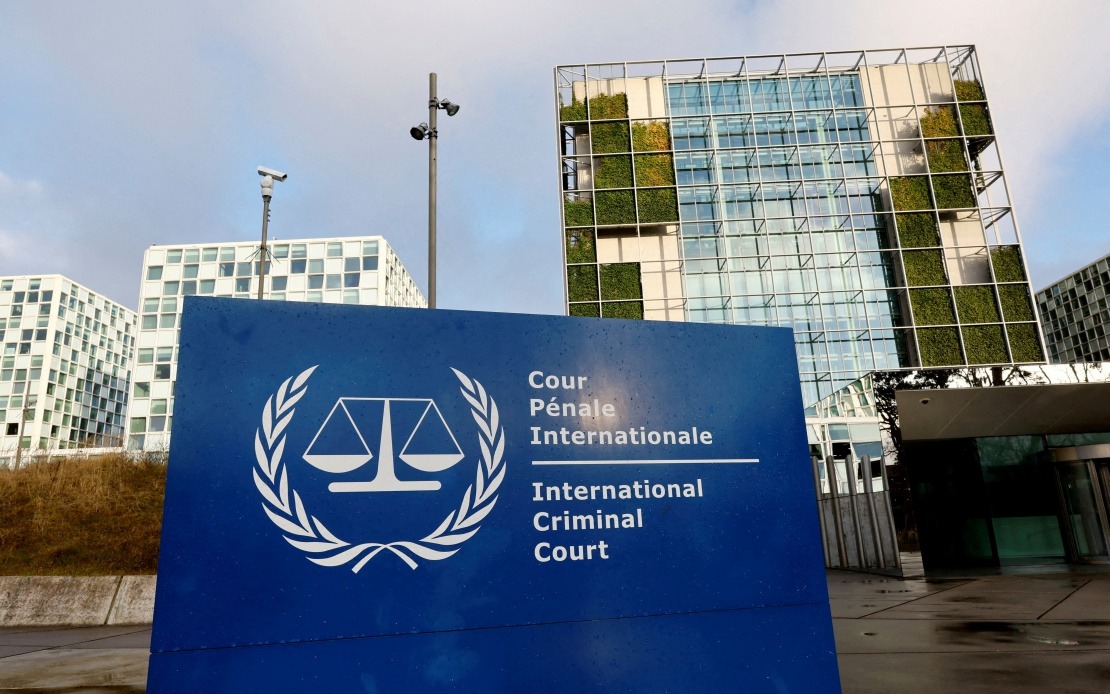
The United States' aggressive strategy to neutralize what Washington perceives as threats from the International Criminal Court has triggered alarm among leading legal academics in the Netherlands, who contend that the campaign represents a destabilizing assault on the international legal framework. Speaking from The Hague, where the ICC is headquartered, scholars have articulated concerns that American efforts to delegitimize and weaken the tribunal could fundamentally reshape global governance in ways that prioritize national power over consistent application of law.
Alette Smeulers, a professor specializing in international criminal law at the University of Groningen, emphasized the philosophical stakes of America's stance. In her assessment, should major powers succeed in dismantling multilateral legal institutions like the ICC, the world would transition from a framework anchored in codified legal principles to one where dominant nations can act without constraint. Such a shift would represent a profound regression, she warned, reversing decades of progress toward establishing accountability mechanisms that apply universally rather than selectively based on geopolitical strength.
The State Department formally launched its campaign on July 13, characterizing the ICC as posing an "intolerable threat" to American sovereignty. Officials framed the court's capacity to investigate and prosecute United States military personnel and government officials—provided they commit offences within signatory nations or act on behalf of Rome Statute members—as an encroachment on US independence. This foundational disagreement between Washington and the international legal community reflects deeper tensions about whether sovereign immunity should shield state actors from external judicial review.
The current friction between America and the ICC represents an intensification of longstanding disputes. In December of the previous year, Washington had already demonstrated its willingness to employ economic pressure, imposing sanctions against two ICC judges whom American officials accused of pursuing "politicised actions" targeting Israel. That measure signalled a departure from traditional diplomatic channels toward direct punitive action against individual magistrates, a tactic that Dutch academics view as particularly troubling for judicial independence.
Smeulers rejected the American government's framing as fundamentally mischaracterizing the ICC's actual scope and function. She emphasized that the tribunal operates within strict jurisdictional boundaries, prosecuting solely the gravest international offences—such as genocide, crimes against humanity, and war crimes—and only when such acts occur either in territories belonging to ICC member states or are perpetrated by nationals of member countries. These constraints, she noted, already provide substantial protections against the kind of unchecked prosecutorial overreach that Washington claims to fear.
Kyra Wigard, an assistant law professor at Utrecht University, offered a particularly sharp critique of the sanctions approach itself. Speaking to Dutch media outlet NU.nl, Wigard characterized the decision to punish ICC judges through economic sanctions as "absurd," observing that such measures are conventionally reserved for entities genuinely threatening international peace—alleged terrorist organizations and nations engaged in active warfare. Applying them to judicial officials exercising their lawful functions represents, in her view, a category error that confuses legitimate policy disagreement with conduct warranting punitive measures.
The implications of Washington's campaign extend well beyond bilateral relations between the United States and the court. According to Smeulers, American officials have signalled intentions to pressure other nations into withdrawing from the Rome Statute, the foundational treaty establishing the ICC. Such diplomatic coercion could trigger a cascade effect, with smaller or diplomatically vulnerable states facing incentives to abandon ICC membership in exchange for improved relations with Washington. The cumulative impact of strategic withdrawals could substantially diminish the tribunal's legitimacy and operational capacity.
For Malaysia and other Southeast Asian nations, this transatlantic dispute carries particular significance. Several regional states maintain Rome Statute membership or are considering accession, and American pressure campaigns could create uncomfortable choices between maintaining relationships with Washington and honouring international legal commitments. The precedent of a major power attempting to systematically undermine multilateral institutions also resonates given Southeast Asia's reliance on rules-based frameworks to manage larger regional powers and constrain unilateral action.
The Dutch scholars' intervention reflects broader concerns within the international legal community about the sustainability of consensus-based institutions when powerful nations view them as obstacles rather than assets. The ICC, despite its imperfections and operational challenges, represents humanity's most ambitious attempt to create impartial mechanisms for prosecuting atrocities. If such institutions can be dismantled through sustained pressure from individual states, the alternative—as Smeulers emphasized—is not a perfected system but rather a return to an era where justice and accountability depend entirely on the preferences of the strongest actors.
Beyond the immediate contest over the ICC's authority lies a deeper question about the future direction of global governance. The Dutch legal experts have essentially articulated a warning that allowing the erosion of multilateral legal institutions invites a transition to international relations governed by calculations of power rather than principle. For smaller and medium-sized nations seeking stable, predictable international order, the outcome of this particular dispute carries consequences far exceeding institutional turf battles between Washington and The Hague.

